|
|
||||||||||||||||||||||||||||||
|
|
|
|
||||||||||||||||||||
 |
|
|
|
Download a printable document listing the books of the Bible in Hebrew: |
|
|
|
|
|
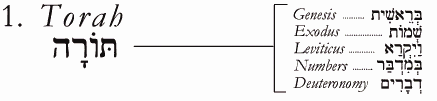
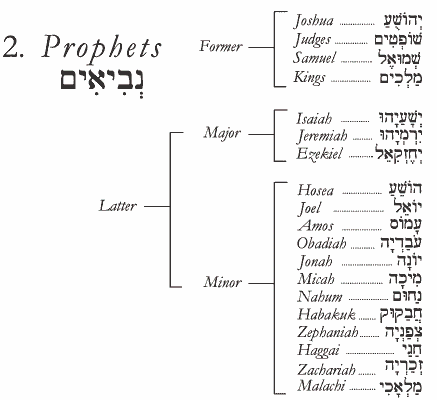
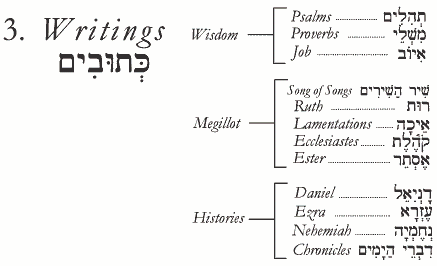
Three Divisions of Tanakh |
|||
|
|
||||||||||
|


|
|
|
|
Notes: |
|
|
|
|
|
|
|
|
|
|
The Thirteen Principles of Faith |
||||
|
Moses Maimonides (1135-1204) is considered by many Jews to be the most important medieval sage. Influenced by Thomas Aquinas and Avicenna, Maimonides sought to systematize the Jewish faith along scholastic lines. His Shloshah-Asar Ikkarim, or Thirteen Principles of the faith, is still widely recited as a sort of Jewish credo among many orthodox Jews. |
||||
|
Related Items: |
||||
|
|
||||
|
|
|
||||
|
|
|
|
|
The B'rit Chadashah |
|
|
|
|
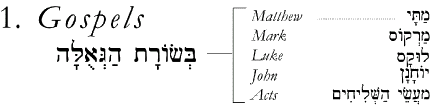
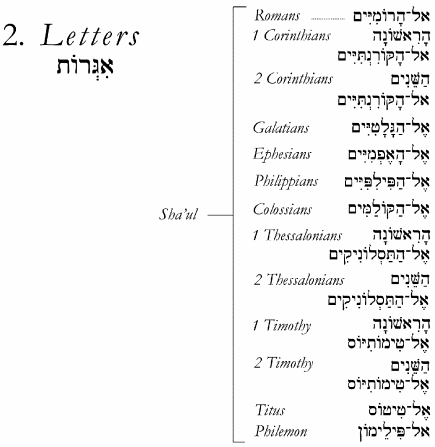
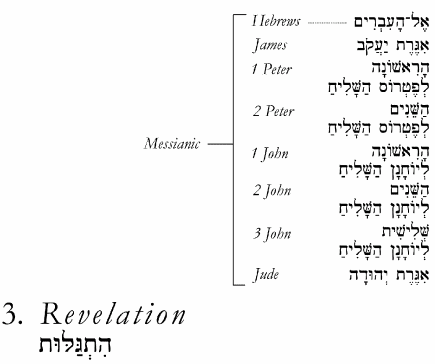
The New Testament is called the B'rit Chadashah in Hebrew (בְּרִית חֲדָשָׁה), meaning "New Covenant" (the word B'rit means "covenant" and Chadashah means "new"). Like the Tanakh, it can be divided into three main parts: Gospels/Acts (corresponding to Torah), Letters (corresponding to Ketuvim), and Revelation (corresponding to Nevi'im): |
|
|
||||||||||||||||||||||||||||||||
|
|
|
|
Download a printable Word document listing the books of the Bible in Hebrew: |
|
|
||||||||||||||||||

|
|
|
|
Like the Tanakh, the B'rit Chadashah can be divided into three main parts: Gospels/Acts (corresponding to Torah), Letters (corresponding to Ketuvim), and Revelation (corresponding to Nevi'im): |
|
|
||||||||||
|


|
|
|
|
|
|
|
|
|
|
|
 |
||||||||||
 |
||||||||||
|
b'khol-zot lanu rak-elohim echad, hu avi-'ad, asher mimenu hakol v'lo anachnu, |
||||||||||
|
Yet for us there is one God, the Father, from whom are all things and for whom we exist, |
||||||||||
|
Notes: |
||||||||||
|
||||||||||
|
|
||||||||||