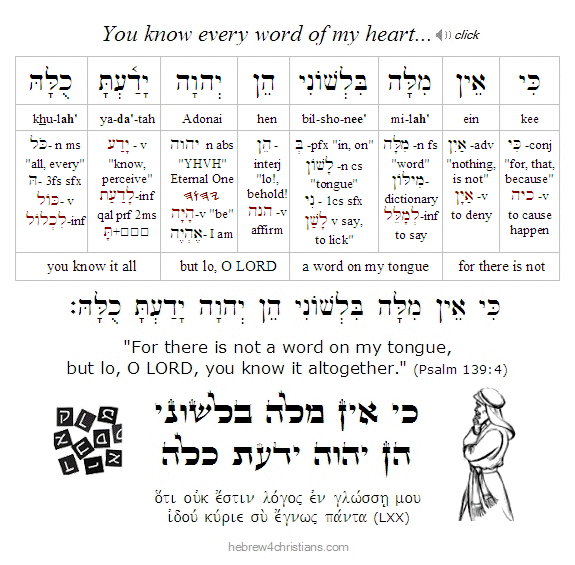
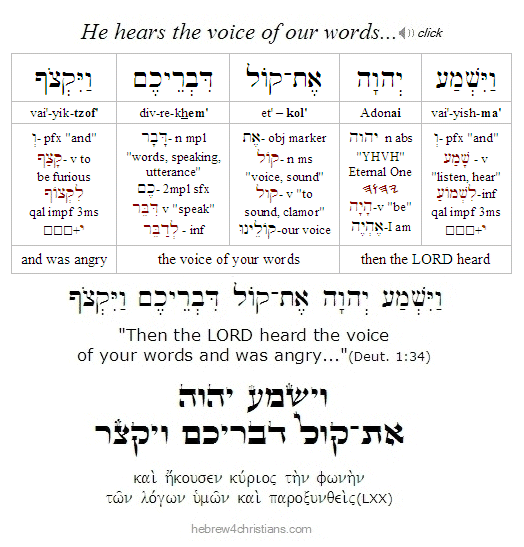
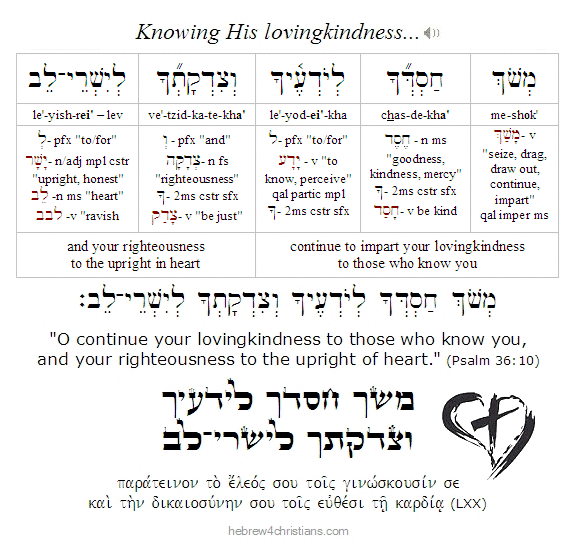
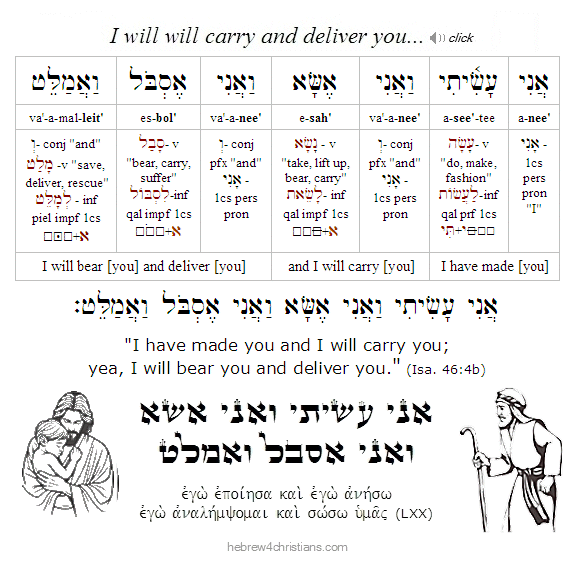
|
Prayer Request (for site updates, see below)
I was laid off from my full-time job several years ago when -- after a lot of prayer, soul searching and discussion with my wife -- we decided to operate the Hebrew for Christians ministry entirely by faith in God's provision through the love and kindness of His people. I am not paid for doing this work, and therefore I ask you to consider supporting us. If you can help, please offer a donation or purchase some of the Hebrew study materials offered here. Encouraging other web sites to link here also helps us become more visible on the web. Above all, agree with us for the Lord's will to be done in our lives. Todah, chaverim.
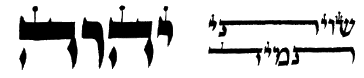
Note: My wife and I have have three young children (Josiah, Judah, and Emanuel David ). The LORD has graciously provided for us as Adonai Yireh (יְהוָה יִרְאֶה), "the One who sees [our need]." We are living one day at a time by the grace and mercy of God, and I want to publicly praise Yeshua and acknowledge His faithful love in caring for my family -- despite the trials during this time. The LORD God of Israel is faithful and true! And to those of you who have sent us a word of encouragement or donation during this difficult time, please accept our heartfelt appreciation! Your chesed truly helps sustain us.
יהי שׁם יהוה מברך - "May the Name of the Lord be blessed."
 |
Please Donate Today
Jewish Holiday Calendar
Note: For site updates, please scroll past this entry....
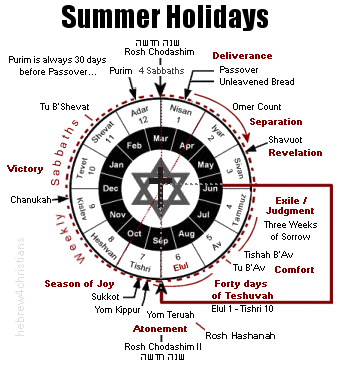
The Torah divides the calendar into two symmetrical halves: the Spring and the Fall, indicating the two advents of Messiah. The Biblical year officially begins during the month of the Passover from Egypt (called Rosh Chodashim, see Exod. 12:2), and the spring holidays of Passover, Unleavened Bread, and Firstfruits both recall our deliverance from Egypt and also our greater deliverance given by means of the death, burial, and resurrection of the Messiah, the great Passover Lamb of God. The holiday of Shavuot (i.e., "Pentecost") both commemorates the revelation of the Torah at Sinai as well as the revelation of the Ruach HaKodesh (Holy Spirit) at Zion, in fulfillment of the promise given by our Lord....
The intermediate months of summer end with the advent of the sixth month of the calendar, the month of Elul, which recalls the time Moses interceded on behalf of Israel after the sin of the Golden Calf. To commemorate this time of our history, we likewise focus on teshuvah (repentance) in anticipation of Rosh Hashanah and especially in anticipation of Yom Kippur, the great "Day of Atonement." In Jewish tradition the 30 days of Elul are combined with the first ten days of the seventh month (called the "Days of Awe") to set apart "Forty Days of Teshuvah" leading up to the Day of Forgiveness for Israel. Immediately following Yom Kippur, the mood changes as we begin preparing for a joyous week-long celebration called Sukkot (i.e., "Tabernacles") that concludes with the holiday of Simchat Torah.
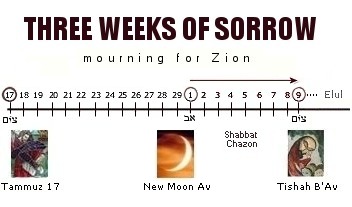
In the summer there occurs a three week period of mourning that begins with the Fast of Tammuz and ends with Tishah B'Av. The last nine days of this three week period (i.e., from Av 1 until Av 9th) are days of increased mourning. However, after this somber time, the romantic holiday of Tu B'Av, the 15th of Av occurs. Summer ends with the 30 days of the month of Elul, a yearly season of teshuvah (repentance) that anticipates Rosh Hashanah and the fall holidays. The 30 days of Elul are combined with the first 10 days of the month of Tishri to create the "Forty Days of Teshuvah" that culminate with Yom Kippur.
Because they occur between the spring and fall holidays, the summer holidays help us prepare for the second coming of the Messiah:
 |
The Summer Holidays:

Note that in accordance with tradition, holiday dates begin at sundown. Moreover, some holidays may be postponed one day if they happen to fall on the weekly Sabbath:
- Month of Tammuz (Sun. June 14th [eve] - Tues. July 14th [day])
- Month of Av (Tues. July 14th [eve] - Wed. Aug. 12th [day])
- Month of Elul (Wed. Aug. 12th [eve] - Fri. Sept. 11th [day])
- Month of Tishri (Fri. Sept. 11th [eve] - Sat. Oct. 10th [day])
Note: For more about the dates of these holidays see the Calendar pages....
Search the H4C Site
July 2026 Site Updates
Note: Please refresh the page (or press F5) to see the latest updates...
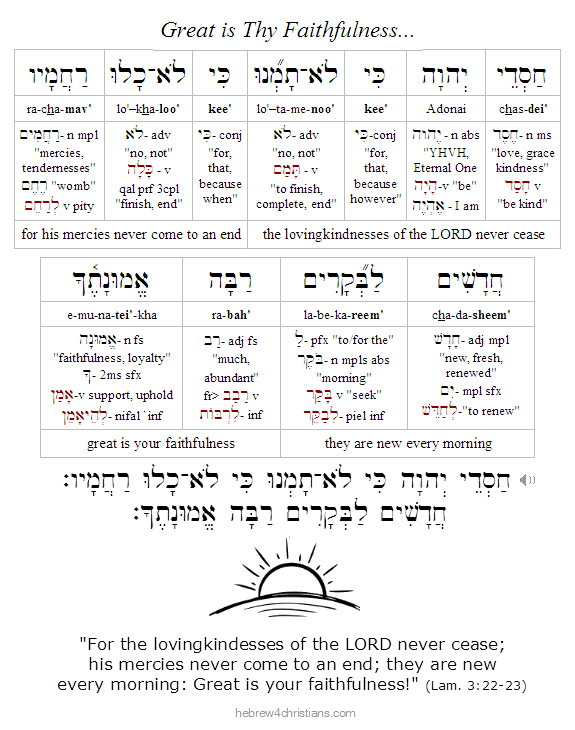
Great is His Faithfulness...
07.24.26 (Av 10, 5786) From this week's Torah (i.e., parashat Vaetchanan) we read: "if you seek for the LORD your God from there, you will find him, if you search for him with all your heart (בְּכָל־לְבָבְךָ) and with all your soul" (Deut. 4:29).
From where do we search, and from what place do we seek, except in our exile, after hardship, testing, and tribulation? If you seek for the LORD your God from there - in the midst of your exile, in the midst of your heart's cry - you will find him there, in your heart.
This message is a prophecy, so that even after testing befalls you, in the end you will belong to the LORD and will hear his voice.
"Where is God to be found?" asks the Kotzker Rebbe, but "in the place where He is given entry!" As the Apostle Paul wrote, "The word is near you, in your mouth and in your heart" (that is, the word of faith that we proclaim); because, if you confess with your mouth that Yeshua is LORD and believe in your heart that God raised him from the dead, you will be saved. For with the heart one believes and is justified, and with the mouth one confesses and is saved. For the Scripture says, "Everyone who believes in Him will not be put to shame." For there is no distinction between Jew and Greek; for the same LORD is LORD of all, bestowing his riches on all who call on him. For "everyone who calls on the name of the LORD will be saved" (Rom. 10:8-13). Even in the face of the tribulations and distresses we may encounter in this world, the lovingkindess (chesed) of the Lord is always present for those who look to Him in trust. Great is his faithfulness!
Hebrew Lesson
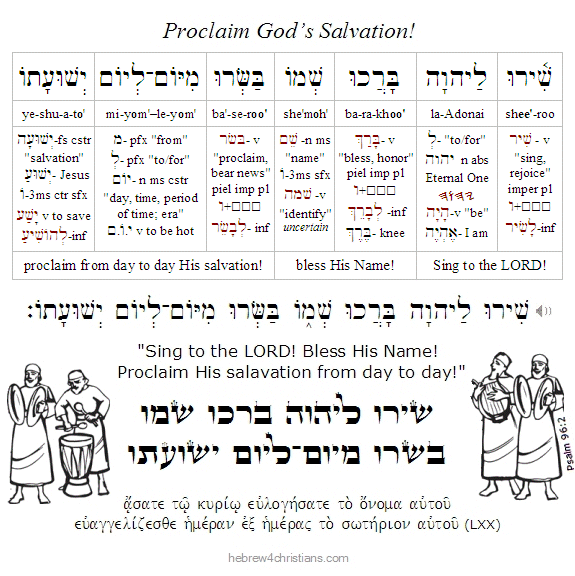
Lamentations 3:22-23 reading:
 |
Praying to Pray...
"It is unbelievable what a person of prayer can achieve if he would but close the doors behind him." - Soren Kierkegaard
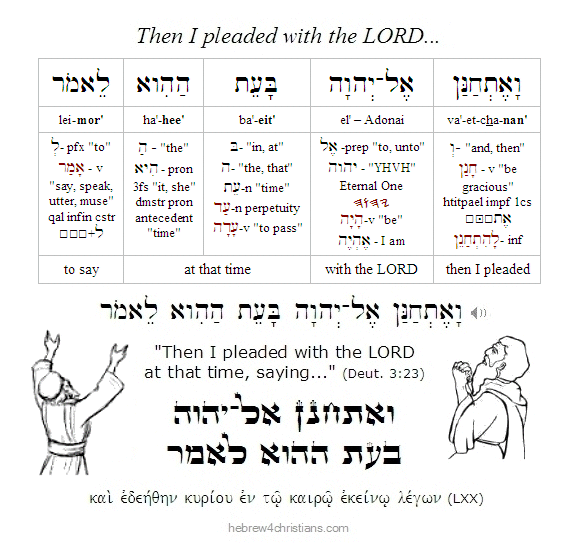
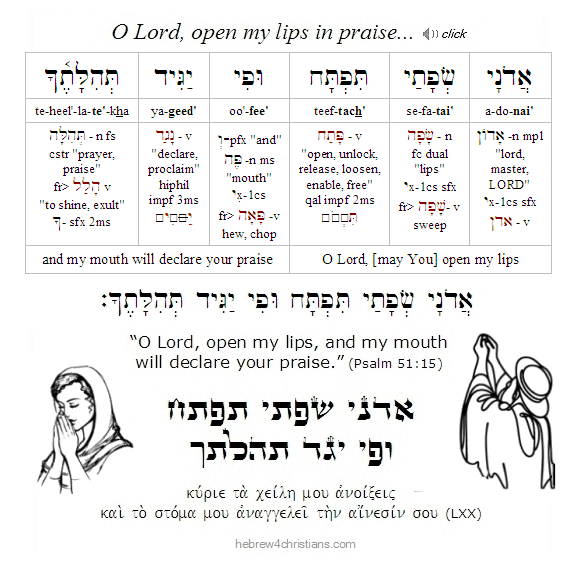
07.24.26 (Av 10, 5786) Our Torah portion for this week (i.e., parashat Vaetchanan) begins, "And I pleaded (ואתחנן) with the LORD at that time, to say..." (Deut. 3:23), which implies that we must first pray in order to be able to pray, that is, we make ourselves ready to pray by finding the inner freedom and grace to come before the LORD with our burdens.... If you can't find the words to pray, then plead with the LORD and ask for the Holy Spirit to groan on your behalf (Rom. 8:26). "Ask, and it will be given to you; seek, and you will find; knock, and it will be opened to you" (Matt. 7:7). "O Lord, open my lips, and my mouth will show forth your praise" (Psalm 51:15).
The need to pray with the proper focus, intention, and heart is surely one of our greatest needs... "Lord, teach us to pray" (Luke 11:1). The disciples were not asking for a formula or recipe prayer (such as might be recited from a prayer book), but for the right motivation, direction, and "Torah" of prayer... If we ask according to his will, God hears us (1 John 5:14), since we are speaking heaven's "language" of truth and humility. Therefore pray for the ability to pray effectively, to commune in trust with your heavenly Father. The prayer of a righteous person has great power (James 5:16).
As we offer our hearts up to God, the Lord in his great mercy fills us with faith, hope, and love... Our spiritual need for God is his habitation with us; our hunger and thirst for healing and life is a gift from heaven (Matt. 5:6). Our blessed desperation impels us to pray because we cannot help praying. As Abraham Heschel once said, "prayer is more than a light before us; it is a light within us." At its deepest level, prayer is not about asking but receiving; it is not so much appealing to God as it is allowing God to appeal to us.
As John Bunyan once wrote, "Rather let thy heart be without words than thy words be without heart." Amen. Adonai sefatai teef'tach, "O Lord, open my lips," oo'fee yageed tehilate'kha, "and my mouth will declare your praise" (Psalm 51:15).
Hebrew Lesson
Psalm 51:15 reading (click for audio):
Faith and Understanding...
07.23.26 (Av 9, 5786) Though it is worthwhile to ask questions about what we believe, we must do so using the principle that "faith seeks understanding" rather than the converse principle that "understanding seeks faith," since the latter elevates human reason to be the judge and arbiter of the things of God, a role for which it is both incapable and unsuited (Isa. 55:8-9; Job 9:10; 11:7; Psalm 139:6; Rom. 11:33).
God is not a "what" but a "Who," and that reality determines the means by which we are able to know him (John 4:24). We can indeed know truth about God, though the means for attaining such knowledge transcends the abilities of unaided human reason (see Deut. 29:29). In other words, we know the truth about God when we encounter the Divine Presence by means of revelation...
Some talk about "honest doubt" regarding matters of God, and while there may indeed be occasions to confess the limitations of our ability to understand the mysteries of heaven and earth, we must be on guard not to ply a present lack of "semantic closure" as an excuse for despair that hardens our hearts and justifies our sin... The lower nature's machinations are so cunning that we must be on guard and "test what manner of spirit" we are (Luke 9:55; 1 John 4:1; James 4:4). In the name of "honest doubt" a soul can invent all manner of difficulties of interpretation, the mind may become jaded and agnostic; the heart cools and steps away from the passion of faith... Doubt introduces hesitancy, compromise, and godless misgivings; it is a leech upon the soul, sapping the strength of conviction, weakening the balm of assurance. Be careful. Honest seeking is one thing, but practiced doubt may be an evasive measure - a diabolical ploy meant to distance yourself from responsibility to the truth of God's Presence.
Often enough people have a "problem" with faith not because there is insufficient reason to believe -- after all, every soul has intuitive awareness of the reality of God's reality and power (see Rom. 1:19-20; Psalm 19:1-4; Acts 14:17) -- but because secret sin lurking within the heart is cherished as the soul's ultimate concern and most precious value. Such idolatry of heart is the essence of much "doubt," since faith ultimately is an act of will. "The heart has its reasons that reason knows not of" applies both to the realm of God but also to the affections of the selfish heart... In that sense doubt serves as a deal made with the devil - an exchange of a "mess of pottage" for the blessing of God!
Charles Spurgeon once wrote: "It seems that doubt is worse than trial. I had sooner suffer any affliction than be left to question the gospel or my own interest in it" (Vol. 29, Sermons). Amen, the gospel cannot be esteemed apart from personal interest in its truth, for otherwise we are merely toying with its message. You must believe that the truth of God - and being properly related to this truth by means of a trusting relationship - is the most inestimably precious and important matter of your very existence... We cannot escape from the double-mindedness of our way apart from sincerely turning to God and asking Him to show us his glory, his beauty, and the wonder of his great love.
A divided house cannot stand. The way of deliverance from yourself - the way to be free of enslaving passions and dark desires that fragment the soul - is by means of the miracle of God: "For the flesh has desires that are opposed to the Spirit, and the Spirit has desires that are opposed to the flesh, for these are in opposition to each other, so that you cannot do what you want' (Gal. 5:17; Rom. 7:15-25), but if you are led by the Spirit, you are free from the law of sin and death and are enabled to live according to a new source of power and life, namely, the law of the Spirit of Life in Messiah Yeshua (Rom. 6:6,14; Gal. 2:20). Living in slavery to sin is to lose yourself - to have no "center," no self that unifies your heart and focuses your reason for being... It is the hell of no longer believing in anything at all, and especially no longer believing yourself.
Soren Kierkegaard once lamented: "The matter is quite simple. The Bible is very easy to understand. But we Christians are a bunch of scheming swindlers. We pretend to be unable to understand it because we know very well that the minute we understand we are obliged to act accordingly." There is a very real danger of "thinking about" truth rather than living it. For instance, we might study the Psalms as literature and attempt to understand the nuances of Hebrew poetry, but that is altogether different than reciting the psalms with inner passion, with simple conviction and the earnest desire to unite your heart's cry with the devotion that gave life to the words... We must read with a heart of faith to unlock the truth that speaks to the heart. If you believe only what you understand, your faith is actually grounded in your own reasoning, not in the Divine Voice of Love...
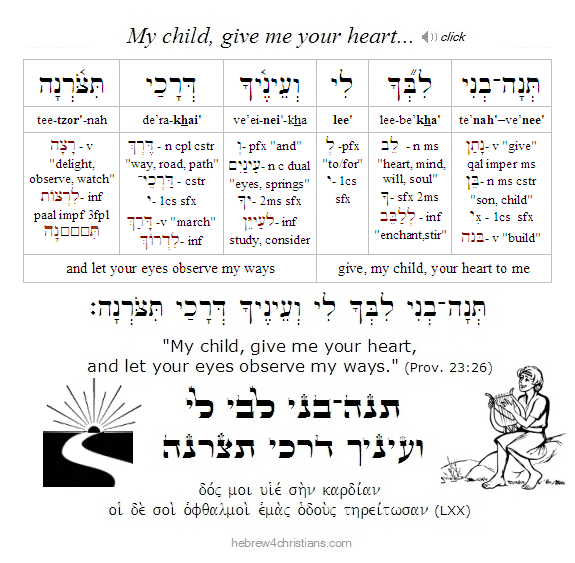
The way of trust is always a matter of the heart's passion and hope... The Spirit of God speaks gently: "My child, give me your heart, and let your eyes observe my ways" (Prov. 23:26). When we call God "Abba," we are not using a formal name that indicates distance, but rather a term that evokes intimate closeness and reliance. Calling out to God as "Abba" signifies that we genuinely accept that God regards us as his beloved child...
Hebrew Lesson
Proverbs 23:26 reading (click for audio):
Tishah B'Av Prophecies...
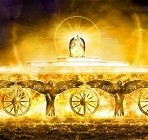
For Tishah B'Av, let us remember Israel and the Jewish in our prayers. May the veil soon be taken away! (Rom. 11:25-6; 2 Cor. 3:14-16). Amen.
07.23.26 (Av 9, 5786) Yeshua foretold the destruction of the Second Temple when he lamented: "O Jerusalem, Jerusalem, the city that kills the prophets and stones those who are sent to it! How often would I have gathered your children together as a hen gathers her brood under her wings, and you were not willing! Behold, your house is left unto you desolate. For I tell you, you will not see me again, until you say, Barukh Haba Ba'shem Adonai: 'Blessed is he who comes in the name of the Lord.' Yeshua then left the Temple and was going away, when his disciples came to point out to him the buildings of the Temple. But he answered them, "You see all these, do you not? Truly, I say to you, there will not be left here one stone upon another that will not be thrown down." (Matt. 23:37-24:2).
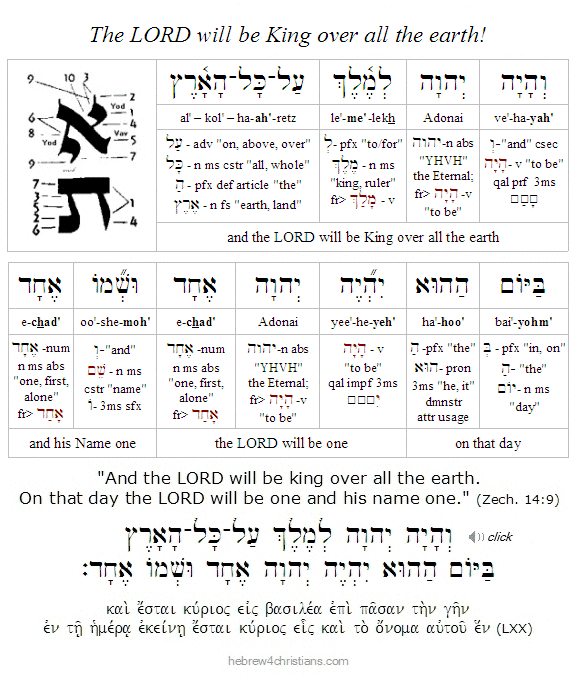
Note that we are not awaiting the appearance of the "Third Temple" which will be hastily erected during the time of Jacob's Trouble during the Great Tribulation, but we await the "Fourth Temple," that is, the Temple that will be built by Tzemach Tzaddik (צֶמַח צַדִּיק), namely, Messiah the Son of David (מָשִׁיחַ בֶּן־דָוִד) who will come again to establish the Kingdom of Zion upon the earth in fulfillment of the promises of God (Zech. 6:12; Jer. 23:5). At that glorious time the mourning of the Jewish people will forgotten, as it is written: "Thus says Adonai Tzeva'ot (יהוה צְבָאוֹת): The fast of the fourth month (Tammuz), and the fast of the fifth month (Tishah B'Av), and the fast of the seventh month (Gedaliah), and the fast of the tenth month (Asarah b'Tevet), will be to the house of Judah for joy and rejoicing and for pleasant appointed seasons. Therefore love truth and peace" (Zech. 8:19). In that coming day, "the LORD will be king over all the earth. On that day the LORD will be one and his name one" (Zech. 14:9).
וְהָיָה יְהוָה לְמֶלֶךְ עַל־כָּל־הָאָ֑רֶץ
בַּיּוֹם הַהוּא יִהְיֶה יְהוָה אֶחָד וּשְׁמוֹ אֶחָד׃
ve·ha·yah · Adonai · le·me'·lekh · al-kol-ha·ah'·retz
bai·yohm · ha·hoo · yee·he·yeh · Adonai · e·chad · oo·she·moh · e·chad

"And the LORD will be king over all the earth.
On that day the LORD will be one and his name one."

 |
As I've mentioned over the years, the word "Zion" (i.e., tziyon: צִיּוֹן) is mentioned over 160 times in the Scriptures. That's more than the words faith, hope, love, and countless others... And since Zion is a poetic form of the word Jerusalem, the number of occurrences swells to nearly 1,000! It is therefore not an overstatement to say that God Himself is a Zionist.... "Out of Zion, the perfection of beauty, God shines forth" (Psalm 50:2). Zion represents the rule and reign of God in the earth and is therefore synonymous with the Kingdom of God. The entire redemptive plan of God -- including the coming of the Messiah Himself and our very salvation -- is wrapped up in the concept of Zion. It is the "historiography" of God -- His "philosophy of history," if you will.
The great vision of Zion is at the heart of the Gospel message and the focal point of God's salvation in this world. Zion represents our eschatological future -- our home in the world to come. Even the new heavens and earth will be called Jerusalem -- "Zion in her perfection" (Rev. 21). "This is what Adonai Tzeva'ot says: I am very jealous for Jerusalem and Zion, but I am very angry with the nations that feel secure" (Zech. 1:14-15). "For Zion's sake I will not keep silent, for Jerusalem's sake I will not remain quiet, till her righteousness shines out like the dawn, her salvation like a blazing torch" (Isa 62:1). "The builder of Jerusalem is God, the outcasts of Israel he will gather in... praise God, O Jerusalem, laud your God, O Zion" (Psalm 147:2-12).
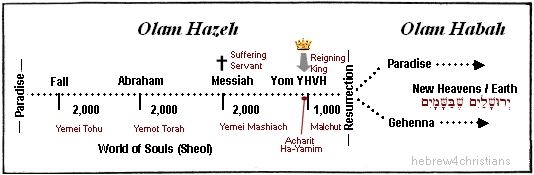
It is worth noting that in the discussion from the Talmud, the 6,000 years of human history are divided into three epochs of 2,000 years each. The period of "tohu" occurred from the time of the fall of Adam until the call of Abraham; the period of "Torah" occurred from Abraham until the time of the destruction of the Second Temple, and the period of the "Messiah" refers to the time when the Messiah could appear before the Kingdom is established in Zion. The time immediately preceding the appearance of the Messiah will be a time of testing in which the world will undergo various forms of tribulation, called chevlei Mashiach (חֶבְלֵי הַמָּשִׁיחַ) - the "birth pangs of the Messiah" (Sanhedrin 98a; Ketubot, Bereshit Rabbah 42:4, Matt. 24:8). Some say the birth pangs are to last for 70 years, with the last 7 years being the most intense period of tribulation -- called the "Time of Jacob's Trouble" / עֵת־צָרָה הִיא לְיַעֲקב (Jer. 30:7). The climax of the "Great Tribulation" (צָרָה גְדוֹלָה) is called the great "Day of the LORD" (יוֹם־יהוה הַגָּדוֹל) which represents God's wrath poured out upon a rebellious world system. On this fateful day, the LORD will terribly shake the entire earth (Isa. 2:19) and worldwide catastrophes will occur. "For the great day of their wrath has come, and who can stand?" (Rev. 6:17). The prophet Malachi likewise says: "'Surely the day is coming; it will burn like a furnace. All the arrogant and every evildoer will be stubble, and that day that is coming will set them on fire,' says the LORD Almighty. 'Not a root or a branch will be left to them'" (Mal. 4:1). Only after the nations of the world have been judged will the Messianic kingdom (מַלְכוּת הָאֱלהִים) be established upon the earth. The remnant of Israel will be saved and the 1000 year reign of King Messiah will then commence (Rev. 20:4).
 |
The concept of the King Messiah, the "Anointed One" who would one day come to deliver his people from oppression at the beginning of an era of world peace has been the sustaining hope of the Jewish people for generations. King Messiah is the instrument by whom God's kingdom is to be established in Israel and in the world. This hope runs throughout the entire Tanakh. According to rabbinical Judaism (following Maimonides), this Messiah figure is not divine, though he certainly has divine powers and attributes. Indeed, he functions as Israel's Savior who would be empowered by God to:
- Restore the Kingdom of David (Jer. 23:5, Jer 30:9, Ezek. 34:23)
- Restore the Temple in Zion (Isa. 2:2, Micah 4:1, Zech. 6:13, Ezek. 37:26-28)
- Regather the exiles (Isa. 11:12, 43:5-6, 51:11)
- Offer the New Covenant to Israel (Jer. 31:31-34)
- Usher in world peace and the knowledge of the true God (Isa. 2:4; 11:9). This will include the entire world speaking Hebrew (Zeph. 3:9).
- "Swallow up" death and disease (Isa. 25:8)
- Raise the dead to new life (Isa. 26:19)
- Spread Torah knowledge of the God of Israel, which will unite humanity as one. As it says: "God will be King over all the world -- on that day, God will be One and His Name will be One" (Zech. 14:9)
According to this general framework of history, we are currently living in the "days of the Messiah," just before the time of great worldwide tribulation that will lead to the prophesied acharit hayamim (אַחֲרִית הַיָּמִים), or the "End of Days." This is the age in which the spirit of the Messiah is available to all. These are "days of God's favor" that are ending soon. According to traditional Jewish sources (Pesachim 54b; Midrash Tehilim 9:2), no one knows the exact time when the Messiah will appear -- though there are some hints. The condition of the world during the end of days will be grossly evil (2 Pet. 3:3; 2 Thess. 2:3-4, 2 Tim. 3:1-5). The world will undergo various forms of tribulation, collectively called chevlei Mashiach (חֶבְלֵי הַמָּשִׁיחַ) - the "birth pangs of the Messiah" (Sanhedrin 98a; Ketubot, Bereshit Rabbah 42:4, Matt. 24:8). Some sages say the birth pangs will last 70 years, with the last 7 years as the most intense period -- the "Time of Jacob's Trouble" / עֵת־צָרָה הִיא לְיַעֲקב (Jer. 30:7). Just before the arrival of Yeshua as Mashiach ben David, a period of tribulation and distress for Israel will occur. After this "great tribulation" period, however, Yeshua will usher in Yom YHVH, the "Day of the LORD," and the sabbatical millennium, the 1000 year reign of King Messiah will commence (Rev. 20:4).
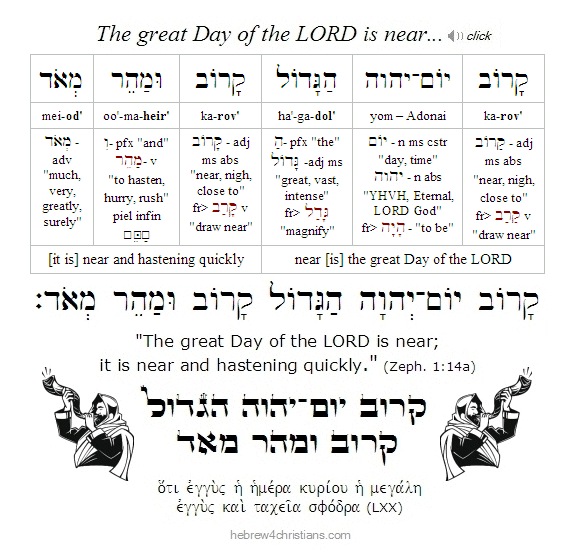 |
Although "Day of the LORD" (i.e., yom Adonai: יוֹם יְהוָה) is sometimes associated with Tishah B'Av and the catastrophic destruction of the Jewish Temple, the words of the prophets were only partially fulfilled, and there awaits another Day coming when God will terribly shake the entire earth (Isa. 2:19). "For the great day of their wrath has come, and who can stand?" (Rev. 6:17). The prophet Malachi likewise says: "'Surely the day is coming; it will burn like a furnace. All the arrogant and every evildoer will be stubble, and that day that is coming will set them on fire,' says the LORD Almighty. 'Not a root or a branch will be left to them'" (Mal. 4:1). For those who are godless, the great Day of the LORD is a time of horrific judgment, but for those who belong to the LORD, it represents a day of victory and great blessing. Regarding that day the prophet Malachi said, "Then you will trample down the wicked; they will be ashes under the soles of your feet on the day when I do these things" (Mal. 4:3).
Ultimately the Great Tribulation period is restorative for Israel (sometimes called yissurim shel ahavah, or "the troubles of love"). The prophets wrote that Zion will go through labor and then give birth to children (Isa. 66:8). Thus the Vilna Gaon wrote that the geulah (national redemption) is something like rebirth of the nation of Israel. This accords with the prophetic fulfillment of Yom Kippur as the Day of Judgment and time of Israel's national conversion. In the verse from prophet Jeremiah regarding the "Time of Jacob's Trouble," it's vital to see the goal in mind -- "yet out of it he is saved" (וּמִמֶּנָּה יִוָּשֵׁעַ). When Yeshua returns to Zion, all Israel will be saved (Rom. 11:26). The sages note that childbirth is a time of radical transition and struggle for the baby -- from the time of relatively peaceful existence within the womb into the harsh light of day -- and therefore a similar transition between this world and the Messianic world to come is about to take place...
|
The Mark of Faith...
07.22.26 (Av 8, 5786) "For God so loved the world, that he gave his only begotten Son, that whoever believes in him would not perish, but have everlasting life...." Most of us are familiar with John 3:16, the great summary verse from the New Testament that explains the meaning of the redemption of Yeshua in light of the "bronze serpent" (נְחַשׁ נְחֹשֶׁת) that was lifted up upon a stake. When the people gazed upon the judged serpent they were delivered from the curse of death (see Num. 21:8-9). Yeshua explained to Nicodemus that just as that serpent was lifted up in judgment, so He would become accursed and lifted up, so that all who looked upon him in faith would live (John 3:14-16).
Now there is another "3:16" passage in Scripture that is powerful and relevant, especially for those who realize that the judgment of God is happening in our world today and yet seek comfort from the LORD during this dark time. The passage is from the Book of Malachi:
"Then those who feared the LORD spoke with each other, and the LORD listened to what they said. In His presence, a Scroll of Remembrance (סֵפֶר זִכָּרוֹן) was written to record the names of those who feared him and always thought about the honor of his Name. "They will be my people," says the LORD of Heaven's Armies (יְהוָה צְבָאוֹת). "On the day when I act in judgment, they will be my own special treasure. I will spare them as a father spares an obedient child. Then once more you shall see the distinction between the righteous and the wicked, between one who serves God and one who does not serve him.
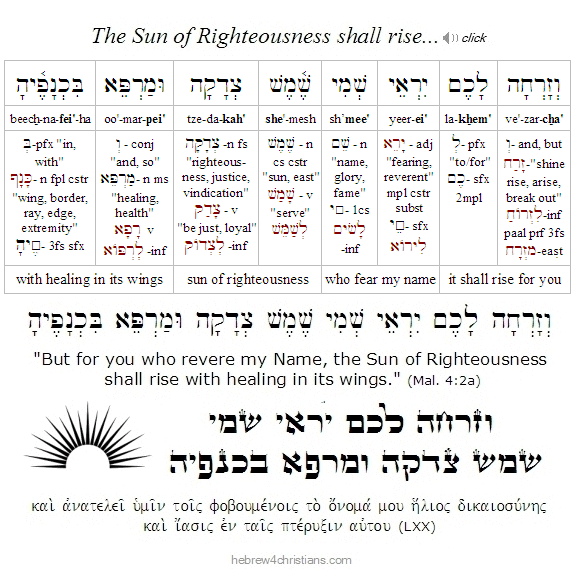
"For indeed the day is coming, burning like a furnace, and all the arrogant evildoers will be chaff. The coming day will burn them up," says the LORD of the Armies of Heaven. They will be consumed-- roots, branches, and all. But for you who fear my name, the Sun of Righteousness (שֶׁמֶשׁ צְדָקָה) will rise with healing in his wings. And you will go free, leaping with joy like calves let out to pasture" (Mal. 3:16-4:2).
Amen. The LORD watches over his remnant... In his vision of the fall of the Temple in Jerusalem due to the apostasy of the people, the prophet Ezekiel overheard the LORD commissioning a mysterious "man clothed in linen, with a writing case at his side, saying, "Pass through the city, through Jerusalem, and put a mark (lit. a Tav, תָּו, which resembled a cross) on the foreheads of the people who sigh and groan over all the abominations that are committed in it." But to the others he said in my hearing, "Pass through the city after him, and strike. Your eye shall not spare, and you shall show no pity... but touch no one on whom is the mark" (Ezek. 9:2-ff).
The Man clothed in linen is Yeshua our Lord (Dan. 10:5-6, Rev. 1:11-16) and God has set his seal of ownership upon those trusting in him. This is the "sign of faith," Alef-Tav (את). The Holy Spirit within our hearts serves as pledge and a witness of that which is to come (2 Cor. 1:22). God's solid foundation stands firm, sealed with this inscription: "The Lord knows those who are his," and "Let everyone who names the name of the Lord depart from iniquity" (2 Tim. 2:19). The day draws near, chaverim: Let us be ready to meet our King.
Hebrew Lesson
Malachi 4:2 reading (click for audio):
 |
Exile and Carelessness...
This evening marks Tishah B'Av, the Ninth day of the month of Av, an annual fast day of mourning that recalls the many tragedies that have befallen the Jewish people over the centuries....
07.22.26 (Av 8, 5786) The theme of the fragility of life is part of the sober message of Tishah B'Av. After all, the great symbol of God's manifest presence on the earth, the Holy Temple, went up in smoke, and the very place (i.e., ha-makom: הַמָּקוֹם) where the LORD chose to "put His Name" was utterly destroyed. As the people were taken captive and led into exile, the great vision of Zion appeared to be forever lost (Psalm 137:1-4).
The LORD had forewarned that exile, persecution and progressively worse punishments would befall the people if they would break faith with Him (see Lev. 26:14-46, which is called the "tochechah (תוֹכֵחָה)," or "rebuke"). But how could all this have happened? Notice that tochechah begins with the phrase ve'im loh tishme'u li (וְאִם־לא תִשְׁמְעוּ לִי), "if you do not listen to me" (Lev. 26:14), which recalls the Shema and the duty to love the Lord bekhol levavkha, "with all your heart." The sages point out that the refrain "if you walk contrary to me" (וַהֲלַכְתֶּם עִמִּי בְּקֶרִי) - which occurs several times during the rebuke - really means "if you walk carelessly (i.e., keri: קְרִי) with me." The commentator Rashi notes that the verb karah (קָרָה) means "to befall" or "to happen" and therefore suggests a sense of randomness (the related word mikreh [מִקְרֶה] means "coincidence"). If the people regarded the events of life as "random," then God would reciprocate by bringing senseless trouble into their lives. For this reason a careless attitude about the things of God is the first step toward apostasy...
It's been said that the opposite of love isn't hate, but rather indifference, and that explains why punishments came when the people "left their first love." If you walk carelessly with God, then you may be afflicted with "troubles of love" (i.e., yissurei ahavah: יִסּוּרֵי אַהֲבָה), that is, with various difficulties, intended to help you "come to your senses," to help you wake up, and to cause you return to the LORD for healing... This is a severe mercy of God.
The idea of tochechah is not simply something for ethnic Israel, of course, since the New Testament likewise warns us that God will punish those who likewise walk carelessly (i.e., keri: קְרִי) with Him. Have you forgotten the exhortation that addresses you as God's children? "My son, do not regard lightly (ὀλιγώρει) the discipline of the Lord, nor be weary by his reproof (תּוֹכֵחָה). For the Lord disciplines the one he loves, and reproves (יוֹכִיחַ) every child whom he receives" (Heb. 12:5-6; Prov. 3:11-12). The Lord charged the assembly at Ephesus that they had let go of their first love. Yeshua therefore urged them: "Remember from what high state you have fallen and repent! Do the deeds (ἔργα) you did at the first; if not, I will come to you and remove your menorah from its place – unless you repent" (Rev. 2:4-5). "God is not mocked (μυκτηρίζω - lit., "to turn up the nose at"), and what a man sows, he also reaps" (Gal. 6:7; Psalm 39:11). There are abiding consequences for the choices we make in our lives. "For you may be sure of this, that everyone who is sexually immoral or impure, or who is covetous (that is, an idolater), has no inheritance in the kingdom of Messiah and God. Let no one deceive you with empty words, for because of these things the wrath of God comes upon the sons of disobedience" (Eph. 5:6-7).
It is written, "Pain (or grief) handled in God's way produces a turning from sin to God (תְּשׁוּבָה) which leads to salvation (יְשׁוּעָה), and there is nothing to regret in that! But pain handled in the world's way produces only death" (2 Cor. 7:10). A common definition of insanity is doing the same thing over and over again and expecting different results. The world's "logic" for dealing with inner pain is to do things that will suppress it, thereby guaranteeing more pain. The only way out is through... During Tishah B'Av we weep over our sins that have brought us exile. The sages note that the word "weeping," i.e., בְּכִי, has the same numeric value as the word for "heart," i.e., לב. We weep from the heart, then, because the heart itself is what needs to be healed... Shalom and love to you.
Hebrew Lesson
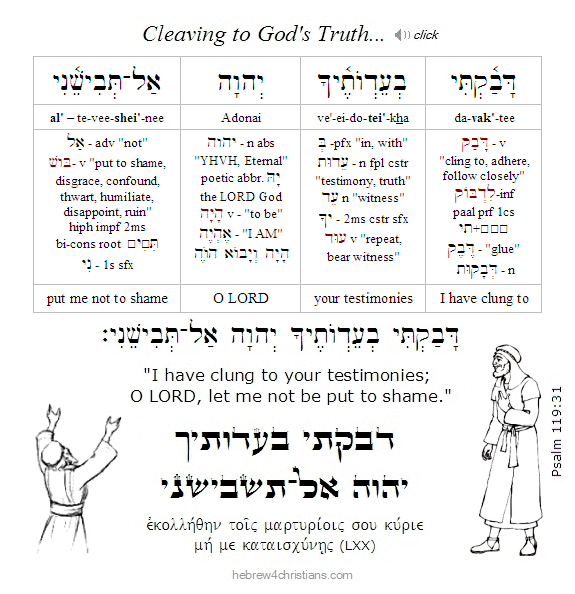
Psalm 119:31 Hebrew reading (click for audio):
 |
Knowing God Truly...
07.22.26 (Av 8, 5786) "Not everyone who says to me, 'Lord, Lord,' will enter the kingdom of heaven, but the one who does the will of my Father who is in heaven. On that day many will say to me, 'Lord, Lord, did we not prophesy in your name, and cast out demons in your name, and do many mighty works in your name?' And then will I declare to them, 'I never knew you; depart from me, you workers of lawlessness' (Matt. 7:21-23).
"I never knew you..." God forbid that we, though we profess faith in God, may be strangers to the truth, and that we deceived ourselves into living lie, a vanity, an everlasting loss...
That is the substance of Yeshua's warning... Not every one who says that he believes in him truly does so, and not every one who thinks he knows him does so truly (Matt. 7:21). We must undergo self-examination and ask God for revelation about our heart's true condition...
"You shall know them by their fruits." Truth is revealed by what a person does with his or her life, since this manifests who they are and what they really believe, far more than mere words. We can say a lot of things about what we may believe, but the test is whether we are doing the will of God - or not. Those who "enter the kingdom" are those who seek to do the will of God as the utmost passion of their existence.
Clearly none of this is about religion or religious "scrupulosity." It is far more serious than that. Yeshua warned that many people do various religious activities, "good deeds" such as feeding the poor, protesting social injustice, or ministering to the oppressed, and so on. Some may even teach or preach the very gospel message itself, but alas! all these may be outsiders who break the inmost law of truth by refusing to surrender to God.
In general, Jewish thought stresses the ideal of "doing faith" rather than simply saying you believe its truth. This is the idea of "mitzvah" by doing God's will (i.e., tikkun). As Abraham Heschel once said, it's a matter of deed more than creed... That is why the sages also say that faith is composed of acts of obedience to God's will. The 613 commandments given in the Torah reveal that every aspect of our lives is a matter of how we choose to live.
Hear Yeshua's words: "Many will say to me, 'Lord, Lord, didn't we prophesy in your name, and in your name cast out demons and do many powerful deeds?' (Matt. 7:22). But note the plural pronoun used in this self-reference. Why does the crowd speak on its behalf regarding what "they" have done to justify themselves? Are these people trusting in their religious associations or virtues to make them right with God? Do they identify themselves with some church or righteous cause and assume that should suffice to obtain favorable judgment from heaven? Be careful. Yeshua always speaks to the individual heart, not to groups, tribes, or political parties... "I never knew you" is spoken in the plural: Οὐδέποτε ἔγνων ὑμᾶς, that is, He is unknown except for the individual heart that trusts in Him...
But nonetheless, Yeshua is saying something more. In this admonitory vision of judgment there is a surprising twist. There is no indication that he denied that some people objectively did such patently "good" things. Many did prophesy (or teach) about God; many did cast out demons and do "powerful" or miraculous works. The essence of the judgment, however, is that despite all this, despite their ostensible allegiance to God, they were really practitioners of lawlessness, they were workers of iniquity, and therefore they were cast out: "I never knew you" (Matt. 7:23).
Yeshua had warned us before. He made the matter clear: "Enter by the narrow gate. For the gate is wide and the way is easy that leads to destruction, and those who enter by it are many. But the gate is narrow and the way is hard that leads to life, and those who find it are few" (Matt. 7:13-14). The "wide" gate is the way of the crowd, spacious enough to accommodate the masses. It's the way of open-ended "tolerance" coupled with the unthinking repudiation of moral convictions. The "paradox of tolerance" is that absolute tolerance is self-contradictory and ultimately leads to self-destruction. As Karl Popper said: "If everyone is tolerant of every idea, then intolerant ideas will emerge. Tolerant people will tolerate this intolerance, and the intolerant people will not tolerate the tolerant people."
The "narrow way," on the other hand, leads to life. It is not the popular way. It is not the way of the masses or the "politically correct" crowd. It is not amenable to the way of the jaded skeptic who has no faith in truth. It is not the path of the proud or arrogant. Nor is it the way of "religion" or social justice organizations. It does neither "jihad" nor affect compassion through worldly philanthropy. It is certainly not the way of the State nor political movements driven by mass appeals of the tyrants, demagogues, and their followers. Nor is it the way of the "institutional" churches. It is not a mass "Christian" movement. It is not concerned with teachings of theologians, or professors, or even preachers who are simply "interested" in the things of God but who never engage in raw personal struggle and agony of heart to do the will of God. No, the way of true surrender involves confessing your brokenness and poverty - your need for deliverance from yourself - and in humility coming before the light to ask God for the miracle of salvation, for "life-from-death" deliverance, resurrection, and newness of life...
Something more is therefore needed than merely thinking about God or doing various forms of good works, and that "something more" is having an honest and genuinely tested relationship Yeshua, knowing him in the severe and secret communion of your heart as you live whatever remains of your days in surrender to his will. What is more is the death of Yeshua given on your behalf and your regeneration. It is life "built upon the Rock" - the solid foundation of God's heart given in Christ - that will enable you to weather the inevitable storms of life without failing (Matt. 7:24-27).
So do you truly know the Lord, friend? Or better - does He really know you? Again, this does not concern abstract knowledge about God or the practices of religion, but the passion of the heart. It is the "knowledge" of knowing someone that you truly love. And that is the key: love. To know God is to know his love and to receive his passion. You simply cannot know Yeshua apart from knowing his love for you, for these are bound together as one.
God loves you despite yourself. It's not your love for God that saves you but God's love for you: ῾Ημεῖς ἀγαπῶμεν αὐτόν, ὅτι αὐτὸς πρῶτος ἠγάπησεν ἡμᾶς. "We love him because he first loves us" (1 John 4:19). We were born into this world alienated, lost, spiritually dead, and therefore unable to know the truth of God's heart. Our love (and knowledge) of God comes from God's love for us, and we receive that love by the miracle of his intervention in our lives. There is no other way. We do not ascend a "stairway to heaven" to find God, but he descends to the depths and rescues us from the shadowy world of exile and fear.
Yeshua was once asked: "What shall we do to do the works of God?" and he answered: "This is the work of God, that you believe in him whom he sent" (John 6:28-29). This, then, is the will of God; this is what the Lord requires from us; this is the key that opens the door to enter in the Kingdom: to believe and trust in God's personal love for us given in Yeshua and to live the truth of that love humbly and in all our ways.
If you forget the essence of your soul you may begin to lose sight of your reason for being, the "why" that underlies all other whys... This essence, however, is not discovered by means of reason, but by revelation -- it is a divine disclosure that awakens you to newness of life. Teshuvah is a return to the arms of your Heavenly Father...
Hebrew Lesson
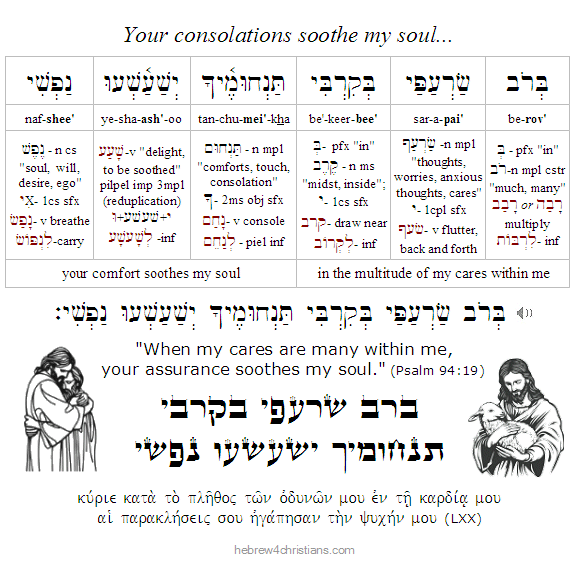
Psalm 94:19 reading (click for audio):
 |
Postscript:
There is irony in all this. Only those who are sick know they need a physician (Matt. 9:12), and a telltale sign of the unregenerated soul is that they believe that "God helps those who help themselves," i.e., we can "get there" (i.e., to heaven) by our own best efforts, etc. Again, God loves you despite yourself, and it's not your love for God that saves you but God's love for you...
Don't be afraid of Yeshua's words, O friend who is looking to Him alone for salvation and healing... The evidence that you are God's child is the spirit within you that cries out to "Abba" for help. "The saying is trustworthy and deserving of full acceptance, that Yeshua the Savior came into the world to save sinners, of whom I am the foremost" (1 Tim. 1:15). Amen. If we don't tremble over our sins, we will not understand our need for the power of his salvation.
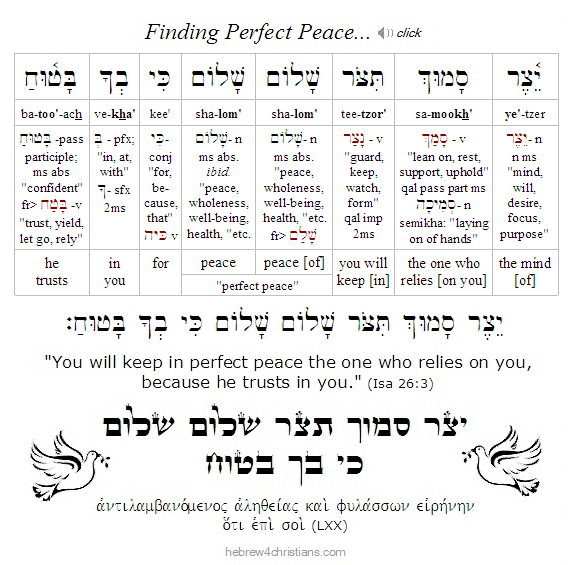
The Lord will keep you in perfect peace as you center your thoughts on Him. Amen.
Fire unto the Heart of Heaven...
"One who does teshuvah is as if he went to Jerusalem, rebuilt the Temple, erected the altar, and offered all the sacrifices ordained by the Torah. As it says, 'The sacrifices of God are a broken spirit; a broken and contrite heart, O God, You will not despise" – Leviticus Rabbah 7:2
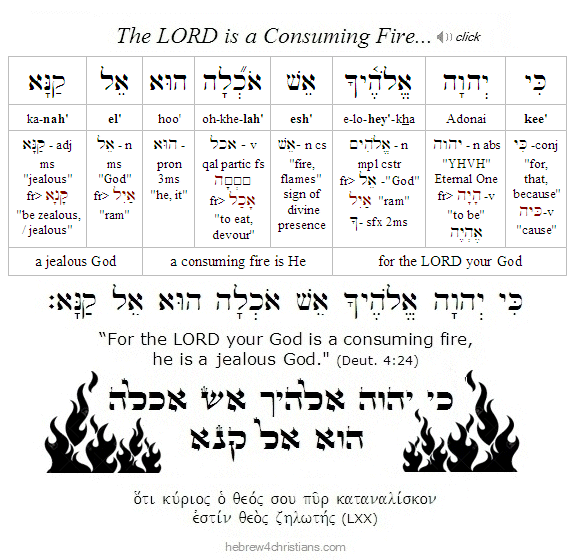
07.21.26 (Av 7, 5786) In our Torah for this week (Vaetchanan), Moses recalled the awesome revelation of the Torah at Sinai, describing how the mountain "burned with fire unto the heart of heaven" (בּעֵר בָּאֵשׁ עַד־לֵב הַשָּׁמַיִם) when the Ten Commandments were inscribed upon the two tablets of testimony (Deut. 4:11-13). In this connection the sages say that the tablets represented a heart, as it says, "write them (i.e., the commandments) on the tablet of your heart" (Prov. 3:3), and God's word is likened to a consuming fire that reveals the great passion of his heart for us (Jer. 23:29; Deut. 4:24).
Tragically, the two tablets were smashed after the people lost sight of the heart of heaven (i.e., lev ha'shamayim: לב השמים), and therefore God requires a broken heart - teshuvah - to behold his glory once again. Therefore we see that Yeshua died of a broken heart upon the cross for our return to God, when the fire of his passion burned unto the very heart of heaven, and in his self sacrifice (מסירת הנפש) we see the greater glory of God...
Hebrew Lesson
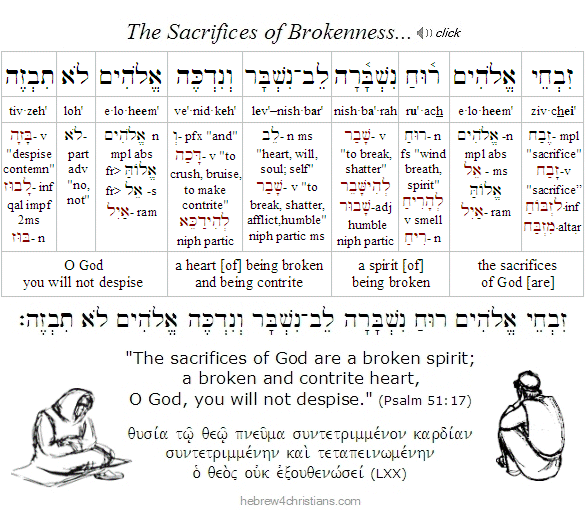
Psalm 51:17 reading (click):
 |
Turn us back to You...
07.21.26 (Av 7, 5786) The scroll of Lamentations, which is traditionally somberly chanted during the morning service of Tishah B'Av, is an acrostic (i.e., alphabetical) poem that begins with the Hebrew letter Aleph (א) in the word "eichah" (אֵיכָה), which also marks the Hebrew name of the book itself (i.e., megillat Eichah: מגילת איכה). It begins: "How (eichah) lonely sits the city that once was full of people; she has become as a widow!" (Lam. 1:1).
אֵיכָה יָשְׁבָה בָדָד הָעִיר רַבָּתִי עָם
הָיְתָה כְּאַלְמָנָה
ei·kha ya·she·vah ba·dad ha·eer ra·ba·tee am
ha·ye·tah ke·al·ma·nah
"How lonely sits the city that once was full of people,
she has become as a widow!"
(Lam. 1:1a)
The sages note that this word "how" (i.e., eichah) could also be read as "where are you?" (i.e., ayekah: אַיֶּכָּה), which was God's first word of intercession spoken to Adam after he broke covenant in the Garden (see Gen. 3:9). Note that God's question is often our own: "Where are you? Where are you, God? Are you here, in the midst of this tedious moment? Do you know my loneliness, my hunger and ache for love? Do you understand the troubles of my heart?" And yet how many people have faith that God's call is one of comfort and restoration? How many shrink back in shame, vainly trying to hide themselves from God?
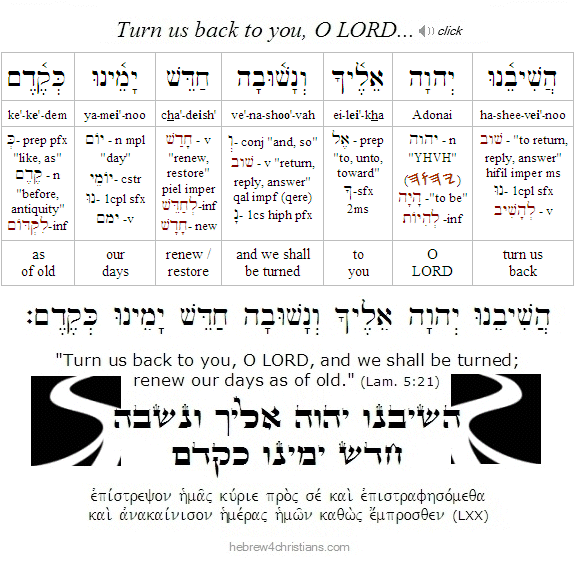
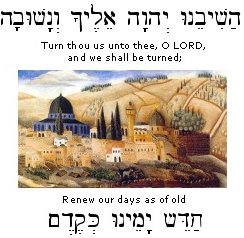
God uses our loneliness ("how lonely...") to search our hearts, asking each of us, ayekah – "Where are you?" Why have you turned away from me and chosen a state of exile? Return to me." Our sense of God's absence impels us to seek for him... God awaits our only possible response, "Hashivenu!" -- an imperative (urgent appeal) for the grace to repent: "Turn us back to you, O LORD, and we shall return; renew our days as of old" (Lam. 5:21).
Hebrew Lesson
Lamentations 5:21 Hebrew reading (click):
Our response to the questioning love of the LORD is called teshuvah ("turning [shuv] to God"). Teshuvah is an "answer" to a shelah (שְׁאֵלָה), or a question. God's love for us is the question, and our teshuvah – our turning of the heart toward Him – is the answer. As Jeremiah confessed in the hour of great trouble: "I called upon thy name, O LORD, from the depths of the pit; Thou hast heard my voice: hide not thine ear at my breathing, at my cry. Thou drewest near in the day that I called upon thee: thou saidst, Fear not" (Lam. 3:55-57).
Daily Perush Podcast:
God's Glory and Tishah B'Av...
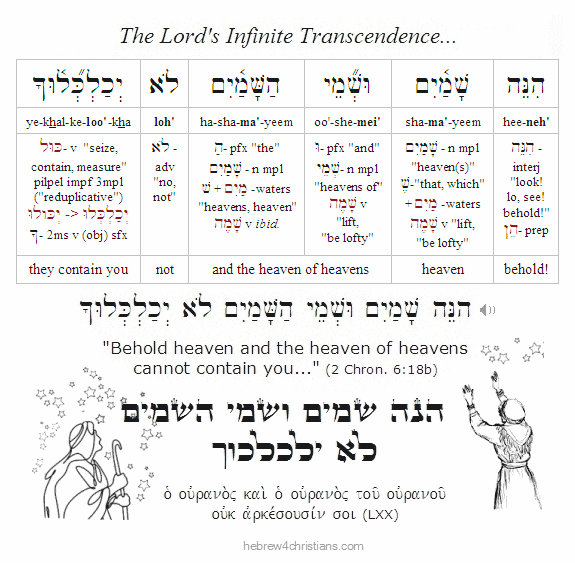
07.20.26 (Av 6, 5786) Shalom chaverim. In the following "Daily perush broadcast" (see link below) I provide exegesis and reading of a significant phrase in King Solomon's prayer at the dedication of the First Temple, namely, "Behold heaven and the heaven of heavens cannot contain you" (2 Chron. 6:18b), and then I take some to discuss the meaning of these words in relation to Tishah B'Av and the subsequent destruction of the Temple in Jerusalem.
Hebrew Lesson
2 Chron. 6:18b reading (click):
Additional Comments
During his earthly ministry, our Lord Yeshua referred to himself as "the True Temple of God" (המקדש האמיתי של אלוהים) that dwelt among us. The Mishkan (Tabernacle) was a temporary dwelling place as was the physical Bet Hamikdash (Temple). As Solomon said, God never could be contained in a house made of stone, cedar and gold (2 Chron. 6:18). These were shadows of a greater Substance that entirely embodied the Temple's purpose and essential truth (Col. 2:17).
Yeshua told the Pharisees of his day that he was greater than the Temple in Jerusalem (Matt. 12:6) and challenged them: "Destroy this Temple, and in three days I will raise it up" (John 2:19-21). Yeshua is the Shekhinah - the Presence of God - manifested in the temple of human form: "For in him the whole fullness of deity dwells bodily" (Col. 2:9, John 1:1,14).
As the Lamb of God, Yeshua is not only the Kodesh Hakodoshim (Holy of Holies) -- embodied within a human heart of flesh -- but also the substance and end of all sacrifice (Heb. 10:12). When his flesh was destroyed on the Cross, the curtain of the Temple was likewise rent asunder (Matt. 27:50). Access to the inner Presence of the LORD was thenceforth available to all who would come in faith. Yeshua is the Spirit, Source and End of the true Temple of God.
For more see: The Significance of Zion and the tragedy of Tishah B'Av
|
Why Tishah B'Av Matters...
Shalom chaverim. The following is related to the holiday of Tishah B'Av, which begins this coming Wednesday at sunset (July 22nd, this year). During this time let us remember Israel in our prayers, praying for the peace of Jerusalem and the coming of God's kingdom!
07.20.26 (Av 6, 5786) The holiday of Tishah B'Av recalls the tragic anniversary of the "sin of the spies" and God's subsequent decree that the generation redeemed from Egypt would die in exile from the promised land (Num. 14:26-37), though providentially it also marks the date of the destruction Temple in Jerusalem (both the first and second Temple) and the subsequent exile of the Jewish people. Because it remembers the loss of the vision of Zion, this date is observed with fasting, heartfelt lamentation and fervent calls for teshuvah (repentance).
Jerusalem (or Zion) is central to the Jewish heart since it represents all the promises of the Lord spoken by the Hebrew prophets to Israel... When religious Jews pray three times a day, they always turn toward the Holy City (i.e., mizrach: מזרח "east"). Synagogues likewise place the holy ark (the place where Torah scrolls are kept) on the wall closest to Jerusalem. Many observant Jews keep small section of an eastern wall of their house unpainted as a sign of mourning for the destruction of the Temple.
Every year we close the Passover Seder with the words, La-Shanah Haba'ah Bi Yerushalayim! ("Next year in Jerusalem"). These same words are invoked to conclude the holiest day of the Jewish year, Yom Kippur. Indeed Yeshua called Jerusalem the "City of the great King" (Psalm 48:2; Matt 5:35): It is the place where He was crucified, buried, resurrected, and from where He ascended to heaven. It is also the birthplace of the true "church" (כלה של משיח) and the focal point of humanity's eschatological future. At the Second Coming, Yeshua will physically return to Jerusalem to restore the throne of King David. Then all the New Covenant promises given to Israel will be fulfilled as the Kingdom of God is manifest upon the earth.
God loves Zion since it symbolizes His redemptive program in human history. In a sense, Zion is the heart of the Gospel message and the focal point of God's salvation in this world. Zion represents our eschatological future -- our home in olam haba (the world to come). Even the new heavens and earth will be called Jerusalem -- "Zion in her perfection" (Rev. 21).
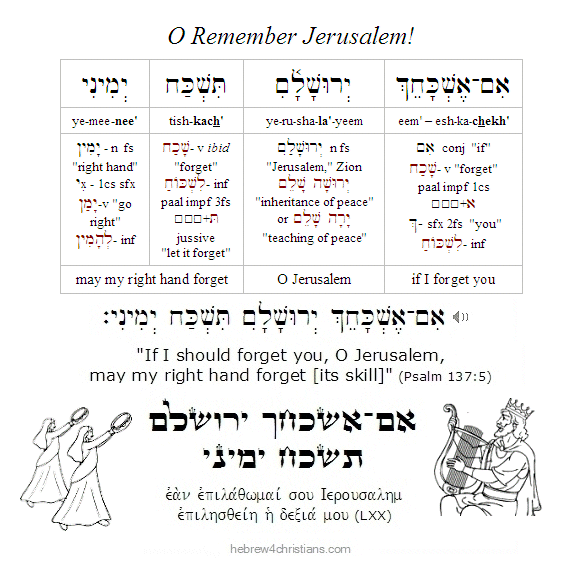
"This is what Adonai Tzeva'ot says: I am very jealous for Jerusalem and Zion, but I am very angry with the nations that feel secure" (Zech. 1:14-15). "For Zion's sake I will not keep silent, for Jerusalem's sake I will not remain quiet, till her righteousness shines out like the dawn, her salvation like a blazing torch" (Isa 62:1). "The builder of Jerusalem is God, the outcasts of Israel he will gather in... Praise God, O Jerusalem, laud your God, O Zion" (Psalm 147:2-12).
Hebrew Lesson
Psalm 137:5 Hebrew reading (click):
For more on this, see:
Return to your heart...
07.20.26 (Av 6, 5786) Although we pray for Israel and anticipate the coming of the Lord for us, the present state of this evil world has absolutely nothing to say regarding the life of faith in the LORD (יהוה)... Our duty is to live before the Divine Presence at all times -- regardless of whatever our circumstances. "In relationship to God one can not involve himself 'to a certain degree.' God is precisely the contradiction to all that is 'to a certain degree'" (Kierkegaard). A believer must be contemporary with Christ's presence on earth, since the Eternal entered historical time to offer a timeless relationship with all who would believe. Our Lord touches us because He connects with our hearts in the present hour...
So what do you truly believe? What do you love? How do you "relate" to life? For those who trust in the Presence of God in Yeshua, nothing "happens" randomly or at a distance from our Heavenly Father's care... We do not know Yeshua as some hoary figure of the past, nor as a remote hope of the heart, but in the "blood and guts" of our daily struggle -- in the midst of our connection with him as we journey in faith. God's love is not a secondhand gift... Yeshua asks each of us: 'Who do you say that I am?' (Mark 8:29) and awaits for us to "show up" in our faith to reach out to Him.
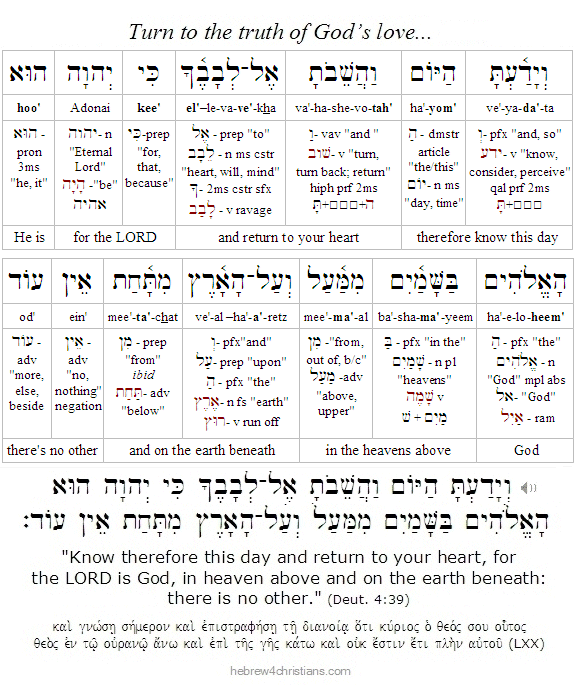
From our Torah portion this week (i.e., Vaetchanan) we read, "Know therefore today and return to your heart (והשׁבת אל־לבבך), for the LORD is God in heaven above and on the earth beneath; there is no other" (Deut. 4:39). Here again we see the centrality of the heart as the mode to encounter God (Luke 17:21). Savor the phrase, "Know therefore today and return to your heart..." It the heart that is the place of connection with God... As Yeshua said, "Behold, I stand at the door and knock. If anyone hears my voice and opens the door, I will come in to him and eat with him, and he with me" (Rev. 3:20). Today is the day to "return to your heart" and receive again God's love for your soul...
Hebrew Lesson
Deut 4:39 Hebrew reading (click):
 |
Holding Fast to God...
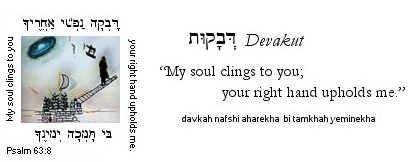
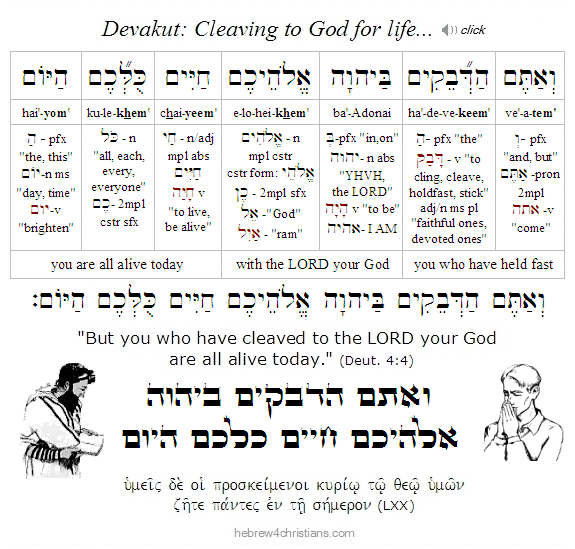
07.20.26 (Av 6, 5786) Our Torah portion this week, which is customarily read on the Sabbath following Tishah B'Av, says: "But you who have cleaved to the LORD your God are all alive today" (Deut. 4:4). The Hebrew word translated "cleave" is davak (דָּבַק), first used in the Torah to describe how a man would leave his father and mother to cleave to his wife so they would become "besar echad" (בָשָׂר אֶחָד), or "one flesh" (Gen. 2:24). The word is also used to describe how Ruth clung to Naomi (Ruth 1:14), how David pursued enemy armies (2 Sam. 23:10), how Solomon was attached to his foreign wives (1 Kings 11:2), how Job's bones stuck to his flesh (Job 19:20), how leviathan's scales were glued together (Job 41:17), how metal was welded together (Isa. 41:7), how the LORD cleaves to Israel (Jer. 13:11), and so on. It also is the word used to describe how Yeshua's tongue was so dried out that it stuck to his jaws as he agonized upon the cross (Psalm 22:15). Incidentally, in Modern Hebrew word for "glue" is devek (דֶבֶק), which also comes from the same root...
Another word that derives from davak is the noun form devakut (דְּבָקוּת), which means "cleaving" in devotion or attachment to God. Such cleaving to the LORD can be thought of as "stick-to-itiveness" or pertinacity, though it might better be understood as a form of clinging in dependency, surrender, and heart-desperation. So understood, devakut is a form of communion with and a reliance upon God for the blessing of life...
Cleaving to God is a day-to-day, moment-by-moment trusting of the heart. As Yeshua said: "Take therefore no thought for tomorrow: for tomorrow shall take thought for the things of itself. Sufficient for the day its own trouble" (Matt. 6:34). Live one day at a time. The LORD gives us daily bread (לֶחֶם חֻקֵּנוּ) so that we may persevere for this day. "For he is our God, and we are the people of his pasture and the sheep of his hand today -- if you hear his voice" (Psalm 95:7). Today, if you hear his voice, do not harden your heart (Heb. 3:15). "Take care, brothers, lest there be in any of you an evil, unbelieving heart, leading you to fall away from the living God, but encourage one another every day, as long as it is called "today," so that none of you may be hardened by the deceitfulness of sin" (Heb. 3:12-13).
Hebrew Lesson
Deut. 4:4 reading (click for audio):
Shavuah Tov Podcast:
Parashat Vaetchanan...
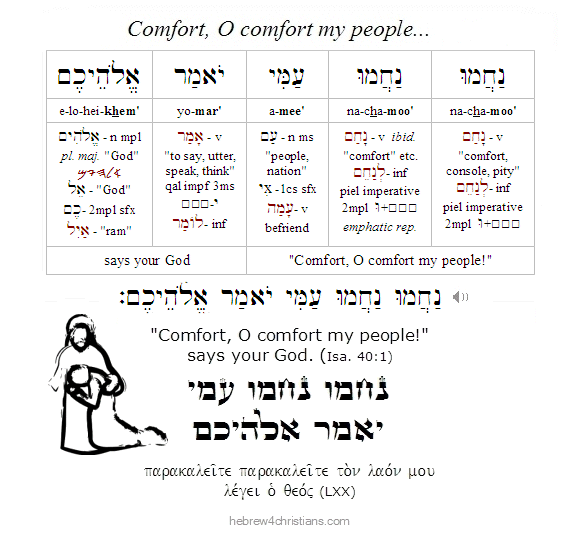
07.19.26 (Av 5, 5786) As I mentioned below, the Torah reading for this week is always read on the Sabbath that immediately follows the somber holiday of Tishah B'Av (תשעה באב). In Jewish tradition, this special Sabbath is called "Shabbat Nachamu" (שַׁבַּת נַחֲמו), "the Sabbath of Comfort" and assigned the prophetic portion from the Book of Isaiah that begins with the famous phrase: נַחֲמוּ נַחֲמוּ עַמִּי - Nachamu, Nachamu ami - "Comfort, O comfort ye, my people..." (Isa. 40:1). With the advent of this special Sabbath, we have just seven weeks to prepare for the new year (i.e, Yom Teruah or "Rosh Hashanah") and the High Holidays - a "jubilee" season that heralds the return of Yeshua.
Hebrew Lesson
Isaiah 40:1 reading (click for audio):
Va'etchanan: Moses' Plea...
Our Torah reading for this week, parashat Vaetchanan, is always read on the Sabbath immediately following Tishah B'Av, called Shabbat "Nachamu", or "the Sabbath of Comfort."
07.19.26 (Av 5, 5786) This week we will study parashat Vaetchanan (פרשת ואתחנן), a rich Torah portion that includes some of the most foundational texts of the Jewish Scriptures, including the Ten Commandments, the Shema (the duty to love God and study His Torah), as well as the commandments of tefillin and mezuzot. In addition, in this portion Moses predicted the worldwide exile and the eventual redemption of the Jewish people in acharit hayamim (the prophesied "End of Days").
The Torah portion begins with Moses' plea to the LORD to be allowed entry into the Promised Land, despite God's earlier decree to the contrary (see Num. 20:8-12; 27:12-14). The Hebrew word va'etchanan (וָאֶתְחַנַּן) comes from the verb chanan (חָנַן), which means to beseech or implore. It derives from the noun chen (חֵן), grace, implying that the supplication appeals to God's favor, not to any idea of personal merit (in Jewish tradition, tachanun (תַּחֲנוּן) are prayers recited after the Amidah for God's grace and mercy). Moses was asking God to show him grace by reversing the decree that forbade him to enter the Promised Land.
Hebrew Lesson
Deut:3:23 reading (click for audio):
In addition to the weekly Torah reading, this week we will remember Tishah B'Av, a solemn holiday that recalls the many tragedies that have befallen the Jewish people over the millennia, including the destruction of the Holy Temple and the diaspora, among other things. Tishah B'Av occurs on Wednesday, July 22nd at sunset this year.
Following Tishah B'Av, on the 15th day of the month of Av, we will also observe chag ha-ahavah (חַג הָאַהֲבָה), or "the holiday of love." Since it marks the "last" festival of the Jewish year, prophetically the 15th of Av (called Tu B'Av) pictures our marriage to the Lamb of God (Seh Elohim), the LORD Yeshua our beloved Messiah. On a soon-coming day those who belong to the LORD and are faithful to follow His ways will be blessed with the unspeakable joy of an eternally intimate relationship with Him. This is heaven itself - to be in the Presence of the LORD and to be regarded as His beloved (Rev. 19:6-9). Maranatha.
His Righteous Judgment...
As I've mentioned earlier this week, the Book of Deuteronomy is read during the season of Tishah B'Av to emphasize our need to be vigilant and to repent... Shabbat Shalom chaverim! - John
07.17.26 (Av 3, 5786) The Torah teaches that because of the Sin of the Spies, the entire generation of Israelites rescued from Egypt was sentenced to die in the desert. According to the Midrash Eichah Rabbah, every year until the fortieth year (after the Exodus), on the eve of the Ninth of Av, Moses would command the people, "Go out and dig," and the people would leave the camp, dig graves, and sleep in them overnight. The following morning a messenger would proclaim, "Let the living separate from the dead!" Fifteen thousand would die that very night, but the survivors would return to the camp for another year.
This occurred year after year, but in the fortieth year no one died. Since they thought they might have miscalculated the days, they slept in their graves an additional night. This went on for five nights until the fifteenth of Av, when they saw the full moon, realized that there calculations were correct, and rejoiced that no more of the first generation would die. They subsequently declared Tu B'Av a day of celebration. The "desert generation" had finally died off and the new generation was finally ready to enter the land!
Moses knew that he could not go with the Jews into the Promised Land because of his sin at Meribah-Kadesh (see Num. 20:10-13, Deut. 3:23-28). He therefore was aware that he had little time left to exhort the next generation before he died. The book of Deuteronomy therefore records Moses' final messages to the Jewish people with the tone of a farewell discourse. Indeed, unlike the previous books of Torah, the speaker in Deuteronomy is Moses himself, and even the recounting of various laws and ordinances are incidentally recorded as part of the addresses he gave.
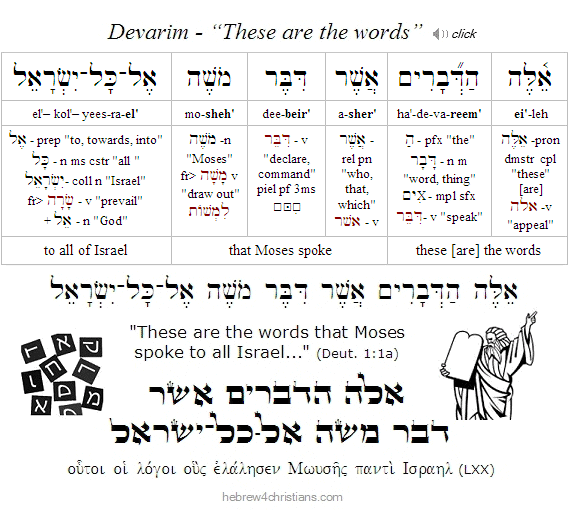
The book of Deuteronomy opens with the Israelites in the land of Moab, just east of the Jordan river, shortly before they would enter the Promised Land. It begins, "These are the words that Moses spoke to all of Israel" / אֵלֶּה הַדְּבָרִים אֲשֶׁר דִּבֶּר משֶׁה אֶל־כָּל־יִשְׂרָאֵל (Deut. 1:1). Two things are important to note at the outset. First, the book begins with the statement that these are the words of Moses rather than the continuation of the historical narrative of the Torah (which essentially ended with the Book of Numbers). Grammatically, it begins with the word eleh (אֵלֶּה, "these") rather than v'eleh (וְאֵלֶּה, "and these"), and this indicates that the book should be regarded as its own entity. In a sense, Deuteronomy functions as Moses' commentary on the Torah, giving voice to his 40 years of experience as the leader of Israel. Second, Moses' words were addressed the children of the original Exodus generation. As already mentioned, the original generation was decreed to die out in the desert because of their unbelief. And since Moses knew he likewise would soon die, he sought to inspire the new generation of Israel to go forward and take possession of the promise of Zion. Since the first generation was disqualified because of their lack of faith, Moses' summary of the Torah's message focused on the importance of trusting and obeying the LORD. Moses emphasized the importance of cheshbon ha-nefesh (חֶשְׁבּוֹן הַנֶּפֶשׁ, "soul searching") in order to help the Jews to take possession of the promises of God.
Various commentators regard the Book of Deuteronomy as Moses' final warning to Israel in light of their repeated failures and setbacks. Some (primarily Christian) commentators even go so far as to say that the book represents an indictment against the Jewish people that warrants regarding them as a cursed people. (This is essentially the odious doctrine of "replacement theology" that denies ethnic Israel has a future and a hope in God's plan of salvation.) Even many Jewish commentators, among them Rashi, seem to focus on Moses' rebuke (i.e., tochechah: תוֹכֵחָה) of Israel and regard the book in a negative light. Because of this, it should be stressed at the outset that Moses' correction of Israel - including his review of the unseemly history of the desert generation - was primarily intended to remind the Jews of their high calling, their new identity, and their preciousness as God's people. As will be seen, Moses wanted Israel to remember its identity as am segulah (עַם סְגֻלָּה), God's "treasured possession among all peoples" (Exod. 19:5). Moses' admonition (מוּסָר) functions more like the plea of a father to his children to walk in a manner that is worthy of his name than a stinging rebuke of the sins of his children. "My son, despise not the discipline (musar) of the Lord; neither be weary of his correction ( tochechah). For whom the Lord loves he corrects; even as a father the son in whom he delights" (Prov. 3:11; cp. Heb. 12:5-6). Therefore we read, "Know then in your heart that as a man disciplines his son (כַּאֲשֶׁר יְיַסֵּר אִישׁ אֶת־בְּנוֹ), the LORD your God disciplines you (הוה אֱלהֶיךָ מְיַסְּרֶךָּ)" (Deut. 8:5).
The Talmud (Kiddushin 70a) says, "Whoever declares others unfit (פּוֹסֵל, "posel") declares them unfit with his own blemish." This is similar to Yeshua's warning about hypocrisy: "Why do you see the speck that is in your brother's eye, but do not notice the log that is in your own?" (Matt. 7:3). In order to judge well, we must first "remove the log from our own eye" in order to see clearly (Matt. 7:5).
If you look for flaws or defects in others, you will find them (Prov. 11:27). "A bitter person makes himself miserable." In this connection, recall that when the Jews came to Marah, they "could not drink the water because it was bitter" (Exod. 15:23). The Hebrew, however, could be read, "they could not drink the water because they (i.e., the people) were bitter (כִּי מָרִים הֵם). The problem is often not "out there" but within the heart (Matt. 15:19-20). How we choose to see, in other words, says more about us than it does the external world. If you read the daily news and see only ugliness, you run the risk of becoming hardhearted. Your despair can eclipse the Presence of God....
As I have written about elsewhere, it is psychologically necessary to make various judgments in our lives. Some of these judgments concern matters of fact, some are preconscious assumptions we make, and some regard value judgments about the actions of other people. Kol Yisrael arevim zeh bazeh (כָּלּ יְִשְׂרָאֵל עֲרֵבִים זֶה בָּזֶה): "All Israel is responsible for one another" (Talmud Shavuot 39a). The Torah commands us to "reprove our neighbor" (תּוֹכֵחָה) because we love him as ourselves (Lev. 19:17-18). It's not a question, then, of whether we are to judge others (since we must), but rather how we will do so. Yeshua's statement, "Judge not that you be not judged" therefore cannot mean "seeing no evil" or refusing to correct our brothers and sisters. Indeed, showing indifference to other people's sin is itself a transgression. It is unloving to disregard the spiritual state of your neighbor. Whether we like it or not, we are our brother's keeper!
Instead of refusing to judge others (in the name of supposed tolerance), we are commanded judge people favorably by using a "good eye" (עַיִן טוֹבָה). As it is written in the Torah, "in righteousness judge your neighbor (בְּצֶדֶק תִּשְׁפּט עֲמִיתֶךָ)" (Lev. 19:15). Notice that the word translated "righteousness" is tzedek (צֶדֶק), a word that includes the heart motive of "charity" and love. We are commanded to give tzedakah (צְדָקָה, "charity") not just because it is "right," but it is right because it is based on God's love and care for others. Something is righteous, in other words, because it expresses the truth about God's love. We could read this commandment as "in love judge your neighbor." Our judgments should be based on compassion, empathy, and care for others - never as a verdict about someone's worth and status before God. We see with a redemptive eye, and that means seeing the potential of others and their inherent worth as God's children.

Similarly, Yeshua warned us not to judge by appearances, but to "judge with righteous (צֶדֶק) judgment" (John 7:24). In the context in which he spoke (i.e., teaching the crowd during the festival of Sukkot in Jerusalem), Yeshua justified healing someone on the Sabbath day as an example of understanding the "weightier matters" of the Torah. He appealed to the crowd to use their sense of charity (צְדָקָה) before coming to a decision. He was grieved that people often "turned off their hearts" by disregarding the pain of others (Mark 3:5). Yeshua warned us not to "judge by appearances," which was the very mistake Job's friends made when they regarded Job's suffering as deserved because of some hidden sin... Certainly such indifference to personal suffering is an implication of a merit-based religious system that was endorsed by some of the religious authorities of Yeshua's day. Even some of Yeshua's disciples mistakenly correlated suffering with sin (John 9:1-3).
Tractate Pirke Avot 1:6 says, dan kol ha-adam l'kaf zechut (דָּן כָּל הָאָדָם לְכַּף זְכוּת), literally, "judge every man with the hand of merit." In other words, judge other people favorably and always give them the benefit of the doubt. Extend kaf zechut - "the hand of merit" - to every person you meet. Use a "good eye" to see them in their best light. Do not focus on defects of character, but rather look for the good in the person. This will encourage them to live up to their real identity and give hope to them that change is possible.
We should look for the good of the other, even if the person is notoriously evil. Rabbi Nachman of Breslov taught that it is impossible that an evil person has not done some good, and this represents his or her spiritual potential. Love draws out the good in others, not judgment. Focus on the good of others so that they might turn from despair and seek God.
This point is illustrated out by a story retold about a famous eastern European Jewish sage called the Chofetz Chaim (1838-1933). One day the saintly rabbi is said to have encountered a hardened ruffian at an inn. The man shouted roughly, drank whiskey, and approached the waitress inappropriately. Shocked at this man's behavior, the Chofetz Chaim prepared to correct the errant Jew. The innkeeper, fearing that harm would come to the rebbe, tried to dissuade him from intervening, explaining that the man's poor upbringing and the terrible suffering had made him incorrigible. Upon hearing this, the Chofetz Chaim approached the ruffian's table and greeted him warmly. He began to praise the man's service in the army and lamented his troubles and his lost opportunity to study Torah. "You've had a difficult life, but I see that you have never renounced your heritage. I envy the portion you will merit in the world to come!" Upon hearing this, the man began to shed burning tears of remorse and later became a sincere penitent.
We are to "master the art of seeing good in others." Soren Kierkegaard tells the story of two young portrait artists who both sought to capture the essence of beauty in their paintings. One artist looked high and low for the "perfect face of beauty" but never found it. Tragically, he later gave up painting and lived in despair. The other artist, however, simply painted every face he saw and found beauty in each one. Now which of the two mastered the art of seeing the good in others? Which of the two had a good eye?

If you find fault with others, you are a hypocrite; if you extend love to others, you will experience love in return. As you judge, so you will be judged; as you see others, so God you will be seen by God. "For with the measure you use it will be measured back to you" (Luke 6:38). This reciprocal principle of Kingdom life appears throughout Jesus' teaching. According to your faith, be it done unto you (Matt. 9:29). As you forgive, so you shall be forgiven (Matt. 6:14); as you judge, so you shall be judged (Matt. 7:2); as you show mercy, so you shall be shown mercy (Matt. 5:7); as you give unto others, so it shall be given unto you (Luke 6:38). This "as principle" works the other way around, too: "Whoever diligently seeks good seeks favor, but evil comes to him who searches for it" (Prov. 11:27).
Just before Moses began his reproof of Israel, he declared his love and faith in the people. "The LORD your God has multiplied you until you are today as numerous as the stars in the sky (כְּכוֹכְבֵי הַשָּׁמַיִם). May the LORD, the God of your fathers, make you a thousand times more as you are (כָּכֶם), and bless you, as He promised you" (Deut. 1:10-11). Moses first brought up God's love for the Jews before he began his admonition. Notice he used the word kachem (כָּכֶם, "as you are") in this blessing. May the LORD multiply you - as you are - a thousand times! You are beloved; you are worthy: may the LORD bless you a thousand times over! (How different is this picture of Moses than the typical cartoon made of him by many in Christianity, who envision him smashing the tablets as if that were his "last word" on the subject of the Torah to Israel!)
Were the people perfect then? Obviously not, as would be clear through Moses' later admonition to them. Nonetheless, Moses used a "good eye" to see their potential as God's chosen people. Here was this ragtag group of of desert wanderers, descendants of slaves from the "house of slavery," whom the LORD God Almighty personally redeemed to be His own treasured possession. Despite their failures in the past and all that went before, Moses reminded them that they were esteemed as mamlechet kohanim v'goy kadosh (מַמְלֶכֶת כּהֲנִים וְגוֹי קָדוֹש), a "kingdom of priests and a holy people" (Exod. 19:6).
Moses' approach gives us insight about how we might correct the people we truly love. Often people become defensive when they are criticized and stop listening. Adding sincere praise and encouragement helps them open up to our message, since it is grounded in a sense of respect and value for their well-being. God thinks highly of the Jewish people, and that is the very first thing to be heard. God greatly esteems us, too. Despite the fact that we are sinners, God truly loves us. He considers us worthy to be saved. Again, why else did Yeshua suffer and die on the cross if God did not value our lives so much?
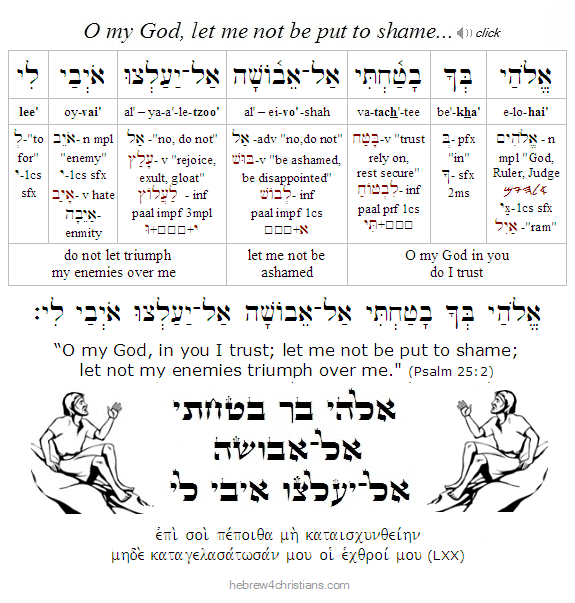
Shame is never the goal of the Torah. As King David prayed: Elohai bekha vatachti; al-avoshah (אֱלהַי בְּךָ בָטַחְתִּי אַל־אֵבוֹשָׁה): "My God, I trust in you; let me not be ashamed" (Psalm 25:2). Some people use the idea of God's "law" as a sort of club to hammer a sense of guilt upon the soul. They insist that man is "totally depraved" and under God's death sentence. Such people then hope to explain the good news of the gospel to escape God's righteous wrath for sin. These people, perhaps well-meaning, forget that the LORD is "near" - karov- to the brokenhearted. This adverb means "close enough to touch." The same root is used for the word korban (קָרְבָּן), an offering that draws us near to God, as well as karov (קָרוֹב), a near kinsman. In other words, God's desire has always been for people to draw near to Him, and He has always provided a way for people to do so -- even those who lived under the terms of the Sinai Covenant.
Guilt (אַשְׁמָה) is an objective state of being sinful that may or may not be accompanied by feelings of remorse, but shame (בּוּשָׁה), at least in its toxic sense, is a state of soul that regards itself as fundamentally flawed, inadequate, and essentially unlovable. God does not want us to grovel in self-disgust or live in constant fear of His judgment. He does not want us to hate ourselves or to regard ourselves as unlovable. As His creation, He loves us and finds us of value and worth. Why else would he have given His Son up to ransom us from sin and death? Like a parent who loves his child but wants to correct him by saying, "this doesn't become you," so God wants us to remember who we really are. He wants us to "walk in love" as His "dear children of light" (Eph. 5:8). God's correction is meant to form His character within us, and this first must begin with our assurance of our value, dignity, and worth in His eyes.
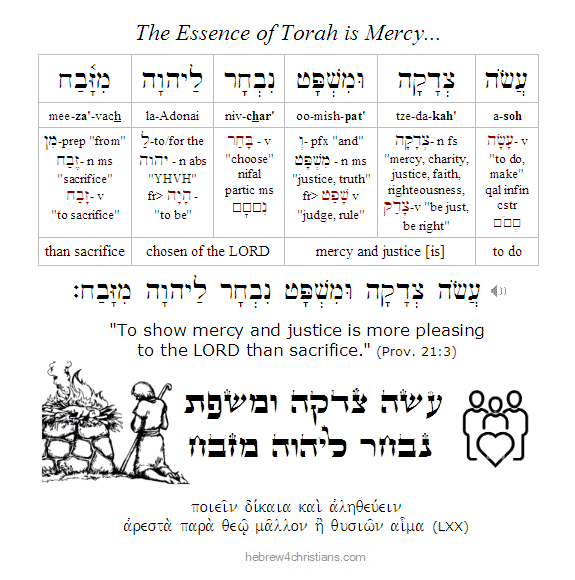
We are commanded to judge with tzedakah, with love as our underlying assumption. If God so commands us, surely we can trust that He likewise judges us this way. God's love is his essence - "God is love" (ὁ θεὸς ἀγάπη ἐστίν) - and He regards you as worthy to receive His love and blessing. He loves you b'ahavat olam - with "an everlasting love" (אַהֲבַת עוֹלָם), and therefore in chesed he draws you to Himself (Jer. 31:3). Why else would Yeshua die on the cross unless He expressed God's desire to judge others favorably?
 |
Be encouraged, chaverim. You are "fearfully and wonderfully made" and you have a future and a hope in the world to come (Jer. 29:11). "There is no fear in love, but perfect love casts out fear. For fear has to do with punishment, and whoever fears has not been perfected in love" (1 John 4:18). Keep hope. God's love never fails (1 Cor. 13:8).
Harden not your heart...
07.17.26 (Av 3, 5786) Our Torah portion this week describes how God hardened the heart of Sihon, king of Chesbon, in order to bring about his destruction (Deut. 2:30). Like the Pharaoh who stubbornly refused to heed the message of God's salvation, the LORD "hardened Sihon's spirit" (כִּי־הִקְשָׁה יהוה אֱלהֶיךָ אֶת־רוּחוֹ) so that he would not yield to the purposes and plans of God. Notice that the Hebrew word translated "hardened" (i.e., hikshah) here is the same word used to describe how Pharaoh's hardness of heart caused the death of the firstborn in Egypt (Exod. 13:15). For more on this subject, see Parashat Bo: "Hardening of the Heart."
People who do not know God are described as those who "walk in the futility (ματαιότης) of their minds" (Eph. 4:17). "They are darkened in their understanding, alienated from the life of God because of the ignorance (ἄγνοια) that is in them, due to their hardness of heart" (Eph. 4:18). This hardness of heart leads to a state of callousness or apathy (ἀπαλγέω, lit. the "inability to feel"), which is the very opposite of empathy or compassion (Eph. 4:19). Notice the progression of this process. People are darkened in their understanding and alienated from the life of God because of the ignorance that comes from having a hardened heart. Put the other way around, having a hardened heart leads to ignorance, alienation from the life of God, darkened understanding, and a "futile" mind... But notice that the heart of man is central (Prov. 4:23) because it determines the "issues of life." It is the heart (לֵבָב), or the "inner man," that determines what to acknowledge and what to ignore (i.e., ignore+ance). Indeed, salvation itself is a matter of believing the truth of the gospel message from the heart (Rom. 10:9).
A heart that is insensitive, indifferent, unfeeling, and callous toward the needs of others is regarded as "hard." Both Pharaoh and Sihon refused to empathize with the suffering of the Jewish people and thereby they became enshrouded in darkness. The darkness within them led to cruelty which further alienated them from the life of God due to their willful ignorance.
Sometimes hardness of heart comes as a result of living in a fallen world. Many people live with abiding "scar tissue" that surrounds their heart, making them feel numb and unwilling to open up and trust others. Their affections have become disordered and their ego rationalizes blaming others or seeking various forms of entitlement. "Turning off your heart" can mean suppressing any positive regard for others (empathy) while nurturing anger and self-righteousness, or it may mean withdrawing from others as a lifeless shell (both approaches vainly attempt to defend the heart from hurt). Although Yeshua always showed great compassion, especially to the wounded and broken in spirit (Isa. 42:3), He regularly condemned the "hardness of heart" ("sclero-cardia," σκληροκαρδία) of the self-righteous and religious types who were opposed his work of healing and love. Such indifference toward the suffering of others caused Yeshua to feel grief (Mark 3:5). Did not the Torah explicitly state: לא תְאַמֵּץ אֶת־לְבָבְךָ / "you shall not harden your heart" against your poor brother (Deut. 15:7)? How much more should a man not "put away" his wife? Moses was forced to "change" the original intent of the Torah regarding the question of divorce as a concession to the hardheartedness of sinful men (Matt. 19:3-9).
Perhaps the telltale sign of having a hard heart is the refusal to listen (i.e., obey) God's word. The LORD said to the prophet Ezekiel: "But the house of Israel will not be willing to listen to you, for they are not willing to listen to me: because all the house of Israel have a "strong forehead" (חִזְקֵי־מֵצַח) and a "hard heart" (קְשֵׁי־לֵב) (Ezek. 3:7, Cp. Jer. 5:23; 7:24). A hard heart has a form of "sclerosis" that makes it closed off and impermeable to love from others, and especially from God. Scripture uses various images to picture this condition, including a "heart of stone" (Ezek. 36:26, Zech. 7:12), an "uncircumcised heart" (Jer. 9:26), a "stiff neck" (Deut. 31:27), and so on. Stubbornness is really a form of idolatry, an exaltation of self-will that refuses to surrender to God.
For example, in the aftermath of the grievous Sin of the Golden Calf, the LORD threatened to wipe out the Jews because they were am k'she oref (עַם־קְשֵׁה־ערֶף), a "stiff-necked people" (Exod. 32:9). Various explanations for this term have been given, including the medieval commentator Sforno's description that a "stiff necked person" is someone who mulishly refuses to "move his head" and listen to those attempting to guide and help him. The neck, after all, is the "corridor" between the head and the heart, and having a "stiff neck" suggests an inflexible way of thinking and feeling... The rebels who enticed Aaron to create the golden calf were certainly "stiff necked" and obstinate. Despite witnessing the great miracles of the Exodus and experiencing the awesome revelation at Sinai, they obstinately insisted that Aaron make them "gods" that would return them to the "fleshpots of Egypt." Now that's some kind of chutzpah!
Later, Moses appealed to the people to "circumcise the foreskin of your heart, and be no more stiff-necked'" (Deut. 10:16). This metaphor pictures removing a hard, outer covering so that the heart is "opened up" to feel once again. God wants us to experience compassion (com+passion: "feeling-with") and sympathy for other people's suffering... Heart circumcision represents a radical turning away from the insular realm of the self toward the emotional realm of others and God. The LORD wants us to open our hearts to the needs of other people in our lives. Indeed, the "law of the Messiah" (תּוֹרַת הַמָּשִׁיחַ) is to bear one another's burdens (Gal. 6:2).
Can believers in Yeshua have hard hearts? Yes, unfortunately, they can... When the disciples saw miracles, for example, they often did not understand because "their hearts were hardened" (Mark 6:52, 8:17). They had somehow "missed" the sense of awe, surprise, and wonder over the miraculous Presence of the LORD in their midst. They did not expect the miracles because their minds were made dull and unable to comprehend reality (John 12:40, Rom. 11:7, 2 Cor. 3:14, using the same Greek word, πωρόω). Yeshua linked this hardness to blindness, both physical and spiritual (John 12:40). Even after the resurrection, Yeshua rebuked his closest followers for their unbelief and hardness of heart (σκληροκαρδία), because they did not believe the testimony of Mary Magdalene and the other witnesses of His resurrection (Mark 16:11-14). The disciples somehow "forgot" Yeshua's repeated teaching that He must suffer, die, and be raised on the third day (Matt. 16:21; Luke 9:22).
Believers are furthermore warned not to become hardened (σκληρύνω) through the deceitfulness of sin (Heb. 3:13). Tolerance for sin causes the heart to become dull and deadened. Just as one mitzvah leads to another, so one sin leads to another... Allowing sin to go unchecked in your life (i.e., by "forgetting" to confess your sins) is to be under the influence of the "deceitfulness of sin" (ἀπάτῃ τῆς ἁμαρτίας). As Bonhoeffer wrote: "Silence in the face of evil is itself evil: God will not hold us guiltless. Not to speak is to speak. Not to act is to act."
In this sense, the deceitfulness of sin is really a form of self-deception (i.e., "fooling yourself"), since (by definition) sin requires the consent of the will to do its dirty work within the heart. When it comes to moral decisions, there really are no "accidental" sins. Can you imagine a man committing adultery and claiming that it was an "accident"? The deceitfulness of sin is also called the "lusts of deceit" (Eph. 4:22), from a Greek word (ἀπατάω) that means to be "cheated out" of something. Just as a hard heart refuses to see the miraculous Presence of God, so it refuses to see the danger of sin. Whether it disbelieves the miraculous in Yeshua or "winks at" the presence of sin, such hardness of heart inevitably leads to a sort of stupor or denial of reality. Such self-deception cheats you from living the life God calls you to live...
If we refuse to confess the truth about our inner condition to God in genuine humility, our correction may be prolonged through the process of further "hardening." Often we are not conscious of this process within ourselves, and then -- when we are made conscious -- we may find ourselves helpless to change our direction. This state of helplessness provides another opportunity for the heart to cry out to God for deliverance. If, however, we yet harden our hearts further, God may "give us over to a depraved mind" (ἀδόκιμος. lit. "tested to be found useless") that is no longer able to discern or resist the presence of evil (Rom. 1:28). This is a state of having an entirely dead heart and is the worst possible judgment from heaven. In this sense, the hardened heart is simply God's ratification of the will of the sinner. The sages wrote, "God leads men along a path which they themselves choose. If a man wants to be good, God leads him toward goodness; if he wants to travel an evil road, God helps him do that, too." According to their desires God rewards the wicked in this world and the righteous in the world to come. As C.S. Lewis once said, "There are only two kinds of people in the end: those who say to God, 'Thy will be done,' and those to whom God says, in the end, 'Thy will be done.'" "The heart of a man plans his way, and the LORD establishes his steps" / לֵב אָדָם יְחַשֵּׁב דַּרְכּוֹ וַיהוה יָכִין צַעֲדו (Prov. 16:9).
If we cry out to the LORD for salvation, He has promised to hear us (Rom. 10:13, Joel 2:32). The awareness that we are hardhearted and self-deceived can lead to a (blessed) sense of brokenness and despair -- i.e., to the realization that own self-sufficiency is futile and ultimately self-destructive. Turning to the LORD in despair of ourselves is a mark of humility. When we are emptied of ourselves, we are delivered from pride and self-deception and thereby enabled to truly ask for God's help... This is a miracle, since most of us have "a little Pharaoh inside," clamoring that we be the center of our universe and refusing to submit to the Presence of the LORD...
God wants us to have "soft" hearts that are malleable and subject to His touch and influence. Consider the Biblical analogy of a potter who works with clay (Isa. 64:8, Jer. 18:6). Hard clay is brittle and hard to work with, though soft clay can be molded and adapted for a variety of uses. Applied to our heart attitudes, soft clay represents being open and moveable, whereas hard clay represents being inflexible, intolerant, and so on. A "hard hearted" person is closed-minded, assured of his own righteousness, and unwilling to admit the possibility of being wrong. He is really a "fragile" soul who is often hidebound by traditions, unwilling to be corrected, and usually so driven by fear and suspicion that he is unable to look at other possibilities. When we find ourselves becoming rigid, inflexible, and intolerant, we may be demonstrating hardness of heart.
Hardness of heart is something all of us deal with, even those who are in an authentic relationship with Yeshua. After all, believers are commanded to "put off the old self with its practices" (Col. 3:9) and are repeatedly urged not to harden their hearts (μὴ σκληρύνητε τὰς καρδίας) through unbelief (Heb. 3:8,15, 4:7). May God's love help us keep our hearts soft and open toward others... May He give us a new heart, and put a new spirit within us. May He remove the heart of stone (לֵב הָאֶבֶן) from us and give us a heart of flesh (לֵב בָּשָׂר). May we be lev echad (לֵב אֶחָד) - "one heart" - with one another and with the Father (Ezek. 11:19). May we be so sensitized to the Presence of God that we detect the slightest touch from His hand upon us. Amen.
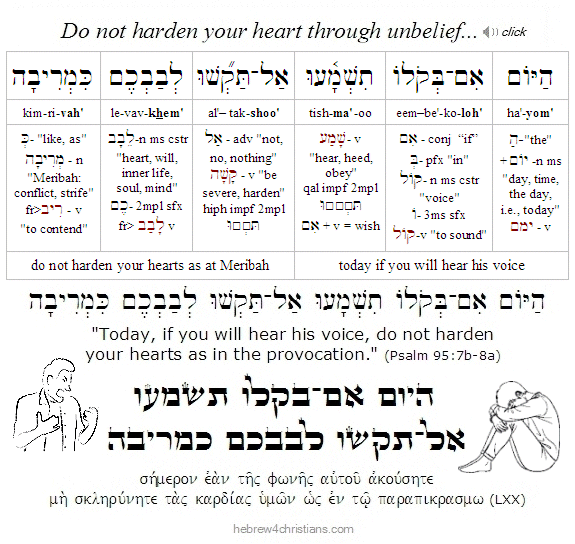 |
The Will to Believe...

07.17.26 (Av 3, 5786) From our Torah portion this week (i.e., Devarim) we read: "But you were not willing to ascend (וְלא אֲבִיתֶם לַעֲלת), but became bitter (מָרָה) against the Word of the LORD your God" (Deut. 1:26). Moses' rebuke was not that the people had been afraid to conquer the land as much as that they had lost heart and no longer desired to take hold of God's promise. The people gave up their dream; they forsook their hope; and they had lost the "devotion of their youth, their love as a bride, how they followed the LORD in the desert, into a land not sown" (Jer. 2:2). The people's failure was on two levels: First they lapsed in faith by abdicating trust in God's word, and second, they had lost the passion of their first love. In light of this, the sages say that the greater problem was that of losing heart, since the heart directs the will to believe in the miracle of God, or not...
Moses' rebuke of the people's heart condition recalls the sober warning Yeshua gave to the Ephesian believers: "I know your works, your toil and your patient endurance, and how you cannot bear with those who are evil, but have tested those who call themselves apostles and are not, and found them to be false. I know you are enduring patiently and bearing up for my name's sake, and you have not grown weary. But I have this against you, that you have abandoned the love you had at first. Remember therefore from where you have fallen; repent, and do the works you did at first. If not, I will come to you and remove your menorah from its place, unless you repent" (Rev. 2:2-5).
Likewise the author of the Book of Hebrews commented: "And to whom did he swear that they would not enter his rest, but to those who were disobedient? And with whom was he provoked for forty years? Was it not with those who sinned, whose bodies fell in the desert? So we see that they were unable to enter because of unbelief" (Heb. 3:17-19). The question of faith is essential: "It is a fearful thing to fall into the hands of the living God" (Heb. 10:31).
Hebrew Lesson
Deut. 4:24 Hebrew reading (click):
God's Love and Reproof...
The following entry is related to our Torah portion this week, parashat Devarim...
07.17.26 (Av 3, 5786) Just before Moses began his reproof of Israel, he declared his love and faith in the people: "The LORD your God has multiplied you until you are today as numerous as the stars in the sky (כְּכוֹכְבֵי הַשָּׁמַיִם). May the LORD, the God of your fathers, make you a thousand times more as you are (כָּכֶם), and bless you, as He promised you" (Deut. 1:10-11). Moses first brought up God's great love for the Jewish people before he began his admonition. Notice he used the word kachem (כָּכֶם, "as you are") in this blessing. May the LORD multiply you - as you are - a thousand times! You are beloved; you are worthy: may the LORD bless you a thousand times over!
Were these people perfect then? Obviously not, as would be clear through Moses' later admonition to them. Nonetheless, Moses used a "good eye" to see their potential as God's chosen people. Here was this ragtag group of of desert wanderers, descendants of slaves from the "house of slavery," whom the LORD God Almighty personally redeemed to be His own treasured possession. Despite their failures in the past and all that went before, Moses reminded them that they were esteemed as mamlechet kohanim v'goy kadosh (מַמְלֶכֶת כּהֲנִים וְגוֹי קָדוֹש), a "kingdom of priests and a holy people" (Exod. 19:6).
Moses' approach gives insight about how we might attempt to correct the people we truly love. Often people become defensive when they are criticized and stop listening. Adding sincere praise and encouragement helps them open up to our message, since it is grounded in a sense of respect and value for their well-being. God thinks highly of the Jewish people, and that is the very first thing to be heard. God greatly esteems us, too. Despite the fact that we are sinners, God truly loves us. He considers us worthy to be saved. Again, why else did Yeshua suffer and die on the cross if God did not value our lives so much?
The essence of the law is mercy, and shame is never the goal of the Torah. As King David prayed: Elohai bekha vatachti; al-avoshah (אֱלהַי בְּךָ בָטַחְתִּי אַל־אֵבוֹשָׁה): "My God, I trust in you; let me not be ashamed" (Psalm 25:2). Some people use the idea of God's "law" as a sort of club to hammer a sense of guilt upon the soul. They insist that man is "totally depraved" and under God's death sentence. Such people then hope to explain the good news of the gospel to escape God's righteous wrath for sin. These people, perhaps well-meaning, forget that the LORD is "near" - karov- to the brokenhearted. This adverb means "close enough to touch." The same root is used for the word korban (קָרְבָּן), an offering that draws us near to God, as well as karov (קָרוֹב), a near kinsman. In other words, God's desire has always been for people to draw near to Him, and He has always provided a way for people to do so -- even those who lived under the terms of the Sinai Covenant.
Guilt (אַשְׁמָה) is an objective state of being sinful that may or may not be accompanied by feelings of remorse, but shame (בּוּשָׁה), at least in its toxic sense, is a state of soul that regards itself as fundamentally flawed, inadequate, and essentially unlovable. God does not want us to grovel in self-disgust or live in constant fear of His judgment. He does not want us to hate ourselves or to regard ourselves as unlovable. On the contrary, as His creation, He loves us and finds us of value and worth. Why else would he have given His Son up to ransom us from sin and death? Like a parent who loves his child but wants to correct him by saying, "this doesn't become you," so God wants us to remember who we really are. He wants us to "walk in love" as His "dear children of light" (Eph. 5:8). God's correction is meant to form His character within us, and this first must begin with our assurance of our value, dignity, and worth in His eyes.
We are commanded to judge with tzedakah, with love as our underlying assumption. If God so commands us, surely we can trust that He likewise judges us this way. God's love is his essence - "God is love" (ὁ θεὸς ἀγάπη ἐστίν) - and He regards you as worthy to receive His love and blessing. He loves you b'ahavat olam - with "an everlasting love" (אַהֲבַת עוֹלָם), and therefore in chesed he draws you to Himself (Jer. 31:3). Why else would Yeshua die on the cross unless He expressed God's desire to judge others favorably?
Be encouraged, chaverim. As God's personal creation, you are "fearfully and wonderfully made" and you have a future and a hope in the world to come (Jer. 29:11). "There is no fear in love, but perfect love casts out fear. For fear has to do with punishment, and whoever fears has not been perfected in love" (1 John 4:18). Keep hope. God's love never fails (1 Cor. 13:8).
Hebrew Lesson
Psalm 25:2 reading (click for audio):
Anticipating Tishah B'Av...
The solemn holiday of Tishah B'Av begins July 22nd at sundown...
07.17.26 (Av 3, 5786) The sages of the Mishnah (Ta'anit 26) taught that five tragedies befell the Jewish people on Tishah B'Av (תשעה באב, or the "ninth [day] of [the month of] Av"). First, God's decree was issued that the generation that left Egypt during the Exodus would not enter the promised land (Num. 14:1-2; 14:23). Second, the First Temple was destroyed by Nebuchadnezzar II (נְבוּכַדְנֶאצַּר) in 586 BC according to prophecy (Jer. 27:6-8). Third, the second Temple was destroyed by the Romans in 70 AD, according to the prophecy of Yeshua (Matt. 24:1-2). Fourth, the last stronghold of the "Bar Kokhba" revolt was destroyed by Roman Emperor Hadrian in 135 AD, and fifth, the City of Jerusalem and the Temple Mount was "plowed under" exactly one year later (Jer. 26:18). Emperor Hadrian then sold all Jewish prisoners into slavery, forbade the teaching of the Torah, renamed the middle east "Palaestina," and dedicated the City of Jerusalem to the idol Jupiter as "Aelia Capitolina." Besides all this, other tragedies are also coincidental with Tishah B'Av, such as the expulsion of the Jews from England in 1290 and their expulsion from Spain in 1492. Some of the sages even date the beginning of WWI, when Germany declared war on Russia, to the Ninth of Av, and since WWI inevitably led to WWII, they also connect Tishah B'Av with the horrors of the Holocaust as well...
Because of all this Tishah B'Av is generally regarded as the saddest day of the Jewish year (even sadder than Yom Kippur), and the sages designated it as an annual day of mourning that recalls these many tragedies that have befallen the Jewish people over the centuries. It is a time for teshuvah, fasting, and special prayers. This year Tishah B'Av begins Wednesday, July 22nd at sundown and runs 25 hours until Thursday, July 23rd, one hour after sundown. The customs for observing the fast are similar to those of Yom Kippur.
It is customary to read Megillah Eicha (מגילה איכה), or the Book of Lamentations, during the Tishah B'Av evening service, since the scroll is an (acrostic) poem of lament prophetically written before the destruction of the First Temple. The scroll is chanted in a plaintive nusach (נוסח), as if lashon ha'kodesh, the holy tongue, weeps for the destruction of God's home.
Hebrew Lesson
Lamentations 2:13 reading (click for audio):
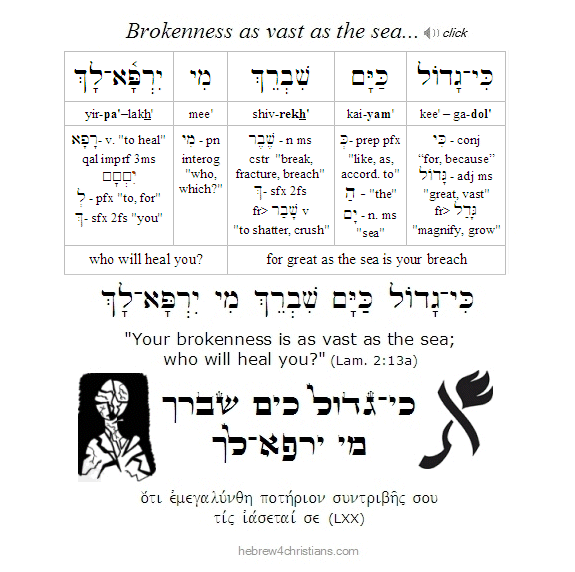 |
Tishah B'Av allows us to express heartfelt grief over the loss of Zion and therefore over the frailty of our human condition. During this time it is appropriate to grieve over our sins and to shed tears that attest to having lev nishbar ve'nidkeh (לֵב־נִשְׁבָּר וְנִדְכֶּה), a "broken and crushed heart" (Psalm 51:17). Indeed, during the entire "Three Weeks of Sorrow" we read selections from the prophets that forewarn of the coming destruction of the Temple (churban) and the subsequent exile of the Jewish people (galut). During this time of the year, we listen to the lamentations of the prophet Jeremiah crying out for our repentance...
During Tishah B'Av synagogue services, the lights are dimmed and the Aron Hakodesh (Holy Ark) is draped in black (in some synagogues the parochet (curtain) is removed as a sign of mourning). The decorations are removed from Torah scrolls. Congregants remove their leather shoes and do not greet each other. The cantor leads the prayers readings in a low, mournful voice, and the cantillation (chanting style) for the Scripture readings are set to elegiac, sorrowful melodies.
"Let everyone cry out to God and lift his heart up to him, as if he were hanging by a hair, and a tempest were raging to the very heart of heaven, and he were at a loss for what to do, and there were hardly time to cry out. It is a time when no counsel, indeed, can help a man and he has no refuge save to remain in his loneliness and lift his eyes and his heart up to God, and cry out to him. And this should be done at all times, for in the world a man is in great danger." - Martin Buber (Ten Rungs)
Whispers of the Heart...
07.17.26 (Av 3, 5786) From our Torah portion this week (i.e., Devarim) we read: "You were not willing to go up but rebelled (i.e., מָרָה, grew bitter) at the word of the LORD your God, and you whispered (תּרגנוּ) in your tents and said, 'Because the LORD hates us he has brought us out of the land of Egypt...'" (Deut. 1:26-27). We may decry the childish insolence of the people, we lament their lack of faith, and yet God was still speaking his heart to Israel...
The sages ask whether we can ever be justifiably angry at God, and answer that we can, because otherwise we could never love Him "bekhol levavkha," with all our heart (Deut. 6:5). Indeed, how can we claim to love God if we withhold the truth, lie to ourselves, and attempt to hide who we really are from Him? If you are angry at God, he already knows, so why the pretense? Being angry with God is part of being a real person in a real relationship with Him, and allowing yourself to express the truth of your heart to him is a sign of trust...
Hebrew Lesson
Psalm 139:4 reading (click):
Miracle of New Life...
The greatest need of our generation is to find authentic hope that life is worth living and to enter into a personal relationship with the Living God in Yeshua. This is the answer to all our suffering.
07.16.26 (Av 2, 5786) Only God can help us let go of the "self life" and to be set free from the painful tyranny of what we naturally are; only the LORD can truly save us from ourselves. The old nature is never "reformed" by religion but is put to death by a supernatural act of God, as it says: "I have been crucified (συνεσταύρωμαι) with Messiah; it is no longer "I" who live, but Messiah who lives in me. And the life "I" now live in the flesh "I" live by faith in the Son of God, who loved me and gave himself for me" (Gal. 2:20).
By faith we trust that we already have been crucified with him, just as by faith we trust that we already have newness of life, though all this is only "theoretical" unless and until the Spirit of God makes it real in our lives: "The wind blows where it wishes, and you hear its sound, but you do not know where it comes from or where it goes. So it is with everyone who is born of the Spirit" (John 3:8). Only the LORD can put a new heart within us; only God can make the new "I" walk in the flesh; only the Spirit can breathe upon dry bones raised from the dust to make them live (Ezek. 37:5).
We believe not only that Yeshua died as our substitute for sin - personally saving us from its penalty - but also that our old nature has died with him - delivering us from its power: "We know that our old self was crucified with him in order that the body of sin might be brought to nothing, so that we would no longer be enslaved to sin" (Rom. 6:6). "For as many of you as were baptized into Messiah have put on the Messiah" (Gal. 3:27) [by "baptism" think identification, not some ritual act]. May the LORD our God make the truth of what He has done for us alive and breathing freely within us -- by the power of his salvation in Yeshua!
Hebrew Lesson
Ezek. 36:26a Hebrew reading:
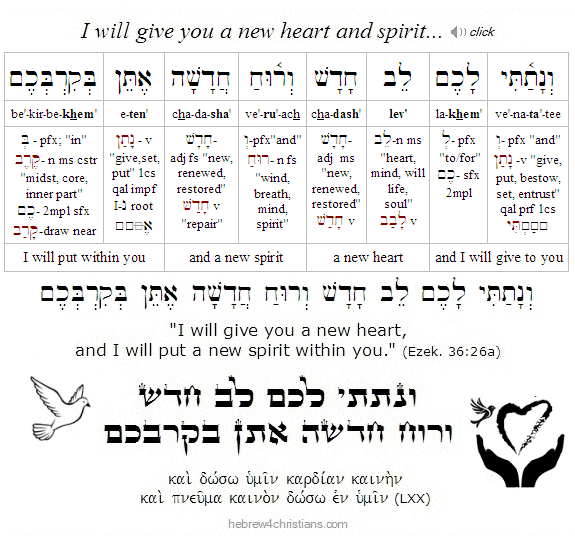 |
The Entreaty of Moses...
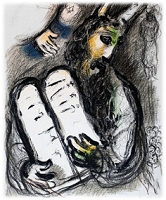
07.16.26 (Av 2, 5786) Various commentators regard "Sefer Devarim," or the Book of Deuteronomy, as Moses' final warning to Israel in light of their repeated failures and setbacks. Some (primarily Christian) commentators even go so far as to say that the book represents an indictment against the Jewish people that warrants regarding them as a God-forsaken people. (This is essentially the unsound doctrine of "replacement theology" that denies ethnic Israel has a future and a hope in God's plan of salvation.)
Many Jewish commentators, however, and among them the notable sage Rashi, seem to focus on Moses' rebuke (i.e., tochechah: תוֹכֵחָה) of Israel and tend to regard the book in a negative light. Because of this, it should be stressed at the outset that Moses' correction of Israel - including his review of the unseemly history of the desert generation - was primarily intended to remind the Jews of their high calling, their new identity, and their preciousness as God's people. Moses wanted the people of Israel to remember their identity as am segulah (עַם סְגֻלָּה), God's "treasured possession among all peoples" (Exod. 19:5).
Moses' admonition (i.e., musar: מוּסָר) functions more like the plea of a father to his children to walk in a manner that is worthy of his name than a stinging rebuke of the sins of his children. "My son, despise not the discipline (musar) of the Lord; neither be weary of his correction ( tochechah). For whom the Lord loves he corrects; even as a father the son in whom he delights" (Prov. 3:11; cp. Heb. 12:5-6). Therefore we read, "Know then in your heart that as a man disciplines his son (כַּאֲשֶׁר יְיַסֵּר אִישׁ אֶת־בְּנוֹ), the LORD your God disciplines you (הוה אֱלהֶיךָ מְיַסְּרֶךָּ)" (Deut. 8:5).
To underscore this point, notice that just before Moses began his reproof of Israel, he declared his love and faith in the people. "The LORD your God has multiplied you until you are today as numerous as the stars in the sky (כְּכוֹכְבֵי הַשָּׁמַיִם). May the LORD, the God of your fathers, make you a thousand times more as you are (כָּכֶם), and bless you, as He promised you" (Deut. 1:10-11).
Moses first brought up God's love for the Jews before he began his admonition. Notice he used the word kachem (כָּכֶם, "as you are") in this blessing. May the LORD multiply you - as you are - a thousand times! You are beloved; you are worthy: may the LORD bless you a thousand times over! (How different is this picture of Moses than the typical cartoon made of him by many who envision him smashing the tablets as if that were his "last word" on the subject of the Torah to Israel!)
Were the people perfect then? Obviously not, as would be clear through Moses' later admonition to them. Nonetheless, Moses used a "good eye" to see their potential as God's chosen people. Here was this ragtag group of desert wanderers, descendants of slaves from the "house of slavery," whom the LORD God Almighty personally redeemed to be His own treasured possession. Despite their failures in the past and all that went before, Moses reminded them that they were esteemed as mamlechet kohanim ve'goy kadosh (מַמְלֶכֶת כּהֲנִים וְגוֹי קָדוֹש), a "kingdom of priests and a holy people" (Exod. 19:6).
Hebrew Lesson
Psalm 94:12 Hebrew reading (click):
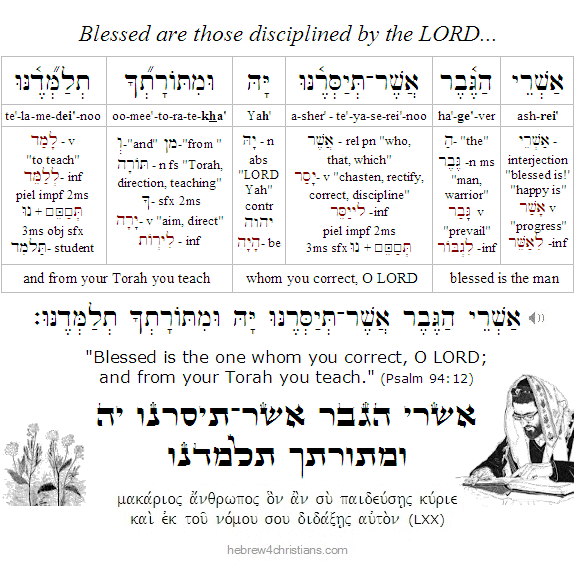 |
The Voice of our Words...
07.15.26 (Av 1, 5786) According to Jewish tradition, it was on Tishah B'Av (the Ninth of Av) when the people wept over the report of the spies, a lapse of faith so serious that it provoked God to decree that the very generation He redeemed from Egypt would die in the exile of the desert (see Num. 13-14). As Moses later recounted this tragic event, he said something peculiar: "The LORD heard the 'voice of your words' (קוֹל דְבַרִים) and was angry..." (Deut. 1:34). The grammar here is unusual, for the text could have simply said, "the LORD heard your words," but the Torah adds something else, the idea of "emotional tone," or the manner, the words were spoken... Sometimes it is not so much what you say that matters, but how you say it. Words of the heart are expressed more by tone, the "voice of the words," than by the words themselves...
The midrash says that when the spies returned after scouting the land, they testified that "the land is good" in a qualified or even an insincere manner. "Just look at this gigantic fruit we picked -- for gigantic people of that land who are invincible!" The words spoken by the spies were "true" in a sense, but their expression mediated a fearful attitude that rendered them untrue. Instead of saying "the land is good" - and affirming God's promise - their words were nuanced with doubt, and the "sound of their words" belied their testimony.
In themselves words are not "static" things but they live and move within a context to inform a common or shared sense of meaning. The grammar of "truth" assumes good will and correspondence between what is said and what is adjudged as real, "actual" or credible. When words are used deceptively, ambiguously, ironically, disingenuously, or without straightforward intent, however, then common sense does not obtain and the meaning shifts to "meta-linguistic" interpretation. With regard to God, however, the constellation of beliefs, assumptions, intent, and the emotional context is fully known whenever we communicate, as it is written: "There is not a word on my tongue but You, O LORD, know it altogether" (Psalm 139:4), and therefore He entirely understands our true intent -- or the "voice of our words."
In our Torah portion this week (i.e., Devarim) we read: "May he (i.e., the LORD) bless you as He said to you" - וִיבָרֵךְ אֶתְכֶם כַּאֲשֶׁר דִּבֶּר לָכֶם (Deut. 1:11), which the sages read as: "May he bless you as your speech is to you," suggesting that our language will mirror spiritual reality (Psalm 18:25-26; Prov. 23:7). And when we recite Shema, we do so bekhol levavkha (בְּכָל־לְבָבְךָ) - with all our heart, with all our soul, with all our might (Deut. 6:5). This is a cry from the heart that affirms God's truth. Our feelings are important and are meaningful, whether they are feelings of joy, gratitude, and so on, or feelings of doubt, despair, or fear. As Yeshua said: "Would that you were either cold or hot, but because you are lukewarm - neither hot nor cold - I will spew you out of my mouth" (Rev. 3:15-16).
It has been said that if you don't know how to say something, say it loudly... The heart has its own voice regardless of the words we are able to articulate. For instance, if you love someone, then really love them and abhor being halfhearted. Being hot or being cold is better then being tepid, because then you are being honest, you are speaking from the kishkas, and honesty will always evoke a genuine response from heaven...
Hebrew Lesson
Deuteronomy 1:34 reading (click):
Alive to His Presence...
To become sober is: to come to oneself in self-knowledge and before God as nothing before him, yet infinitely, unconditionally engaged." - Soren Kierkegaard
07.15.26 (Av 1, 5786) The essence of temptation is distraction. Sometimes it's not the obvious lusts and allurements of the world that tempt us, but something more sinister, namely the subtle process of being seduced away from what is most essential to our lives. God's truth should weigh upon our every thought and deed, but through various forms of distraction we lose sight of this until he is no longer a primary factor in our daily thinking.
The Hebrew word for "glory" (i.e., kavod: כָּבוֹד) implies "heaviness" and significance. It is of "grave" concern, and regarding the LORD implies fear, awe, respect, honor, and even dread. In some cases it can imply "excessiveness" or "immeasurability." This is what is meant by the "weight of glory": God has infinite worth and value, and we do not know Him as we might know various things in the universe, but as the Holy One (הקדוש), the most important being in our lives (and in any possible world). God is of no significance if he is not of utmost significance, or as C.S. Lewis said: "Christianity, if false, is of no importance, and if true, of infinite importance. The only thing it cannot be is moderately important."
How does the truth of God "weigh in" on your life? Is it a source of special awareness that guides your way, or is divine truth incidental to your thinking? Is God an "afterthought" or a starting point for your decisions? Do you "seek first" the kingdom of God? (Matt. 6:33). How much do you allow God to affect your daily thought life and speech? Is relationship with God the priority of your existence? (Deut. 6:5). Is God the "ultimate concern" of your life, or is God essentially "weightless" or insignificant regarding the course of your life?
The Commandment not to take the Name of the LORD "in vain" (see Exod. 20:7) implies that we must affirm the sanctity, meaning, significance, and worth of life itself. We must never live as though God does not exist, or, to state this positively, we must "set the LORD" always before us (Psalm 16:8). We must not waste our lives. It is therefore forbidden to ignore the miracle of existence, to scoff at the value of life, or to debase ourselves by refusing to receive the truth. We are to take every thought "captive" to the reality of the Messiah (2 Cor. 10:5). Everything belongs to God, and every moment that we have is beholden to Him...
Finding deliverance from profane thinking requires concentrated focus or "kavanah" (כַּוָנָּה). As it is written: "We destroy arguments and every lofty opinion raised against the knowledge of God, and take every thought captive to obey Messiah" (2 Cor. 5:10). We are instructed to "bring down reasonings" (λογισμοὺς καθαιροῦντες) and every high thing that is lifted up against the knowledge of God (κατὰ τῆς γνώσεως τοῦ θεου) and to bring every thought "as a captive" to the obedience (ὑπακοὴν, from ὑπό: by, under, + ἀκούω: hear, obey) of Messiah. We can do this negatively by fighting against evil thoughts and censoring the inner evil of our hearts, or we can do this positively by being "captivated" by the words and love of Yeshua, and often we have to do both. This is the deeper meaning of "profanity" - to deny reality, to live in willful ignorance, and to miss the wonder of God's presence. If we sanctify God in our hearts, we will be far less likely to use God's name in vain, of course.
God invites you to come to Him for relationship... Since the LORD is a Person, He wants to know you as a person. He is not interested in formulaic prayers, religious rituals, or your membership at a particular religious organization. God wants to renew your inmost thoughts and heart. Drawing near to God is God's way of drawing near to you... In other words, as you draw near to God, He will draw near and touch you (James 4:8; Psalm 145:18; Isa. 55:6). This is the way of transformation and healing for the depths of our lives.
Hebrew Lesson
Psalm 16:8 Hebrew reading:
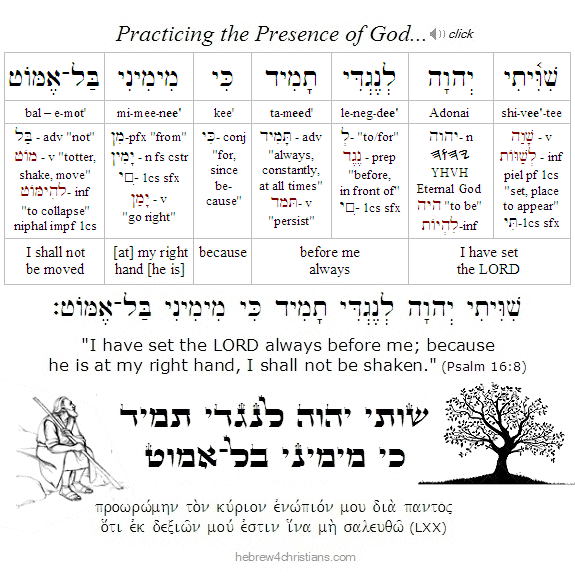 |
The Mind of Messiah...
07.14.26 (Tammuz 29, 5786) Recall that the Hebrew word "mitzvah" (מִצְוָה), often translated as "commandment," derives its basic idea regarding connection to God (i.e., the root צוה means to "bind" or "unite"). Therefore when Yeshua said to his followers, "If you love me, keep my commandments" (John 14:15; 1 John 5:3), he meant they should do those things that connect them with him (John 15:1-5). This appeal to "love the Lord your God" (וְאָהַבְתָּ אֵת יְהוָה אֱלֹהֶיךָ) with all your heart by keeping his commandments was also the message the Lord gave to Israel at Sinai (Exod. 20:6; Deut. 6:5). What is essential to Torah, then, is a love connection, that is, walking in the light of the Lord and knowing the blessing of his heart...
We told to have the "mind of Messiah" (תּוֹדָעָת הַמָּשִׁיחַ) within us -- that is, we are to embrace his "hashkafah" (הַשׁקָפָה), or his outlook, and his "chashivah" (חֲשִׁיבָה), or thinking, regarding the truth and reason for our lives (1 Cor. 2:16). This means knowing the heart of the Father as lived and expressed in the life of his beloved Son (בן יחיד). "This is eternal life, that they know you the only true God, and Yeshua the Messiah whom you have sent" (John 17:3). Yeshua is the interpreter and teacher of Torah (המורה הגדול ביותר), and all the great truths of Scripture point to him: "I the Lord, have called you in righteousness, and will hold your hand; I will keep you and give you as a covenant to the people, as a light to the Gentiles, to open blind eyes, to rescue prisoners from prison, and those who sit in darkness" (Isa. 42:6-7).
The Holy Scriptures (כִּתְבֵי הַקּוֹדֵשׁ) - both the "Tanakh" (i.e., תנ"ך, an acronym for Torah (תּוּרה), Prophets (נביאים), and Writings (כּתּוּבים)) as well as New Testament (i.e., הַבְּרִית הַחֲדָשָׁה, including the Gospels, the Writings (epistles), and the book of Revelation) provide witness as informed by the Holy Spirit (Tim. 3:16-17). When we read the Scriptures with a heart of faith, the Holy Spirit (רוּחַ הַקּוֹדֵשׁ), whom Yeshua called "the Spirit of Truth" (רוּחַ הָאֱמֶת), provides the "seal" of attestation and the inner witness between our minds and the mind of our Lord (John 15:26, 1 Cor. 2:16; Phil. 2:5). The "yoke" of Yeshua's discipleship leads us to know his ways and to shepherd our understanding of God (Matt. 11:29).
Discipleship to Messiah is more than simply "book learning," of course, since the Word of God is "living and powerful, sharper than any two-edged sword, piercing even to the division of soul and spirit (הַנֶפֶשׁ וְהָרוּחַ), and of joints and marrow (הַמִפְרָקִים וְהַמֹחַ), and is the judge (הבּוֹחֵן) of the thoughts and intentions of the heart (Heb. 4:12). In other words, "study" is a means to the greater end of living the truth in your daily life. Followers of Yeshua are to be "doers of the word" (עוֹשֵׂי הַדָּבָר) and not merely "hearers" who fool themselves (James 1:22). As Yeshua said, "Whoever has my commandments and keeps them, he it is who loves me. And he who loves me will be loved by my Father, and I will love him and manifest (i.e., "shine within," from ἐν, "in" + φαίνω, "shine") myself to him" (John 14:21). The end or goal of Torah is personal love for God revealed by the inner light of our Redeemer and Savior.
As we study the Scriptures, then, let us obey from the heart its "Torah," its living message of grace and love spoken to us. The "mind of Christ" (i.e., toda'at ha'Mashiach: תּוֹדָעָת הַמָּשִׁיחַ), that is, Yeshua's beliefs, values, concerns, and vision then become our own. When we identify and and yield ourselves to him, we become instruments of his will, practicing peace, love, and good will toward others in his name. As we "follow" him, we share the same way, truth, and life that revealed the heart of the Father: "Let this attitude be in you" that was also in Yeshua the Messiah... who humbled himself and became obedient unto death - even the death upon the cross (Phil. 2:5-8; John 15:13).
Yeshua promised that the Ruach HaKodesh (Holy Spirit) would be "called alongside" (παράκλητος) to comfort us on the journey. The English verb "comfort" literally means "to give strength" (from com- ["with"] and fortis ["strong"]), an idea similarly expressed by the verb "encourage," that is, to "put heart [i.e., 'core'] within the soul." In Hebrew, the word courage is expressed by the phrase ometz lev (אמֶץ לֵב), meaning "strong of heart," denoting an inner quality of the will rather than of the intellect. Ometz lev means having an inner resolve, a passion, and a direction. The sages say "the mind is the eye, whereas the heart is the feet." May the LORD our God be our Light and Salvation as we walk through the surrounding darkness...
So then let us always focus our attention on Yeshua, "the Light of Torah" (האור של תורה) and "the true Wisdom of God" (חָכְמַת אֱלהִים אֲמִתִי). He is the Source of the Light we need that overcomes all darkness; He is the Power that is upholds our way. Yeshua is the Beginning, the Center, and the End of all true meaning from God. Blessed is His Name forever. Amen.
Hebrew Lesson
Psalm 36:10 reading (click):
Receiving His Sight...
"We can't see light itself. We can see only what light lights up, like the little circle of night where the candle flickers - a sheen of mahogany, a wineglass, a face leaning toward us out of the shadows." - Frederick Buechner
07.14.26 (Tammuz 29, 5786) Human beings are seemingly "thrown" into existence, subject to historical forces and pressures over which they have no control, bound to their DNA and biochemistry, hemmed in on all sides, powerless, full of ignorance and dark impulses. Yet the more people attempt to disentangle themselves from what cannot be changed, the more enmeshed they become. The natural order of life seems to be that we come forth out of the darkness of birth and return to the darkness of death - a pilgrimage of the unknown.
We need light to conquer our darkness, but we are blind. We cannot forgive ourselves or make ourselves feel loved. We can't find our way. By ourselves we cannot be delivered from fear, anger, or despair. Aristotle's logic is tragically sound: "All people are mortals; all mortals fear death; therefore all people fear death." We cannot escape ourselves; we cannot heal ourselves; we cannot save ourselves. Therefore all that hope believes can only be graciously given by God, for we are lost and must be found. We cannot find our way to eternal life: we must be brought home by the Good Shepherd who seeks for us.
We are saved by the miracle of divine intervention in our lives, and that alone truly changes us. This is called "regeneration" or spiritual rebirth. Just as we were powerless when we were physically brought into this world, so we are powerless when we are spiritually brought into the realm of the divine. We cannot change ourselves, that is, by our own strength or resources. Salvation is "of the LORD," which means it is God's power and love that sets us free. We become a "new creation" that finds its life in the blessing of the Living God. Before we see this, however, we have to become "sick of our sickness," tired, exhausted, and utterly conscious of our need for deliverance from ourselves. We can only come to know God as our Savior when we turn to Him as our only hope.
"Unless you are born again, you cannot see the kingdom of God." We are blind until God opens our eyes. When Yeshua gave sight to a man born blind, the Pharisees concluded that he could not be a true prophet of God because he healed someone on the Sabbath day (John 9). In response Yeshua said, "For judgment I came into this world, that those who do not see may see, and those who 'see' may become blind." When the Pharisees heard this they asked, "Are we blind then?" and Yeshua replied: "If you were blind, you would not be guilty of sin, but now because you claim that you can see, your guilt remains." Likewise the Apostle Paul was made blind in order to see; he had to lose the blindness of his seeing in order to behold the truth of God's kingdom (Acts 9). As long as Paul thought he could see he remained blind, but as soon as he realized he was blind, he began to be able to see...
The difference between believers and unbelievers does not turn on the problem of sin and the condition of spiritual death - for all are in the same helpless state before God - but rather with the different responses they have toward "the light," that is, the revelation of God manifest in Yeshua. Those who love evil hate the light and turn away from its disclosure, whereas those who "do truth" love the light so that their deeds are revealed as God's power at work within their hearts (John 3:19-21; Eph. 5:13). There is an "exclusive disjunction" in the realm of the spirit: either you will love what is evil and hate the light, or you will love the light and hate what is evil. As Yeshua said: "No one can serve two masters, for either he will hate the one and love the other, or he will be devoted to the one and despise the other" (Matt. 6:24).
Followers of Yeshua are told to "walk as children of light" / ὡς τέκνα φωτὸς περιπατεῖτε (Eph. 5:8). The children of light are called to be "am kadosh" - a holy people - separate from the evil engendered by the fallen world and its forces, just as the very first creative expression of God was the separation of light from darkness (Gen. 1:3-4). The children of light "hate evil and love the good," and conversely, the children of darkness "hate the good and love evil" (Psalm 34:21, Prov. 8:13, Amos 5:15, John 3:20-21). Regarding the heavenly Zion to come, it is written: "nothing ritually unclean will ever enter into it, nor anyone who does what is detestable or practices falsehood (lit. "makes a lie"), but only those whose names are written in the Lamb's book of life" (Rev. 21:27).
This is the question of the gospel, after all: Are you willing to believe in the light of God's love, or not? What is your destiny? Yeshua is the light of the world, and those who follow him will not walk in darkness, but will have the light of life (John 8:12). So, do you have "ohr ha-chayim" (אוֹר הַחַיִּים), "the light of Life," shining within your heart? The light beckons: "wake up, open your eyes, and believe" the good news: darkness and despair will not prevail; your mourning will find comfort, your grief its solace. Your heart's deepest longing shines brightly, even now, if you will but believe... Now may you find courage and remember what is written: "The LORD is my light and my salvation (i.e., my Yeshua); whom shall I fear? The LORD is the refuge of my life; of whom shall I be afraid?" Amen.
Hebrew Lesson
Psalm 36:9 reading (click):
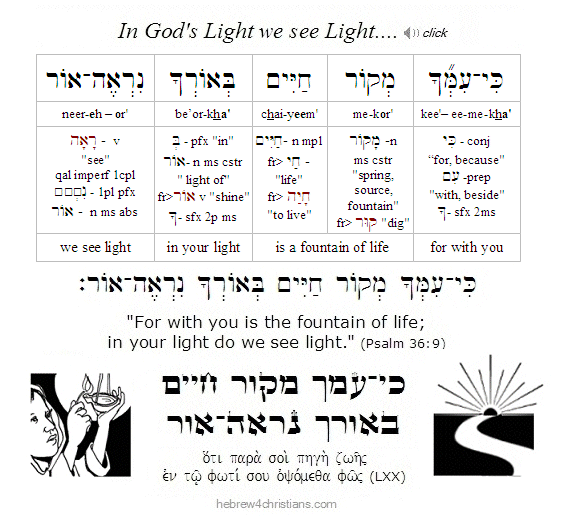 |
He carries us through...
The following entry is related to our Torah portion this week, parashat Devarim...
07.13.26 (Tammuz 28, 5786) From our Torah this week (Devarim) we read: "The LORD your God carried you, as a man carries his son, all the way that you went until you came to this place" (Deut. 1:31). Part of the miracle of faith is coming to believe that you matter to God – that you are his child, and that your thoughts, words, and deeds all are of his concern.
You may be tempted to regard yourself as unseen and powerless before the Creator of the universe. How is it possible for anyone to serve the Infinite One, since "even the heavens, and the heaven of heavens, cannot sustain You" (1 Kings 8:27)? Are we not made of clay, whose foundation is but dust? (Job 4:19).
Here the miracle of faith believes that God, the LORD and Source of all life, seeks relationship with you, and that He makes place within Himself to hear you, to engage your life, and to walk with you... Indeed, "the Word was made flesh and dwelt among us:" God emptied himself (κενόω) and clothed himself with human dust so that we could be touched by His love. The LORD carries us through our exile so that we might know and trust him...
Hebrew Lesson
Isaiah 46:4b reading (click):
"And just as we have borne the image of the man of dust,
so we shall also bear the image of the man of heaven" (1 Cor. 15:49).
About Shabbat Chazon...
07.13.26 (Tammuz 28, 5786) The Sabbath that precedes the fast of Tishah B'Av is called Shabbat Chazon (the "Sabbath of the Vision") since the Haftarah that is read (i.e., Isa. 1:1-25) describes the vision of the prophet Isaiah regarding the imminent destruction of the Temple:
"Hear, O heavens and give ear, O earth,
For the LORD has spoken;
Though I brought up and raised My children,
They have rebelled against me." (Isa. 1:2)
When it was first recorded, Isaiah's vision of the destruction to come was still future, and the Jewish people still had a chance to repent before the great tragedy would befall them. However, since they refused to do teshuvah (turn back to God), calamity overtook them. Today the Haftarah is traditionally chanted to the same haunting melody as Megilat Eichah (Lamentations), written by the prophet Jeremiah, who was an eyewitness to the destruction and fall of Judah and Jerusalem.
During the last nine days of the Three Weeks of Sorrow (from Av 1 - Av 9) it is common to confess the sins in our lives that likewise contribute to the lack of God's Presence in our midst. Hashivenu Adonai, elekha ve'nashuvah; chadesh yamenu kekedem: "Turn us back to You, O LORD, and we shall be turned; renew our days as of old" (Lam. 5:21).
Though Shabbat Chazon is a time of mourning, it is also a time for hope. The Torah reading for Shabbat Chazon is always parashat Devarim, the first portion of the Book of Deuteronomy. In this reading, Moses details the victorious battles with Sihon the king of Amorites and Og the king of Bashan. Because it speaks of God's victory, the sages recommended envisioning the future Temple that will be built by the Messiah at this time. According to Jewish tradition, after the Messiah comes and restores Israel, Tishah B'Av will become one of the happiest days of the year (and may He arrive soon and in our days).
The Month of Av...
07.12.26 (Tammuz 27, 5786) The fifth month of the Hebrew calendar (counting from the month of Nisan) is called the month of Av (i.e., Chodesh Av, "the month of the Father"), which begins at sundown on Tuesday, July 14th this year (this is also the anniversary of the death of Aaron, the first High Priest of Israel, see Num. 33:38).
The month of Av is regarded as most solemn among the Orthodox. The ninth day of this month (Tishah B'Av) marks the date when the people believed the evil report of the spies and were sent into exile by the LORD (see Num. 14:28-35). Later, the destruction of both the First Temple (in 586 B.C.) and the Second Temple (in 70 AD) occurred on this same date, resulting in the worldwide exile (diaspora) of the Jewish people. In somber recognition of this we observe Tishah B'Av (תִּשְׁעָה בְּאָב), or the "ninth of Av," as a fast day for mourning the lost vision of Zion. This year Tishah B'Av begins Wednesday, July 22nd at sundown.
The month of Av (חודש אב) literally means 'father' (אָב). It is customary to add the word 'menachem' (מנחם), which means "comforter," because while the month is associated with various tragedies in Jewish history, our Heavenly Father also brings comfort, and hence it is customary to refer to the month of Av as 'Menachem Av' (מנחם אב).
Menachem Av may also mean the "comfort of Aleph-Bet" (א-ב). The Prophet Jeremiah, who witnessed the destruction of the Temple, later wrote the scroll of Lamentations to commemorate this tragic time. The form of Lamentations is an acrostic based on the letters of the Hebrew Aleph-Bet (like Psalm 25, 34, 37, 119, Prov. 31, etc.). The scroll has five sections (perekim). The verses of the first two chapters and the last two chapters all are written in alphabetical order (א,ב,ג). The middle chapter, however, writes its verses using a triple Aleph Bet ordering, i.e., "Aleph, Aleph, Aleph," "Bet, Bet, Bet," "Gimmel, Gimmel, Gimmel," and so on. Since Yeshua is called the "Aleph and Tav" of God (האלף והתו) in Rev. 23:13, the comfort of the Father is revealed in Him! Yeshua is "et" (את), the direct sign and wonder of God!
Since Rosh Chodesh Av marks the time of mourning for Zion, we humbly ask the LORD to help us prepare for the coming time of teshuvah:
יְהִי רָצוֹן מִלְּפָנֵיךָ יהוה אֱלהֵינוּ
וֵאלהֵי אֲבוֹתֵינוּ שֶׁתְּחַדֵּשׁ עָלֵינוּ חדֶשׁ טוֹב
בַּאֲדנֵינוּ יֵשׁוּעַ הַמָּשִׁיחַ אָמֵן
ye·hi · ra·tzon · mil·fa·ne'·kha · Adonai · e·lo·hei'·nu
vei·lo·hei · a·vo·tei'·nu · she·te·kha·desh · a·lei'·nu · cho'·desh· tov
ba'a·do·nei'·nu · Ye·shu'·a · ha·ma·shi'·ach · A·men
"May it be Your will, LORD our God and God of our fathers,
that you renew for us a good month in our Lord Yeshua the Messiah. Amen."

Download Study Card
Hebrew Lesson
Psalm 104:19 reading (click):
Parashat Devarim:
The Summary Book of Torah...
"Reviewing a lesson a hundred times cannot be compared with reviewing it a hundred and one times." - Hillel the Elder
07.12.26 (Tammuz 27, 5786) Shavuah tov b'Yeshua Moshienu, chaverim! The concluding book of the Torah of Moses is called "Devarim" (i.e., דברים, "words" or "things"), from the phrase eleh ha'devarim ("these are the words...") found in its opening verse. In our English Bibles, Sefer Devarim (ספר דברים) is known as the "Book of Deuteronomy," from a Greek word meaning "second (or repeated) law" (δευτερονόμιον), a term used to translate the phrase mishneh ha-Torah ("copy of the Torah," Deut. 17:18).
Generally speaking, the Book of Devarim represents Moses' "farewell address" to Israel, where he reviews and summarizes the history and the laws given to the people and repeatedly warns that obedience will bring blessing while disobedience will bring disaster. The series of personal discourses (or sermons) in the book all have the pleading tone of rebuke and admonition, and indeed some sages say it resembles a sort of "deathbed blessing" not unlike Jacob's blessing given to his sons.
Our Torah portion (i.e., parashah: פרשה) for this week is the very first section of the Book of Deuteronomy, which begins with Moses recounting the journey from Mount Sinai to the edge of the promised land. Moses mentioned the difficulty of personally governing the people and recalled how he set up a system of judges to help him administer justice among the various tribes. Moses then reminded the people of the tragic sin of the spies and the rebellion of the people at Kadesh Barnea, which led to God's decree that no one of that generation would live to enter the land of Canaan (except for Caleb and Joshua). Moses then provided an outline of the 38 year exile of the Israelites back toward the Sea of Reeds, into the desert regions, and then back again until the subsequent generation was ready to enter the promised land. For more information, see the links listed below.
Shavuah Tov Podcast:
Parashat Devarim...
07.12.26 (Tammuz 27, 5786) Our Torah reading this week (Devarim) is the very first portion from the Book of Deuteronomy (ספר דברים), which is always read on the Sabbath that precedes the solemn and somber holiday of Tishah B'Av (תשעה באב). In Jewish tradition, this Sabbath is called "Shabbat Chazon" (שַׁבַּת חַזוֹן), "the Sabbath of Vision," since the Haftarah that is read (i.e., Isa. 1:1-25) comes from the vision of the prophet Isaiah regarding the destruction of the Holy Temple in Jerusalem. In both Jewish tradition and liturgy, teshuvah (repentance) and confession of sin are the themes of this prepatory Sabbath.
Hebrew Lesson
Isaiah 1:9 reading (click):
Deliver us from anxiety...
"To look away from the world, or to stare at it, does not help a man to reach God; but he who sees the world in Him stands in His presence." - Martin Buber
07.10.26 (Tammuz 25, 5786) Why do we often feel anxious? Why are we filled with unease and worry about what might happen to us? Is it not because everything seems out of our control? The world around us seems threatening and unstable; our interpersonal relationships are fragile and vulnerable; our bodies can get sick and falter; we grow despondent, lonely, and grieved. Time relentlessly passes and dissolution seems omnipresent; we feel distressed, swallowed up, overwhelmed, and powerless...
Now while it is true that everything is out of our control, it is not true we are utterly alone, the victims of unhappy chance and sorrowful fortune, for we find life in relationship with a loving God who has repeatedly told us that he is with us always, through all the byways and valleys, and that he will never leave nor forsake us. The Lord has promised to shepherd us through the present darkness; he is the ground of our being, the place of our refuge.
We do not deny reality or pretend that we are not in struggle between hope and despair. But while it is true that we are in a world that is frightening and uncertain, we are given strength by God to walk in shalom here, to bear witness of his radiant light. We are "in" but not "of" the world -- a realm that God has subjected to vanity in order to redeem it to a heavenly and eternal hope (Rom. 8:20). You are not alone, friend; you are part of God's blessing. The Lord is with you and he provides you sure refuge and abiding comfort in the midst of the storm. God is always between you and your wounds...
Just as humanity was plunged into darkness through unbelief, so we are brought to the light through faith in God's deliverance. Therefore hold fast to hope, and keep the fire of your heart burning, friend... Rabbi Nachman once told a person who was struggling with his faith: "It is written that all creation was brought into being because of people like you. God saw there would be people who would cling to our holy faith, suffering greatly because confusion and doubt would plague them. God perceived that such would overcome these doubts and troubles of heart and remain strong in their belief. It was because of this that God brought forth all creation." Amen. Repudiate anxiety and never yield to despair, since that leads to further darkness and fear. "Do not be anxious (i.e., inwardly divided, two-hearted) over anything, but in every thing by prayer bring your needs before God with gratitude, and the peace of God that surpasses all understanding (שלום אלוהים העולה על ההבנה) will guard your hearts and minds in Yeshua the Messiah (Phil. 4:6-7).
Press on and keep fighting the "good fight" of faith (1 Tim. 6:12). When the apostle Peter lost courage at the sight of the swelling waves, Yeshua reached out his hand and took hold of him, saying, "O you of little faith, why did you doubt (lit., think twice)?" Remember that you infinitely matter to heaven; your life has great value; you are significant and you are truly loved by our Heavenly Father. "The LORD your God goes with you to fight on your behalf against your enemies to give you victory" (Deut. 20:4).
We are not alone; God will help us get through... "I am sure of this, that he who began a good work in you will bring it to completion (ἐπιτελέω) at the Day of Yeshua the Messiah" (Phil 1:6). The LORD is able to guard you (φυλάξαι) from stumbling and to present you blameless before the presence of His glory with great joy (Jude 1:24). "The LORD upholds all who are falling and raises up all who are bowed down" (Psalm 145:14). "He will sustain you to the end, guiltless in the Day of our Yeshua the Messiah" (1 Cor. 1:8). He who calls you is forever faithful; He will surely do it (1 Thess. 5:24). Yea, "the Lord is faithful (נֶאֱמָן הוּא): He will establish you and guard you against the evil one" (2 Thess. 3:3). The Spirit of the Lord says, "Fear not, for I AM with you always." Amen and amen.
Hebrew Lesson
Isaiah 41:13 reading (click):
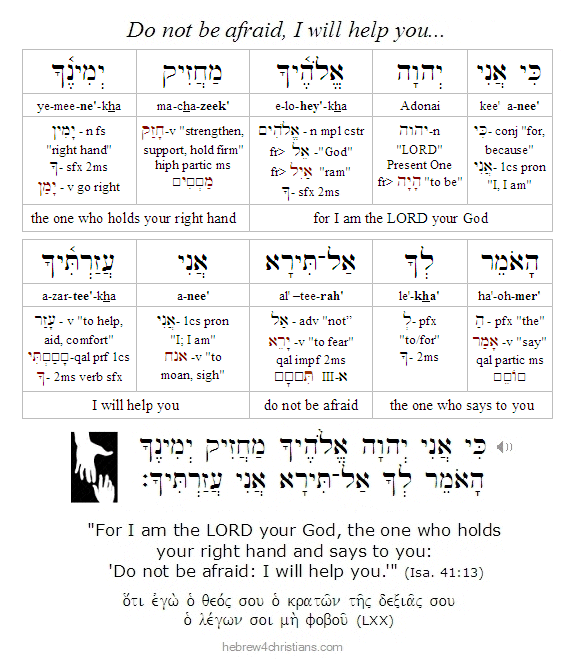 |
Heaven's Last Laugh...
07.10.26 (Tammuz 25, 5786) "Blessed are you who weep now, for you shall laugh" (Luke 6:21). Despite the heartache of our present life and the grief we now bear, sorrow will not be given the last word, but rather laughter and joy... And even now, in the midst of our afflictions, we can laugh in joy at the prospect of the coming great Day when all things shall be completely healed, the untrue will be made true, the crooked made straight, and our hearts deepest dream for love will be fulfilled...
Nonetheless we still weep because we see the world as painful, tragic, and filled with so much sadness; we cry out for deliverance; we mourn over our lives and for the lives of others we love... If you have a heart that still can feel, you know the crushing weight of sin, you share the agony of others who struggle with their sufferings; and you may feel nearly suffocated by the darkness, pain, and inconsolable despair. Indeed only those who are heartless can laugh at the troubles of this world, unmoved and untouched by the sorrows of others, perhaps because they are insulated in their moneyed indifference or else because they scorn life as "hard" and unforgiving, yet in either case we hear Yeshua add, "Woe to you who laugh now" (either in levity or in bitterness), "for you shall mourn and weep" (Luke 6:25). So you see how it is: God's people will always be "out of step" with this world and its godless idolatry. Genuine faith is a form of protest against any interpretation of reality that denies or minimizes the truth of the Divine Presence and therefore it suffers as the world exchanges truth for the lie.
Indeed God's people are "strangers" in this world; they are estranged and live as "resident aliens" -- here, yet not here.... Those who 'settle' here, who lay claim to life in this world, therefore make God their stranger. Thus King David said to the LORD: "We are strangers with You (כִּי־גֵרִים אֲנַחְנוּ לְפָנֶיךָ) and sojourners like our fathers; our days on earth are like a shadow (כַּצֵּל יָמֵינוּ) without abiding (1 Chron. 29:15). Faith in Yeshua affirms that underlying the surface appearance of life is a deeper reality that is ultimately real and abiding. It "sees what is invisible" (2 Cor. 4:18) and understands (i.e., accepts) that the "present form of this world is passing away" (1 Cor. 7:31). The mode of faith therefore calls us to live as toshavim - sojourners - who are at an infinite "distance" from the world of appearances and who seek the Eternal. We are "just passing through" this world, as we look forward to our promised home in heaven (Heb. 11:9-10). Then the days of our mourning shall be turned to dancing and God himself shall wipe away all tears from our eyes (Rev. 7:17; Isa. 55:11). Amen.
Hebrew Lesson
Psalm 30:5 reading (click for audio):
The Mystery of Spirit...
07.09.26 (Tammuz 24, 5786) The word "spirit" points to wonder, to something extraordinary and beyond our expectation, that is, to the mysterious Divine Presence that pervades all things yet rises above all things. Yeshua likened the Ruach (רוּחַ) with the inscrutable motions of the wind: "The wind blows where it wishes, and you hear its sound, but you do not know where it comes from or where it goes. So it is with everyone who is born of the Spirit" (John 3:8). We see the effect of the wind, but not the wind itself, which illustrates that the wind is ultimately beyond our grasp and control. To be "born of the Spirit" is therefore a mysterious intervention from heaven (John 1:13), just as being "led by the Spirit" implies seeing differently, that is, apprehending the Divine Presence in the mysterious motions of life.
Hebrew Lesson
Psalm 139:7 reading (click):
Soren Kierkegaard connects the movement of the Spirit with a deep sense of longing: "The wind blows where it will; you are aware of its soughing, but no one knows whence it comes or whither it goes. So also with longing, the longing for God and the eternal, the longing for our Savior and Redeemer. Comprehend it you cannot, nor should you; indeed, you dare not even want to attempt - but you are to use the longing. Would the merchant be responsible if he does not use the opportune moment; would the sailor be responsible if he does not use the favorable winds - how much more, then, is the one who does not use the occasion of longing when it is offered?" (Kierkegaard: Discourses)
Meaning and Life...
07.09.26 (Tammuz 24, 5786) The Hebrew word for "life" is chayim (חַיִּים), a plural noun that contains two consecutive letter yods (יי) that picture two "hands held together" (the Hebrew word yad [יָד] means "hand"), or the union of our spirit with God's Spirit. The word itself reveals that there is no life apart from union with God, who extends his hand to you and says, "Live in me" (John 15:4). Live in God, who is your life, your love, your light, your truth, your healing, your beauty, your breath, and your salvation. Yeshua is the Source of all life, and we find nourishment, strength, and fullness of joy as we connect with his life. The Lord is our light and our salvation, the Mediator of divine life (Psalm 27:1; John 1:4). The Voice of the LORD still speaks: "Take heart. It is I; be not afraid."
The word chayim can also be read as chai (חי), "alive," combined with the particle im (אם), "if," suggesting that being alive is conditional on our connection with God in the truth. "Whoever believes in the Son has eternal life (חַיֵּי עוֹלָם); whoever refuses the Son shall not see life, but the separation of God remains" (John 3:36). Life and peace are therefore inextricably connected, and those who refuse Yeshua, the Prince of Peace (שַׂר־שָׁלוֹם), therefore separate themselves from unity with God. Yeshua alone is the means of receiving the divine life: "Whoever has the Son has the life (הַחַיִּים); but whoever does not have the Son of God does not have the life" (1 John 5:12).
The Divine Life is such that it is never diminished as it shared but instead grows and multiplies in miraculous ways. This is alluded to by the Hebrew word for love (i.e., ahavah: אהבה), the gematria of which is thirteen (1+5+2+5=13), but when shared with another it is multiplied: 13 x 2 = 26 - the same value for the Sacred Name (יהוה), i.e., (10+5+6+5=26). Love is inherently relational, and the love of God is the very life of the universe...
The word chayim is also written in the plural both to indicate that we are in relationship with ourselves as well as with others, and moreover that our souls, despite the various changes we may go through in life, remain a unique identity. When Cain murdered his brother Abel, the Torah says, "the voice of your brother's bloods (plural) cries out from the ground" (Gen. 4:10), indicating that Abel's soul, (and the souls of his descendants) also cried out (Heb. 12:24). "Whoever destroys a soul, it is considered as if he destroyed an entire world; and whoever saves a life, it is as if he saved an entire world" (Sanhedrin 37a).
A broken relationship is a kind of death, as anyone who has experienced divorce or the loss of a friend can attest. Death is separation from life. The message of the "gospel" is that our relationship with God is dead and in need of reconcilliation, and that he reaches out to us in our alienation and heartache to restore our lost hope. It is the life blood of Messiah shed in the passion of God's outstretched arms that heals our separation and accepts us into the Divine Presence... The voice of Yeshua's blood cries out on our behalf (Heb. 12:24) as his life was given in exchange for ours: "For our sake he made him to be sin who knew no sin, so that in him we might become the righteousness of God" (2 Cor. 5:12).
We make "spiritual contact" with the sacrificial blood of Yeshua through faith -- by being "baptized into His death" and identifying with Him as our Sin-Bearer before God. We "lean into" Yeshua, confessing our rage, and are cleansed from all unrighteousness (1 John 1:9). In the New Testament Yeshua is called the "atonement" (ἱλασμός) for our sins (1 John 2:2), a Greek word that was used in the Septuagint (i.e., LXX) to translate the Hebrew word kippurim in the Torah (Lev. 25:9). The Septuagint uses the same word (ἱλασμός) to translate the Hebrew word for selichah (forgiveness), for example: "But with you there is forgiveness (הַסְּלִיחָה), that you may be held in awe" (Psalm 130:4). Just as the blood was sprinkled upon the kapporet (cover of the Ark of the Covenant) in the Holy of Holies during the Yom Kippur ritual, so the blood of Messiah was sprinkled the heavenly kapporet, the very altar of Almighty God, to secure for us everlasting redemption and healing... The breach has been healed by our Savior Yeshua, who alone mediates the life of God within us. By faith we are delivered from condemnation and are accepted as God's beloved children.
Hebrew Lesson
Psalm 6:4 reading (click for audio):
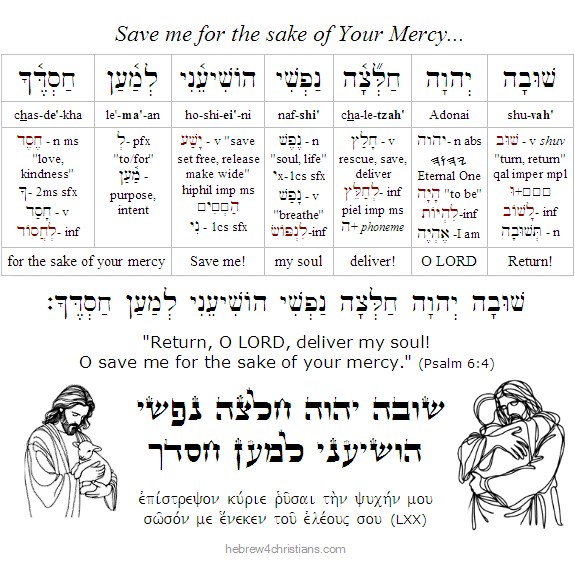 |
The Journey of Journeys...
07.08.26 (Tammuz 23, 5786) From our Torah portion for this week (i.e., parashat Masei) we read: "These are the journeys of the people of Israel (מַסְעֵי בְנֵי־יִשְׂרָאֵל) who went out of the land of Egypt..." (Num. 33:1). The sages ask why the word "journeys" (plural) was used here, since only the first journey – from Rameses to Sukkot – literally marked "yetziat mitzrayim," the going out of Egypt – and all the other journeys were outside of Egypt, in desert regions. They answer that the journey out of Egypt goes beyond the physical land into the spiritual - an exodus from captivity to the world into the realm of the spirit. As has been said, it took the LORD 40 days to get Israel out of Egypt, but it took 40 years to get Egypt out of Israel... The "journey out of Egypt" is therefore a journey of smaller journeys that leads to the full consciousness of deliverance.
Along the way we are repeatedly tested. The "desert experience" reveals what is hidden in our hearts... The murmuring and rebellion of the Israelites in the desert is our own, and our challenge is to find healing from our fears. Anger, doubt, boredom, cravings, and outright rebellion are symptoms of a deeper problem, and to change we must first confess our inner poverty, neediness, and emptiness (James 5:16). When we stop making excuses we can learn to trust in God's provision for our lives; we will taste of the heavenly manna and be satisfied; we will be delivered from our fears by be filled with God's love. The impulses that sought to lead us away from God will no longer be able to pretend to be the truth, since God's peace and love will direct the heart. We will begin to take hold of the promise...
Be encouraged my fellow sojourners walking by faith through the desert of this present world. The Torah uses a repetitious expression, "Sanctify yourselves and you shall be holy" (הִתְקַדִּשְׁתֶּם וִהְיִיתֶם קְדשִׁים) (Lev. 11:44) because when we make a sincere effort -- no matter how feeble at times -- to draw near to the LORD, He will draw near to us (Zech. 1:3; James 4:8; Psalm 145:18). Indeed the walk of faith is one of ascent and descent and ascent again: It's often "two steps forward, one step back..." It is a long road, a process, as we learn to obey and seek to grow closer to God. Authentic repentance doesn't imply that we will never sin or make any mistakes, of course, but rather means that the oscillating pattern of "up, then down, then up" is the basic way we walk. Our direction has changed for good; we have turned to God for life and hope. We now understand our sins in light of a greater love that bears them for us even as we draw ever closer to the One who calls us home...
Hebrew Lesson
Zechariah 1:3 reading (click):
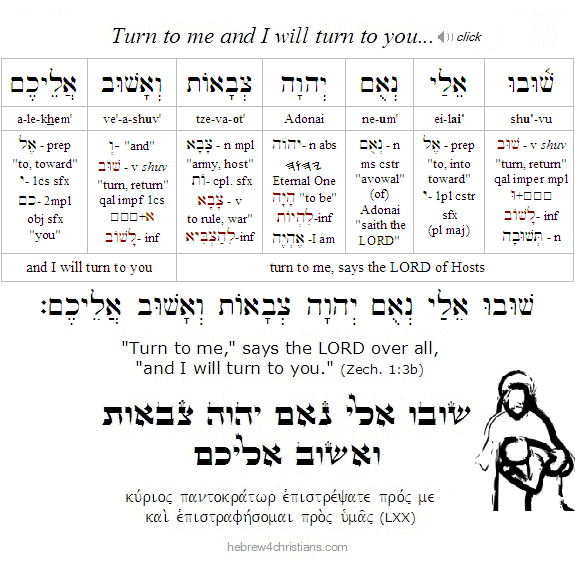 |
The Prayer of God...
"And this is eternal life: that they know you the only true God, and Yeshua the Messiah whom you have sent." - Yeshua (John 17:3)
07.07.26 (Tammuz 22, 5786) Man prays to God, but to whom does God pray? And for what does He pray? Or do you think that the Almighty has no desires of His own, no yearning of heart? The sages of the Talmud believed that God indeed addresses himself: Yehi ratzon milfanai, "May it be acceptable before me, may it be My will, that my compassion overcome my anger, and that it may prevail over my justice when my children appeal to me, so that I may deal with them in mercy and in love" (Berachot 6a). This is the deeper unity of the Name YHVH (יהוה), the Savior and LORD, revealed to Moses after the sin of the Golden Calf (Exod. 34:6-7), and this is the essential meaning of the cross of Yeshua, where the LORD passionately "prayed within Himself" so that His compassion would overcome His judgment for our sins.
Only the cross allows God's righteousness and mercy to "kiss" (Psalm 85:10; 89:14); only the cross reveals the true Holy of Holies where the blood was placed over the Ark of the Law; only the cross intimates the Inner Sanctum of God's heart. Because of the cross, a holy God is able to truly love and help the trusting sinner (Rom. 3:26). It is written: "Righteousness and justice are the foundation of your throne (צֶדֶק וּמִשְׁפָּט מְכוֹן כִּסְאֶךָ); steadfast love and faithfulness go before you" (Psalm 89:14). Because of Yeshua, God is vindicated as entirely just - and the Justifier of those who trust in His redemptive love (Rom. 3:24-26). Yeshua is the prayer of God the Father's on behalf of His children...
The will of God - His heart's yearning and desire - is for his children to receive his love (2 Pet. 3:9; 1 Tim. 2:4; John 3:16; Ezek. 18:23). As Yeshua prayed, "Holy Father, keep them in your Name, which you have given me, that they may be one, even as we are one... I in them and you in me, that they may become perfectly one, so that the world may know that you sent me and loved them even as you loved me" (John 17:11,23).
Yeshua died on the cross to bear the shame for your sins, to be sure, but he did this so that you could be accepted and securely loved forever.... It is the love of God that is the goal of all things, after all. When Yeshua cried out, "It is finished" and breathed his last breath as He died for our sins upon the cross, the greatest exhalation of the Spirit occurred, the greatest sigh, the greatest utterance was ever declared. The sacrificial death of Yeshua for our deliverance was God's final word of love breathed out to those who are trusting in Him.
Hebrew Lesson
Psalm 85:10 reading (click for audio):
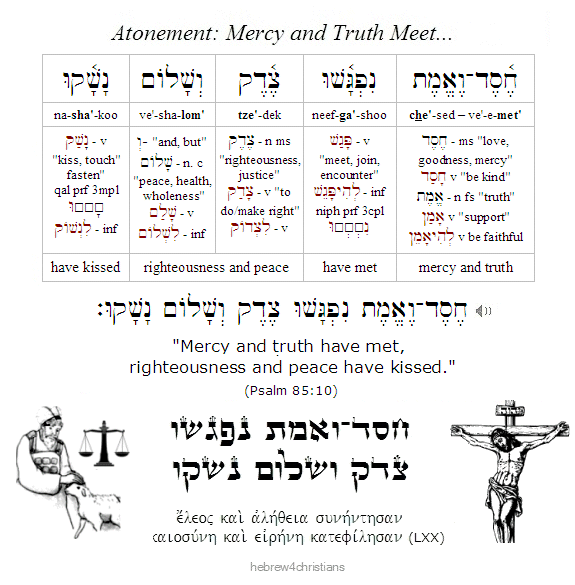 |
His Abiding Presence...
07.07.26 (Tammuz 22, 5786) The Spirit of the Lord comforts and reassures those who come to trust in Him: "My sheep hear my voice, and I know them, and they follow me. And I give them eternal life (חַיֵּי עוֹלָם), and they will never perish - no, never! - and no one will snatch them out of my hand" (John 10:27-28).
Note that the Greek grammar in this verse uses a "double negation," which is the strongest way to deny something. In other words, if the question were asked, "Will one of these sheep perish?" the answer is emphatic: "No, no, it will never happen! It is unthinkable!" Indeed all those who belong to Messiah "shall never, ever perish - not into eternity (εἰς τὸν αἰῶνα)." It is an eternal certainty that you who are trusting in Yeshua will never perish, and no power in heaven or earth will be able to take you out of God's hand... "Surely goodness and mercy shall pursue you all the days of your life, and you shall dwell in the Presence of the Lord forever (Psalm 23:6).
Regarding the certainty of salvation Yeshua said: "I tell you the solemn truth, the one who hears my message and believes in the One who sent me has (i.e., ἔχει, present active indicative) eternal life and will not be condemned, but has passed over (i.e., μετά + βαίνω, lit., "crossed over" [עָבַר]) from death to life" (John 5:24).
The verb translated "has passed over" (μεταβέβηκεν) is a perfect active that expresses completed action: "this one has already passed over from death to life." In other words, it is an accomplished reality though it is only experienced as we surrender to the love and grace of God. As the apostle Paul later summarized: "For it is by grace you have been saved (i.e., σεσῳσμένοι, a perfect passive participle that denotes completed action done on your behalf with effects that continue to the present) through faith, and this not from yourselves, it is the gift of God, not a result of works, so that no one may boast" (Eph. 2:9-10). Ultimately, salvation is a question about who you really are, not about what you do.
God does not want us uncertain or unsure of His great love for us. A fearful believer explained that he was anxious about his acceptance before heaven. When he was asked to define "salvation," he answered, "freedom, deliverance, rest, peace." So you think fear will help you do away with your fear? You are fearful of the idea of freedom from fear?
"Be strong and of good courage" - chazak ve'ematz (חֲזַק וֶאֱמָץ). The LORD God promises "never to leave you nor forsake you," and to be with you wherever you go (Josh. 1:5,9; Heb. 13:15, Psalm 139; Matt. 28:20). In the Greek New Testament the wording of Hebrews 13:15 is highly emphatic: "Not ever will I give up on you (οὐ μή σε ἀνῶ); no, not ever will I leave you behind (οὐδ᾽ οὐ μή σε ἐγκαταλίπω)." May you hear the voice of the Good Shepherd calling you, and may He forever keep you under His watchful care. Amen.
Hebrew Lesson
Joshua 1:9 reading (click for audio):
Sanctity of Heart...
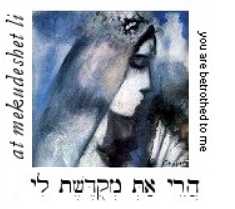
07.07.26 (Tammuz 22, 5786) From our Torah portion this week we read: "Speak to the children of Israel, and say unto them, 'When ye are passed over into the land of promise ... drive away all the inhabitants of the land before you; destroy all their carved images, all their molten images, and demolish their high places'" (Num. 33:51-52). The Hebrew term for idolatry is "avodah zarah" (עֲבוֹדָה זַרָה), which literally means strange or "foreign" worship... The worship of anything other than the true God, whether it is pleasure, money, fame, control, security, self-improvement, health, religion, etc., is regarded as foreign, since it alienates us from the truth of reality. We were created to be in relationship with God but we lose sight of this truth whenever elevate what is finite to the status of the infinite. Indeed idolatry is the substitution of what is not-god (לא־אֵל) for the sacred, absolutizing the present and worshiping the temporal. Since our greatest good is found in the eternal verities of the divine communion, the Lord cannot give us an absolute good apart from Him, since there literally is no such thing. "No one can serve two masters," Yeshua said, and "a divided house cannot stand." For our own good, then, God necessarily is the Ultimate Concern of our life, and he wants to spare us the pain, disappointment, and trauma of being double-minded, disintegrated, and full of inner conflict. Spiritual warfare therefore means taking every thought captive before the bar of God's truth, rooting out and destroying all our inner idols so that we can be delivered from the anguish of uncertainty and ambivalence.
What is at stake here is your inner life, or rather the threat of the disintegration of your deepest essence into a fragmented multiplicity without center... The soul must be grounded in Reality or it is lost, dissipated in existential dread and despair. Yeshua said that when your eye is "single" (ἁπλοῦς), your whole being will be full of light (Matt. 6:22), which means that being single-minded and wholehearted unifies and heals the soul.... Being pulled in opposite directions is both painful and debilitating, for there is no overarching reason to direct the will in its decisions. Hating and loving the good is the ambivalence of despair. Being both willing and unwilling weakens the soul, but seeking the good and making God your ultimate concern binds up the broken heart and centers the will. "Your faith has made you whole..."
"Keep your heart with all vigilance, for from it flow the springs of life" (Prov. 4:23). The heart, that is, the willing and desiring center of the self, is to be proactively guarded, and for this sacred task God offers us heavenly comfort and resolve. Courage does not chase away or deny fear and despair, but instead gives us determination to persevere despite these feelings. "Why are you cast down, O my soul, and why are you in turmoil within me? Hope thou in God" (Psalm 42:11). Courage expresses hope in the midst of the struggle; it finds strength to confront pain, danger, or grief with God's help. Courage is grounded in the decision to trust that God is with us, despite our circumstances or feelings of abandonment. How you choose to guard your heart from the corruption and hardness of the world will determine the "road" of your life. If you do not care to keep your heart open and soft, you will become cynical, weary, and more and more selfish. Your way will be lonely, suspicious, and dangerous. If, however, you keep yourself from the hardness of unbelief, you will experience compassion, encouragement, and the joy of loving others.
Hebrew Lesson:
Proverbs 4:23 Hebrew reading (click)
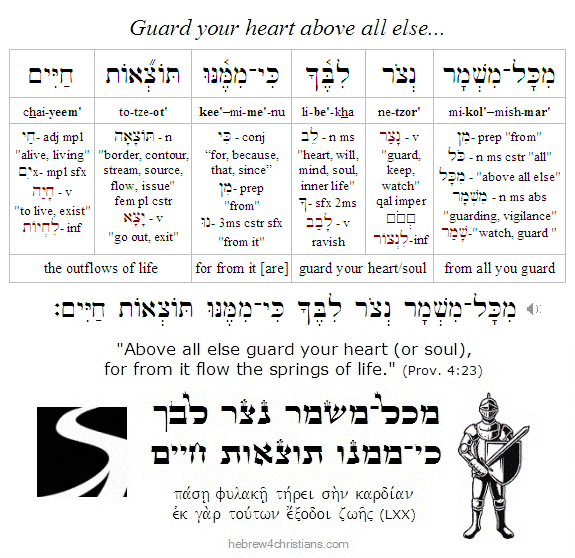 |
Sufficient unto the Day...

07.07.26 (Tammuz 22, 5786) In the Gospel of Matthew we read these words of our Lord: "Therefore do not be anxious about tomorrow, for tomorrow will be anxious for itself. Sufficient for the day is its own trouble" (Matt. 6:34). Soren Kierkegaard comments: "If there is no next day for you, then all earthly care is annihilated. When the next day comes, it loses its enchantment and its disquieting insecurity. If there is no next day for you, then either you are dying or you are one who by dying to temporality has grasped the Eternal, either one who is actually dying or one who is really living... The one who rows a boat turns his back to the goal toward which he is working. So it is with the next day. When, with the help of the Eternal, a person lives absorbed in today, he turns his back to the next day. The more he is eternally absorbed in today, the more decisively he turns his back to the next day." Amen. Today is the day of salvation; today may we hear His voice...
"If there is no next day for you, then either you are dying or you are one who by dying to temporality has grasped the Eternal, either one who is actually dying or one who is really living..." - Soren Kierkegaard
"For he that loses his life will find it..." (Luke 17:33). But how are we to understand this? An old story from the Desert Fathers comes to mind. A visitor came to the Master and was struck by his radiance. Later he spoke to a disciple and asked him for an explanation. The disciple quoted the Master's words, "Truly, truly, I say to you, unless a grain of wheat falls into the earth and dies, it remains alone; but if it dies, it bears much fruit" (John 12:24). Life is a sacred mystery, but death provides the key to unlock its meaning. We can "turn the key" by surrendering ourselves in silent expectation before God. Once we die to life in this world we are set free and empowered to live in joy and gratitude for everything. We experience serenity as we let go in surrender to God's care.
A person must be content to be as he is; a dependent being, as little capable of sustaining himself as of creating himself. If we choose to forget God and look after our own sustenance, then we are overcome with anxiety. It is certainly praiseworthy and pleasing to God when a person works for his food. But if he forgets God, and thinks that he himself is supporting himself, then he becomes burdened with the necessities of life... Worry about making a living, or not making a living, is a snare. In actuality, it is the snare. No external power, no actual circumstance, can trap a person. If a person chooses to be his own providence, then he will go quite ingenuously into his own trap, the wealthy as well as the poor. If he wants to entrench himself in his own plot of ground that is not under God's care, then he is living, though he does not acknowledge it, in a prison. When the farmer shut the door on the wood dove, the wood dove believed himself to be safe, when in fact he was caught. Or to put it another way, he was shut out from the care of Providence and trapped in a life of anxiety. In a spiritual sense he made himself a captive and "trapped himself unto death." (Kierkegaard UPD)
It is the saddest thing of all if a human being goes through life without discovering his need for God. Therefore blessed indeed are the poor in spirit, for theirs is the kingdom of heaven (Matt. 5:3). It is a "blessed fault" to understand our inner poverty, to know anguish of heart, and to be able to abide in God's salvation one day at a time....
The Spirit cries out: "Fear not, for I am with you..." אַל־תִּירָא כִּי עִמְּךָ־אָנִי. What we need most of all is right here, present in this hour, whether we're conscious of it or not. God is with you, even if you feel alone, lost in darkness, unclean, afraid... "Dear Lord Jesus, I don't know who I am, I don't know where I am, and I don't know what I am, but please love me" (prayer of a sufferer from Alzheimer's disease). That's what we need most, to trust that we are safe in God's love, and that's the ultimate message of our atonement in Messiah.
Hebrew Lesson
Psalm 73:23 reading (click for audio):
Safe in God's Arms...
"God be praised that it is not because of my worthiness that God loves me; otherwise, I might at any moment die of fear lest the next moment I cease to be worthy." - Kierkegaard, Journals
07.06.26 (Tammuz 21, 5786) "Now I lay me down to sleep, I pray the Lord my soul to keep..." After praying with my youngest son Emanuel before he goes to bed, and just after we have said our closing "amens," a moment of silence sets in and he often asks me to pray again so that he won't have be afraid. I get it. The lingering thoughts, the liminal awareness that something went undone today, the fear of the unknown. So we pray some more, asking God to deliver us from our fears and to put his "shields of his protection" all around us as we sleep. And I think to myself, and isn't this what we are praying much of the time anyway -- not to be afraid? And not to be angry, which really is the other side of our fear?
We may sometimes feel uneasy over our lives; we may wrestle with "inner demons" that lurk in the shadows of consciousness and seek refuge from them; we may feel fragile, powerless, stupefied, sad, guilty, remorseful, fearful, insecure, lonely... We call out to the Lord for his protection and deliverance. We need reassurance that He is there for us, that he's on the other end of our heart's cry, that he cares. But surely our deepest fear is that of ourselves - our own inner darkness - and whether we will be able to hold it together and not destroy ourselves. As Yeshua said, "If the light that is in you is darkness, how great is that darkness!" (Matt. 6:23).
Our faith in God's love must be greater than the fear of our inner darkness -- those parts of ourselves that seemingly lurk in the shadows. It is not simply trusting God to protect you from external evil but trusting God to deliver you from yourself - trusting him to heal you in the unconscious depths of your soul - the wound that evokes the raw cry of the heart. And more than that, our prayers are a cry for our Abba to be there for us, to take us up in his "everlasting arms," to have him shush away our fears and to quietly say to us: "I love you; I am here with you..." Be at peace my beloved child.
Hebrew Lesson
Isaiah 41:13 reading (click for audio):
|
Guarding your Tongue...
07.06.26 (Tammuz 21, 5786) Our Torah portion this week (i.e., Mattot) begins with Moses instructing the leaders of the tribes, saying: "If a person makes a vow (נֶדֶר) ... he shall not break his word; but he shall do according to all he has said" (Num. 30:2). Notice that the phrase "break his word" literally means to profane (חָלַל) his word, which implies that breaking a promise is a type of profanity or spiritual defilement...
If we do not honor and respect our words, we lose a sense of meaning, and the substance of what we say and think becomes unstable. Such double-mindedness leads to shame, since without inner conviction we become inwardly divided and fragmented, so that we no longer trust ourselves... Being honest (i.e., yashar: יָשָׁר) implies that what we say and what we mean are unified. An honest person doesn't play games with words but understands that communication is a sacred trust...
We have a moral obligation to speak truth to others. This is called dibbur emet (דברי אמת) in Hebrew. Dibbur emet, or "speaking truth," is the duty to use words and language with integrity, compassion, and justice. We abuse language when we gossip, slander, or express contempt to others, and therefore the Torah urges us to practice "shemirat lashon" (שמירת לשון), or "guarding of the tongue" (Psalm 34:11-18).
Yeshua warned us not make oaths but rather we should be trustworthy with our words: let your "yes" mean yes, and your "no" mean no (Matt. 5:37). The talmud agrees by saying that 'no' is an oath and 'yes' is an oath." Our words are to be regarded as sacred, a confession of truth. God has made us inviolable promises, and we are never to play games with that. Just as His word is sacred, so we should strive to be sacred in our speech, too: "I tell you, on the day of judgment people will give account for every careless word they speak, for by your words you will be justified, and by your words you will be condemned" (Matt. 12:37).
The Torah states, "You shall not put a stumbling block (מִכְשׁוֹל) before the blind" (Lev. 19:14). In addition to its literal meaning, the word "blind" figuratively refers to a person unaware of all the facts and who is therefore made vulnerable. Someone who misdirects the blind deceives them, and this violates the 9th commandment not to bear false witness (Exod. 20:16; 23:1). Such deception is called genevat da'at (גְּנֵבַת דַעַת), or "stealing the mind," since it defrauds the other person's trust. For example, it is common practice for politicians to disclose only what they think others need to know, and therefore they offer incomplete versions of truth for the sake of their own self-serving interests. Lying to others is a violation, then, of both the commandment not to steal and the commandment not to bear false witness. "The righteous person hates lies" - דְּבַר־שֶׁקֶר יִשְׂנָא צַדִּיק (Prov. 13:5).
Hebrew Lesson
Proverbs 13:5 reading (click):
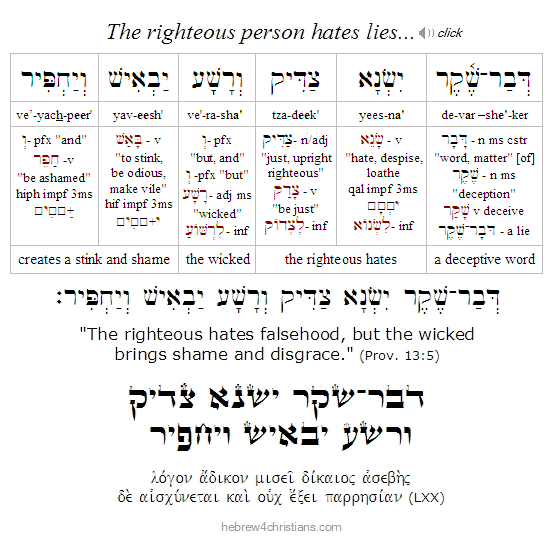 |
"Deliver me, O LORD, from lying lips, from a deceitful tongue" (Psalm 120:2). The sages say that the virtue of eminut (אֲמִינוּת), or trustworthiness, begins with learning to trust others... Parents are therefore responsible to fulfill their commitments to their children. Rabbi Zera said, "One should not say to a child, 'I will give you something' and then not do so, since that teaches the child to lie" (Sukka 46b). People learn to lie from a sense of betrayal, from the mismatch between professed words and reality. The breakdown of trust leads to the evasive use of words to protect ourselves. We tell others what we think they want to hear or we mislead them to keep ourselves safe. Breaking promises wounds others, and children can learn to become hardhearted, untrusting, and fearful of intimacy as a result.
Power to the Faint...
07.06.26 (Tammuz 21, 5786) "Have you not known? Have you not heard? The Eternal One, the LORD, is the Creator of the ends of the earth (בּוֹרֵא קְצוֹת הָאָרֶץ). He does not faint nor grow weary; his understanding is unsearchable. He gives power to the faint, and to him who has no might he increases strength" (Isa. 40:28-29).
Human pride has no objection that God can impart strength, but it objects that strength is found in those who are broken and weary – that is, to those mortally wounded in the battle against evil. The principle of the self-life, the ego, religious observance, "doing the law," etc., is a spiritual dead-end. The word is this: God gives strength to the weary, to the faint, to those who are without potency or power. But this means that they must first be emptied, broken, and stripped of self-sufficiency before the strength of God is manifest in them: "My power is made perfect (τελειοῦται) in weakness" (2 Cor. 12:9). God's way is first to break us, to make us weaker and weaker, so that he can then fill us with the miraculous divine nature.
Like all sacrifices brought to the altar, we must pass through death to life by means of our union with the Messiah at the cross... It is only after the cross that it may be truly said, "It is no longer 'I' who lives; now it is Messiah who lives His life in me" (Gal. 2:20). There is indeed strength, power, and victory – but such comes after the cross, after we reckon carnal energy as useless. "Not by might, nor by power, but by My Spirit, says Adonai Tzeva'ot" (Zech. 4:6).
Hebrew Lesson:
Isaiah 40:29 reading (click):
Where we read, "Messiah who loved me and gave himself for me" (Gal. 2:20), we emphasize the object of God's redeeming love; we stress that this word is being spoken to "me," and that Messiah's love is poured out "for me." But how can we justify doing so, in light of the innumerable souls that have been brought forth in the world? The Mishnah asks, "Why was man created alone?" and answers so that each person must say the world was created for me. "Whoever destroys a soul, it is considered as if he destroyed an entire world; and whoever saves a soul, it is considered as if he saved an entire world..." Amen.
This Week's Torah:
Parashat Mattot-Masei...
07.05.26 (Tammuz 20, 5786) Shavuah tov, chaverim! This week we will read a "double portion" of Torah that concludes Sefer Bamidbar, or "the Book of Numbers." Our first Torah portion, called parashat Mattot (מַטּוֹת, "tribes"), begins with the LORD giving laws and prohibitions regarding the making of vows (nedarim). After this, the Israelites were commanded to wage war against the Midianites for seducing the people to sin at the incident of "Baal Peor." During the ensuing battle, the wicked sorcerer Balaam was killed, as well as five tribal kings of the land of Midian.
The tribes of Reuben and Gad (and half of the tribe of Manasseh) asked permission to settle in the pasture land of Gilead (on the east of the Jordan), since they had large herds of cattle. At first Moses disapproved their request, since he feared that the other tribes would lose heart if these tribes stayed behind during the conquest of Canaan. However, when the tribal leaders made a vow to join the fight while their families remained in Gilead, Moses finally agreed.
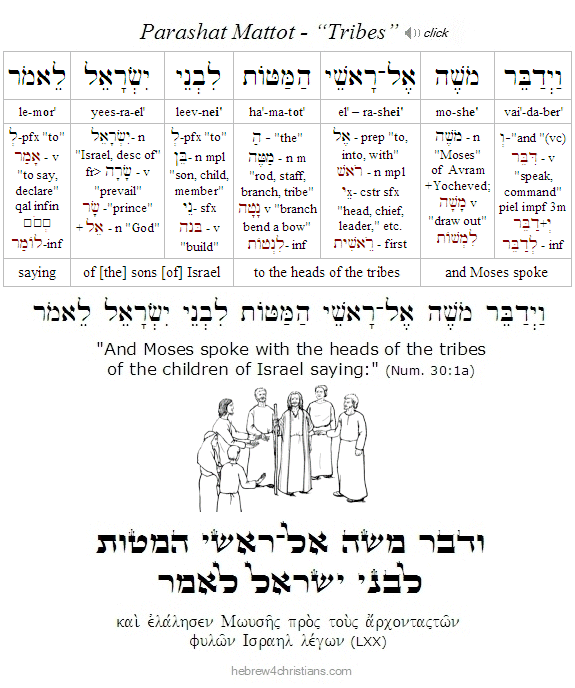 |
In our second Torah portion, called parashat Masei (מַסְעֵי, "journeys"), Moses recounted the various "stations" of the journey from Egypt to the edge of the promised land, and instructed that when the people would finally cross the Jordan River into the land of Canaan, they were to drive out all the inhabitants and to utterly destroy all traces of their culture and religion. After this, the land would be divided by lot according to tribes of Israel, based on the size of each tribe. God then warned Moses that if the Israelites would not drive out the inhabitants of the land, they would become a "snare" to them, and God would then judge and exile the Israelites as he intended to do to the Canaanites.
The Israelites were then instructed to assign towns with surrounding pasture lands to the Levites. There were to be a total of 42 towns, chosen by lot and distributed throughout the land according to the size of each tribe. In addition, six more cities were to be given to the Levites and designated as "cities of refuge" to which a person who unintentionally killed another may flee to take refuge from an "avenger of blood" (i.e., next of kin). The death penalty required testimony from at least two witnesses and admitted of no "ransom" (plea bargain) to be offered in place of the murderer's execution. On the other hand, a person responsible for involuntary manslaughter of another was required to dwell within the confines of a city of refuge until the death of the High Priest, after which time he was free to return to his home without fear of retribution from an avenger of blood.
The Book of Numbers – and the historical narrative of the Torah itself – concludes with the resolution of the question of legal inheritance in the land just before Joshua would lead the people into the land of Canaan. The book ends with this statement: "These are the commandments and the rules that the LORD commanded through Moses to the people of Israel in the plains of Moab by the Jordan at Jericho."
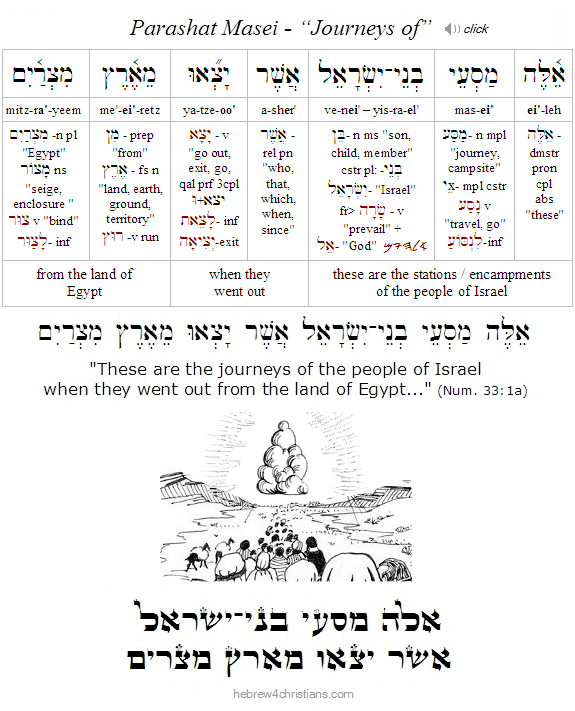 |
The Way of Perfect Peace...
07.03.26 (Tammuz 18, 5786) When we lose sight of the truth that God is in complete control of all things, we tend to grow anxious... Feeling worried comes from focusing on ourselves, a perspective that can make us feel alone, forgotten, and even victimized in this world. Worry moves us to defend ourselves, to seek refuge in our own devices, and to forfeit the will of God according to the dictates of lesser fears...
The sages say it is not permitted to worry: "To worry is a sin; only one sort of worry is permissible; to worry because one worries." We should worry that we worry because this indicates our hardness of heart and our unbelief. God's name YHVH (יהוה) means "Presence," "Breath," "Life," and "Love." So why should we be anxious for "tomorrow"? We really only have this moment, but this moment is entirely sufficient when we walk in the light of God and seek to know him in all our ways (Prov. 3:5-6).
The first part of the Shema (i.e., Deut. 6:4-9) admonishes us to remember the truth of God "when you sit in your house, when you walk in your ways, when you lie down, and when you rise up." "In all your ways know Him," that is, in all that you put your hand to do look for the God's Presence and guidance (Prov. 3:6; 1 Cor. 10:31). This is something you must do: As King David stated, "I have set the Lord always before me, because He is at my right hand, I shall not be moved" (Psalm 16:8). Make up your mind: "Let the peace of God rule in you" (Col. 3:15).
The Name of the LORD is "I-AM-WITH-YOU-ALWAYS," which implies that we always live within His Presence and care, even if we are sometimes unconscious of this truth (Matt. 28:20). As it is written in the prophets, hen al kapayim hachotikh: "Behold I have engraved you on the palms of my hands" (הֵן עַל־כַּפַּיִם חַקּתִיךְ; Isa. 49:16). Remember the One who stretched out his hands and died for your healing; remember that he said, "Do not be anxious about tomorrow... sufficient for the day is its own trouble" (Matt. 6:34). A
Again it is written in our Scriptures: "Do not be anxious about anything, but in everything by prayer and supplication with thanksgiving let your requests be made known to God" (Phil. 4:6). When we worry we heed voices of fear and begin to feel 'double-minded,' (i.e., δίψυχος), unstable, and unable to think clearly; we get restless and find it difficult to deeply breathe. We start to feel out of control, fearful that something bad will happen despite all our efforts or wishes to the contrary; we sense doom; we lose heart; we go dark...
The Scripture here admonishes us to pray when we are tempted to be anxious by focusing on something for which we are grateful. Doing so will instill the "peace of God" (שלום יהוה) that quells all our fears (Phil. 4:7). We gain the "light of life," that is, inner illumination from God, so that we can remain steadfast and unmovable in faith. We will experience complete peace, shalom shaleim (שלום שלם) when we make up our minds to trust in Him (Isa. 26:3).
If you leave everything in God's hands, eventually you will see God's hand in everything....
Hebrew Lesson
Isaiah 26:3 reading (click):
Gift of Holy Desperation...
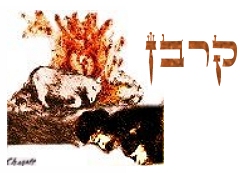
"The mass of men lead lives of quiet desperation. What is called resignation is confirmed desperation." -- Henry David Thoreau
07.03.26 (Tammuz 18, 5786) Many of us have been given the "gift of holy desperation." That's the special blessing of needing God so viscerally that you will fall apart or even self-destruct apart from His daily intervention in your life... "Blessed are the poor in spirit, for theirs is the kingdom of heaven" (Matt. 5:3). We groan in hope...
Our Torah portion this week (Pinchas) says that the fire on the altar was to be kept burning at all times (Lev. 6:12-13), which symbolizes esh tamid (אֵשׁ תָּמִיד), or the inner fire of the heart... How blessed it is to be full of the fire of this inner need, this relentless groaning, this constant hunger to be set free. Even more wonderful is how the korban tamid (קָרְבָּן תָּמִיד) - the daily whole burnt sacrifice of the lamb - represents Yeshua's ongoing and wholehearted passion for you to come alive to God's love... The heart of the Lord is offered to you in brokenness and compassion.
Hebrew Lesson:
Psalm 143:6 Hebrew reading:
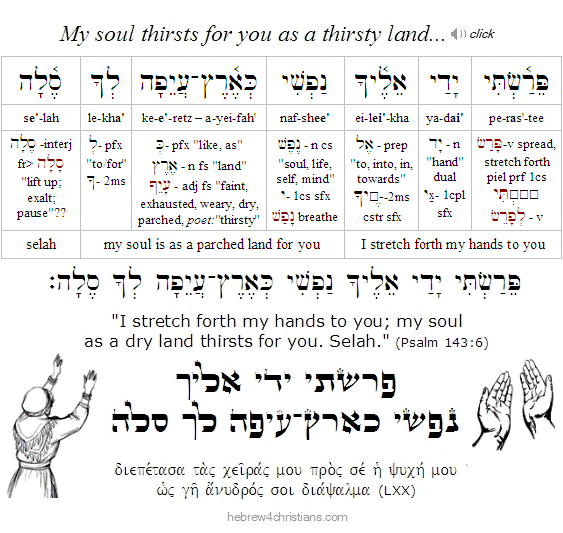 |
Awakening to Wonder...

"Every sparrow is unlike every other sparrow despite the similarities." - De Mello
07.03.26 (Tammuz 18, 5786) Every day we are alive is a miracle, though because of the "evil spell of habit" we desensitize the wonder of existence right out of consciousness itself. Kierkegaard once quipped that many people sleep away the days of their lives only to awaken one day to find that they had died! "The greatest hazard of all, losing one's self, can occur very quietly in the world, as if it were nothing at all. No other loss can occur so quietly; any other loss—an arm, a leg, five dollars, a wife, etc.—is sure to be noticed."
The "sleepwalking" person mindlessly follows the social programming of the crowd and unreflectively conforms to worldly culture and its distractions. They live on the "surface" of life, conditioned by the bells and whistles of social programming. Being unconscious is likened to being asleep and oblivious to the truth of reality, which is a pleasant sort of nightmare...
When we are told to "reduce" ourselves (and the universe itself) to be "merely" or "really" the product of impersonal forces, "mechanistic" laws, overarching fate, and so on, we lose sight of the "magic" of creation and miss the wonder of why there is something rather than nothing at all. We explain away divine mysteries and pretend that we already know what is real, failing to see the great poetry and beauty of life...
Habit steals the heart and soul out of life, inducing feelings of indifference and meaninglessness. Once we open our eyes in childlike wonder, we will discover amazing grace and gratuitous blessings all around us. Our breath, the beating of our hearts, and our thoughts will declare the wonder and glory of God....
Hebrew Lesson
Psalm 119:1-2 reading (click for audio):
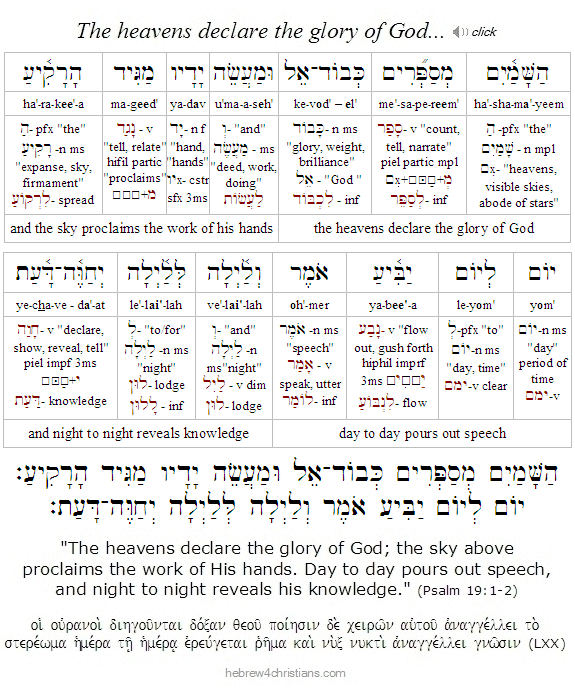 |
True and False Zeal...
The following entry concerns our Torah reading for this week, parashat Pinchas...
07.03.26 (Tammuz 18, 5786) You may be entirely sincere in your convictions, but you may be sincerely wrong... In the time of the Second Temple, for instance, the Jewish "Zealots" despised the rule of Rome, and their political hatred caused them to blindly regard anyone who didn't share their passion as a personal enemy. In one of the great tragedies of Jewish history, these zealots actually killed more Jews than did the Romans themselves! And how many Christians these days "kill" relationships with other believers because of their particular zeal regarding some doctrinal question? I am not suggesting that doctrine is unimportant, of course, but before you pick up that sword to do the business of Pinchas, you might do well to consider your heart's attitude...
"In this respect fundamentalism has demonic traits. It destroys the humble honesty of the search for truth, it splits the conscience of its thoughtful adherents, and it makes them fanatical because they are forced to suppress elements of truth of which they are dimly aware." - Paul Tillich
We need to be careful with our passions. There is a "false zeal" that leads to estrangement and confusion. Withholding love from others is ultimately grounded in an appeal to God as the administrator of Justice. It is an appeal to God as Elohim (אֱלהִים), not as YHVH (יהוה), the Compassionate Source of Life. If we insist on our rights, we are appealing to principles of justice, i.e., to God as the Lawgiver. But if we intend to have God be the Judge of others, we will know Him as our own Judge as well. This is a serious matter, friends: If we have an unforgiving spirit toward others, we will not receive our own forgiveness (Matt. 6:15); if we are judgmental toward them, we ourselves will be put on trial;but if we are cruel and ungiving toward them, we will experience life as hellish, miserable and mean. This reciprocal principle of Kingdom life appears throughout Yeshua's teaching. "According to your faith, be it done unto you" (Matt. 9:29).
Hebrew Lesson:
Psalm 18:26 reading (click):
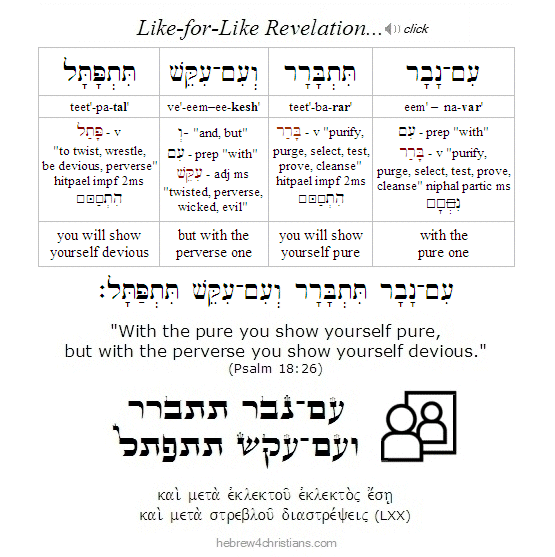 |
Olam Katan: A Small World...
Being made in God's likeness means that how we regard ourselves and others will be the measure that we regard God Himself...
07.02.26 (Tammuz 17, 5786) It is written in our Torah portion for this week (i.e., Pinchas), "My offering, my food for my food offerings, my pleasing aroma, you shall be careful to offer to me at its appointed time" (Num. 28:2). Food for God? What need has the LORD for food? But by this is meant "as you have done it to least of these my brethren, you have done it unto Me" (Matt. 25:40). The offerings you make to tzedakah (giving charity, your time, your kindness, etc.) constitute food presented before the secret place of God's altar...
God created Adam alone, as a solitary being, made in the divine image, to teach us that to destroy a single life is to destroy an entire world, and to sustain a single life is to sustain an entire world. Therefore everyone should say: 'For my sake the world was created' (Talmud). Each of us is olam katan (עולם קטן), a small world that represents the large world. Indeed, one righteous human being can sustain the entire world, as it is written (Prov. 10:25), "the righteous is the foundation of the world" (וְצַדִּיק יְסוֹד עוֹלָם).
On the other hand, balance is of course required here. Each of us is olam katan, a small world, though, as Rabbi Noah of Lekhivitz once wisely said, "if we are small in our own eyes, we are indeed 'a world,' but if we are a 'world' in our own eyes, we are thereby made small." This thought obviously echoes Yeshua's teaching: "Whoever exalts himself will be humbled, and whoever humbles himself will be exalted" (Matt. 23:12).
There are assumptions we bring to the reading of Torah that affect how we read and what we will hear... The sages generally agreed that the greatest principle of Torah is to love your neighbor as yourself (Lev. 19:18), though Ben Azzai further said that even greater is the principle that God created man in His likeness (i.e., bid'mut Elohim, בִּדְמוּת אֱלֹהִים, in "outline" or "silhouette," the word demut [דְּמוּת] a synonym of tzelem [צֶלֶם], a "shadow" or semblance) because then one cannot say, 'Since I despise myself I can despise another as well; since I curse myself, let the other be accursed as well.' Being made in God's likeness means how we regard ourselves and others will be the measure we regard God Himself (1 John 4:20). Therefore the first commandment is always, "I am the LORD thy God..." (Exod. 20:2), since apart from faith, there is no Torah of any kind.
Eleazar ha-Kappar used to say: "They who have been born are destined to die. They that are dead are destined to be made alive. They who live are destined to be judged, that men may know and make known and understand that He is God, He is the maker, He is the creator, He is the discerner, He is the judge, He is the witness, He is the complainant, and it is He who will in the future judge, blessed be He, in whose presence is neither guile nor forgetfulness nor respect of persons nor taking of bribes; for all is His. And know that everything is according to the reckoning. And let not your evil nature assure you that the grave will be your refuge: for despite yourself you were fashioned, and despite yourself you were born, and despite yourself you live, and despite yourself you die, and despite yourself shall you are destined to give account and reckoning before the supreme King of kings, the Holy One, blessed be He." (Pirkei Avot 4:29)
Hebrew Lesson
Eccl. 12:13 Hebrew reading:
The Fast of Tammuz...
07.02.26 (Tammuz 17, 5786) In Jewish tradition, Moses smashed the tablets on the seventeenth day of the fourth month (later called Tammuz) after he came down from Sinai and found the people worshiping the Golden Calf. This tragedy was seen as prophetic, since it was on this same date that the walls of Jerusalem were crushed by the invading armies of Nebuchadnezzar (see 2 Kings 25:2-7), an event which led to the destruction of the Temple and the exile of the people three weeks later, that is, on the ninth of Av. Today, the seventeenth of Tammuz is commemorated as a fast day (i.e., the "Fast of 4th month") that marks the beginning of the three week period of mourning for the lost vision of Zion...
Since the three week period from the 17th day of Tammuz through the 9th day of Av recalls the season when the Temple was destroyed and the people were exiled from the promised land, it is called yemei bein ha-metzarim (יְמֵי בֵּין הַמְּצָרִים), "the days in the midst of distress," a phrase taken from the Book of Lamentations: "Judah has gone into exile, her pursuers have all overtaken her in the midst of her distresses" (i.e., bein ha-metzarim: בֵּין הַמְּצָרִים).
The tears of the prophet Jeremiah represent God's compassionate love for the Jewish people; the Book of Lamentations is really God's cry... God cares about the suffering of His people: b'khol tzaratam lo tzar (בְּכָל־צָרָתָם לוֹ צָר) - "In all their affliction he was afflicted" (Isa. 63:9). Even after all the horrors that befell the people of Judah due to God's disciplinary judgment, the LORD still encouraged them to seek Him again. "The faithful love of the LORD (חַסְדֵי יהוה) never ceases, and his compassions never fail. They are new every morning; great is your faithfulness" (Lam. 3:22-23). Our response to the faithful love of the LORD is teshuvah (i.e., תְּשׁוּבָה, "turning [shuv] to God"). In Modern Hebrew teshuvah means an "answer" to a shelah (שְׁאֵלָה), or a question. God's love for us is the question, and our teshuvah – our turning of the heart toward Him – is the answer. We return to the LORD when we truly acknowledge that He is our Father and our King.
הֲשִׁיבֵנוּ יְהוָה אֵלֶיךָ וְנָשׁוּבָה
חַדֵּשׁ יָמֵינוּ כְּקֶדֶם
ha·shi·vei'·nu · Adonai · ei·lei'·kha · ve·na·shu'·va
cha·desh · ya·mei'·noo · ke·ke'·dem
"Turn us back to yourself, O LORD, so that we may return to you;
renew our days as of old" (Lam. 5:21)

Hebrew Study Card
Note that the word "distress" (i.e., metzar: מֵצַר) comes from a root word (i.e., tzarah: צָרָה) that means to "make narrow or restricted" (the Yiddish word "tsuris" comes from this root), whereas the word for "deliverance" or "salvation" (i.e., yeshuah: יְשׁוּעָה) means to "make wide" or "make sufficient." These two ideas can be seen in a verse from the Psalms: "Out of my distress (מִן־הַמֵּצַר) I called on the LORD; the LORD answered me and set me in a wide open place" (Psalm 118:5). Among other things, deliverance (salvation) is always a transition from bondage to freedom...
Note: For more information about the Fast of Tammuz, click here.
The Torah of Mercies...
07.01.26 (Tammuz 16, 5786) Shalom chaverim. It has been said that grace is getting what you don't deserve, whereas mercy is not getting what you do... Yeshua said, "Blessed are the merciful, for they shall receive mercy" (Matt. 5:7). This is not a reciprocal law like karma, i.e., you get in return what you first give, since we cannot obtain God's mercy as reward for our own supposed merit (Rom. 4:4). No, we are able to extend mercy to others only when we are made merciful ("full of mercy"), that is, when we first receive mercy as the gift of God (Eph. 2:8; Rom. 5:15). After all, you can't give away what you don't have, and if you have no mercy for others, it is likely that you have not received it for yourself, as the parable of the "Good Samaritan" reveals (Luke 10:25-8).
Your forgiveness is your forgiveness, that is, as you forgive, so you reveal your heart. What you do comes from what you are, not the other way around. We are first transformed by God's grace and then come works of love. We are able to judge others mercifully, with the "good eye," because we come to believe that we are beloved by God.
When Yeshua rebuked the "holier-than-thou" attitude of some people, he said: "Go and learn what this means, 'I desire mercy, and not sacrifice.' For I came not to call the righteous, but sinners" (Matt. 9:13). The pattern therefore abides: First you realize you are broken, impoverished of heart, and you mourn over your sinful condition (Matt. 5:3-4); then you hunger and thirst for God's righteousness, that is, for his healing and deliverance, and finally you learn to trust the mercy of God, that is, you come to accept that you are accepted despite your unacceptability (Matt. 5:5-6). As you begin "suffer yourself" and forgive your own evil, you are enabled to extend this mercy to others (Matt. 5:7). In this way you begin to see God in your relationships and obey the heart of truth (Matt. 5:8; 1 Sam. 15:22).
Though we love and honor truth, we must be careful never to use it as a weapon to judge or wound others. The failure to extend mercy, to demand your "rights" or hold on to grudges, implies that you are relating to God as Judge rather than as Savior (James 2:13). If we condemn what we see in others, we have yet to truly see what is within our own hearts; we have yet to see our desperate need for God's mercy for our lives. If you don't own your own sin, your sin will own you. Being merciful is a response to God's love and therefore is essential to genuine teshuvah (repentance).
Walking in love is the deepest expression of truth, since love heals untruth and embraces hope for what is presently broken (1 Cor. 13:7). In light of this, take a moment to ask the LORD to help you relinquish the pain of your past by being full of mercy toward yourself and others. Honor God's love for you by forgiving yourself and showing compassion and mercy to others in your life...
Hebrew Lesson
Hosea 6:6 Hebrew reading (click):
Truth and God's Salvation...
07.01.26 (Tammuz 16, 5786) The Scriptures teach us that it is forbidden to be afraid of the future because we are to live in the presence of God today and trust him to take care of us. "Sing to the LORD! Bless His Name! Proclaim His salvation from day to day" (Psalm 96:2).
"There is no fear in love," and therefore over and over the Spirit of God says, al tira' - "don't be afraid..." When we are afraid, we are believing the lie there is something beyond God's control or reach, and therefore God is "not enough"...
In times of testing you must remind yourself of what is true and real. When you know the truth, you will be set free from the power of the lie (John 8:32). God formed you in your mother's womb, breathed into you nishmat chayim, the breath of life, and numbers all your days... Every breath you take, every heartbeat in your chest is ordained from heaven, and indeed, there is not a moment of your life apart from God's sovereign and sustaining grace.
So what, then, are you afraid of? Dying? Judgment in the world to come? Being left unloved, bereft of home, abandoned, consigned to outer darkness? King David said, "If I make my bed in Hell, behold, you are there" (Psalm 139:8). Understand that the LORD God is not only present in your "happy moments," when you feel "put together" and respectable, but he is present in your desperate moments, in your hunger, your thirst, and in your secrets. May we never lose sight of God's love, especially in times of distress and trouble, since we trust that he is always working all things together for our ultimate good (Rom. 8:28).
The Name of the LORD (יהוה) means "Presence" and "Love" (Exod. 3:14; 34:6-7). Yeshua said, "I go to prepare a place for you," which means that his presence and love are waiting for you in whatever lies ahead (Rom. 8:35-39). To worry is "practicing the absence" of God instead of practicing His Presence... Trust the word of the Holy Spirit: "For I know the plans I have for you, declares the LORD, plans for healing peace and not for evil, to give you a future and a hope (Jer. 29:11). The Word always speaks hope.
Take comfort that your Heavenly Father sees when the sparrow falls; he arrays the flower in its hidden valley; and he calls each star by name. More importantly, the Lord sees you and knows your struggle with fear. Come to him with your needy heart and trust him to deliver you from the burdens of your soul (Matt. 11:28). Shalom means being free from fear.
This is a word for the exiles of every age: Be not afraid - al-tira' – not of man, nor of war, nor of tribulation, nor even of death itself (Rom. 8:35-39). If God be for us, who can be against us? Indeed, Yeshua came to die to destroy the power of death "and to release all those who through fear of death were subject to lifelong slavery" (Heb. 2:14-15). The resurrection of the Messiah is the focal point of history - not the "dust of death." Death does not have the final word. Indeed, because Yeshua is alive, we also shall live (John 14:19). May your chesed, O LORD, be upon us, as we wait for You (Psalm 33:22).
Nachman of Breslov once is reported to have said that "The whole earth is a very narrow bridge (כָּל־הָעוֹלָם כֻּלּוֹ גֶּשֶׁר צַר מְאד), and the point of life is never to be afraid." Likewise we understand Yeshua to be the Bridge to the Father, the narrow way of passage that leads to life. He calls out to us in the storm of this world, "Take heart. It is I; be not afraid" (Matt. 14:27). When Peter answered the call and attempted to walk across the stormy waters, he lost courage and began to sink, but Yeshua immediately reached out his hand and took hold of him, saying, "O you of little faith, why did you doubt (lit., think twice)?"
We must be careful not to let the light in us become darkness (Luke 11:35). The love and acceptance of God is the answer to our fear, not the thought of being judged by Him or attempting to merit his favor through religion. God's love is our hope, and this hope gives us courage to persevere the storms of the day... As it is written: "Be not afraid of sudden terror, nor of the destruction of the wicked when it comes. For the LORD shall be your confidence, and he shall keep your foot from being caught" (Prov. 3:25-26). Amen, may your chesed, O LORD, be upon us, as we wait for You.
"Greater is He that is in you than the one that is in the world" (1 John 4:4). Let us therefore walk in the Spirit of Truth, friends, and thereby overcome the devil and his noisome lies....
Hebrew Lesson
Psalm 96:2 reading (click for audio):
June 2026 Site Updates
Joy at the End of it all...
"Joy is at the end of it, after all. Astonishment and joy are what our faith finally points to, and even Paul ... after he had come through his years of suffering, and at the end, licking his wounds in a Roman lock-up wrote: "Rejoice in the Lord always. Again I will say, rejoice" (Phil. 4:4). But it is at the end that he wrote it. Rejoice is the last word and can be spoken only after the first word." - Frederick Buechner
06.30.26 (Tammuz 16, 5786) The Torah teaches that a personal, all-powerful, and all-loving God exists and solely created the universe "yesh me'ayin" (יֵשׁ מְאַיִן), or out of nothing. As his crowning creative achievement, God created free moral agents - both angels and man - who could choose to do what is good or what is evil. For reasons that are not entirely clear, however, some of the angels chose to rebel against God (chief among them Lucifer, later renamed Satan), and these angels, in turn, conspired to seduce human beings to do likewise. When Adam and Eve disobeyed God's moral law, they effectively joined the angelic rebellion. The consequence of this was catastrophic, and the mankind "fell" away from God as their King into a state of alienation and exile called "spiritual death."
Since God had created man to exercise lawful dominion over the earth (שׁגח), however, as the steward and "federal head" of creation, the effect of his apostasy affected not only his life, but also that of the entire created order itself, as Satan then usurped the authority given to man and began his reign of terror upon the earth. With the spiritual and moral order usurped, mankind was under the hegemony of Satan, and anarchy resulted. The natural order likewise broke down and dissipated. The original transgression of man therefore affected not only his relationship with God but also that of the entire created order itself. Natural evils and chaos erupted as the earth became a rebel outpost from the original Kingdom of God. Satan enthroned himself as the "god of this world" (ὁ θεὸς τοῦ αἰῶνος τούτου) and humanity has subsequently suffered under his tyranny of deception and malice ever since.
Now this general account of the origin of evil can be considered philosophically, and indeed it inevitably is discussed that way, since the main objection to the idea that an all-powerful and all-loving Creator exists is the concurrent existence of evil, and in particular, pain and suffering that seems to be omnipresent in the world. How could such a God allow evil in his creation? And doesn't the prevalence of such evil impugn faith in God?
The contrary challenge being made here is that the following four propositions: 1) God exists; 2) God is all-powerful, 3) God is all-loving, and 4) evil exists are together logically incompatible and therefore one (or more) of them must be false. So the first order of business regarding this critical challenge is to consider each proposition (and its negation) to determine its credibility (or lack thereof), and then, after better understanding the meaning of the propositions, to decide if they are really inconsistent or not.
As for the first proposition, namely, that God "exists," we need to consider various rational arguments for the existence of God, for instance, the cosmological argument (argument from cause), the teleological argument (argument from design), the ontological argument (the a priori argument), the argument from intuitions of beauty, morality, and logic, the argument from mystical experiences, arguments from fulfilled prophecies, evidences for the historical reliability of the Scriptures, and so on. Working through these arguments is beyond the scope of this short article, since my goal here is to briefly explore how "evil" and the existence of God are not only compatible, but are in indeed complementary to sound theology.
Regarding the second premise that God is all-powerful, we must consider the definition of "God" and then the definition of "omnipotence." First we can define God as "that being than which no greater can be conceived," which implies that God is maximal in all perfections, and that includes the idea that God is unlimited in his power and capabilities. God's omnipotence means that no other being can thwart or surpass his will or desire. Moreover, whereas other forms of being are "contingent," that is, they can pass out of existence, God is a "necessary" being that cannot not exist, since existence itself is an inherent good.
The truth that God is almighty or all-powerful is further attested by the witness of the Jewish Scriptures which collectively affirm that the LORD alone is the Sovereign Creator over all that exists (Gen. 1:1). God is regarded as the "potentate" or owner of reality (1 Chron. 29:11; 1 Tim. 6:15) and that nothing is beyond his power to accomplish (Psalm 115:3; Jer. 32:17; Luke 1:37). God is also omniscient, or all-knowing (Psalm 139; 147:5; 1 John 3:20) and omnipresent, or everywhere present and fully conscious (Psalm 139:7; Jer. 23:24; Isa. 6:3; Matt. 28:20). These attributes imply that God is one, and that there is no other god or power apart from the LORD (אֵין עוֹד מִלְבַדּו), who alone is the Master of the universe (ריבונו של עולם), the peerless and supreme authority over all (Deut. 4:35; 4:39; 32:39; Isa. 43:10; 44:6; 45:18, etc.).
Furthermore, God is rationally understood (or defined) to be "that being than which no greater can be conceived," that is, the Supreme Being, the Source of all that exists, and the consummate power that originated the universe. By definition this implies that God is "maximal" in his perfections, unlimited in his capabilities and designs, and utterly sacred, that is, entirely unique and without rival. Therefore God's omnipotence, omniscience, omnipresence, and other attributes, are intrinsic to his essence (מַהוּת אֱלהִים) and cannot be separated or diminished. God is therefore YHVH (יהוה), the LORD who is ehyeh (אהיה), the great "I am" whose consciousness transcends all of space-time and sustains it by the word of his power.
The third premise is that God is all-loving or "omnibenevolent." This again follows from the axiom that the Supreme Being is maximal in his perfections, and that includes all the moral perfections intuited by the human heart. Affirming that God is all-loving implies his agency as the source and meaning of goodness and love. As we will consider later, it is possible for the universe to exist without evil, but it is impossible for evil to exist without goodness, since goodness is intrinsic to being in itself. A perfect being includes the attribute of being good.
The Torah describes the LORD as morally perfect and upright in all his ways: The LORD is "the Rock, his work is perfect, for all his ways are justice. A God of faithfulness and without iniquity, just and upright is he" (Deut. 32:4). Moreover, again rationally understood, if God is not all-good, then there must be some limitation of his being, something that constrains his will, some defect or deficiency in his character, which violates the condition that God is than which no greater can be conceived.
Some atheistic philosophers, such as Friedrich Nietzsche, have made the claim that God is "beyond good and evil," a sort of "pantheistic" promiscuity that transcends limiting categories of consciousness. God is likened to a cosmic force that cannot be defined using any analogy to human experience. This implies that moral truths are relative and, in an absolute sense, illusory. The Scriptures attest, to the contrary, that God is good, and that we can know what is good (and what is evil) because we have intuitions of conscience and the logic of transcendental values as part of being created in God's "image" and likeness.
The last premise is that evil exists, which is considered self-evident to common sense. Pain, suffering, and loss cannot be rationalized as some sort of an illusion or theologically justified as part of the "will of God." To say that evil is only "apparently" so, or that what we call "evil" is a misinterpretation of a "deeper" reality, is an affront to human pathos, suppressing the voice of suffering and pain and relegating it to meaninglessness. On the contrary, with common sense we affirm that evil exists, and indeed its reality is the essential objection that God is all-powerful and all-loving. After all, if God is all-powerful, then he can do anything, and if he is all-good, then he will do what is best. Why, then, does evil exist?
The problem for the skeptic or unbeliever is nevertheless defining what evil is, and perhaps more tellingly, defining what "good" means. If God is "beyond good and evil," or an impersonal cosmic force that is indifferent to moral values, then on what grounds can the objection be made that God is not good? The skeptic might just as well take up the argument with brute nature and its "evolutionary carnage" than with God... No, the unbeliever wants to blame God for creating (or allowing) evil by appealing to some sort of "super-transcendental" value of cosmic justice, yet this is another appeal to a standard that is esteemed as "good." C.S. Lewis addressed this problem for the skeptic this way: "My argument against God was that the universe seemed so cruel and unjust. But how had I got this idea of just and unjust? A man does not call a line crooked unless he has some idea of a straight line. What was I comparing this universe with when I called it unjust?"
I might add here that those theologies that emphasize God's power over his other attributes of goodness, justice, and so on, regard him as an "impassive" and unstoppable power or mind that foreordains and predestines all things -- both good and bad -- without compassionate regard to the will and welfare of his creatures. This Stoic idea ultimately makes God into a form of "Fate," an irresistible force that decrees all things. A theology that stresses divine sovereignty over his other attributes (such as empathetic awareness) violates the unity of God's perfections. While it is true that God is sovereign and omnipotent, he "empties himself" to allow human choice and responsibility to have a real influence in his providential designs.
So, in light of the forgoing considerations it seems evident that we can rationally affirm that: 1) God exists; 2) God is all-powerful, 3) God is all-loving, and 4) evil exists, and that there is no logical inconsistency in affirming all four propositions together.
That said, the existence of evil is still problematic, though not in a way that impugns or questions God's existence, power, or goodness, and it is this problematic tension that evokes the mystery or "riddle" of life, since it rejects both a fatuous optimism that regards this to be the "best of all possible worlds" as it also rejects a dejected pessimism that regards life as a senseless nightmare. To paraphrase Chesterton, neither extreme aligns well with reality, since it is evident that "not everything is right; not everything is wrong, and not everything is both right and wrong, but what is wrong has no right to be so" (Everlasting Man).
If we know what ought to be, if we have some intuition of goodness, beauty, justice, truth, and so on, yet we live to the contrary, then the more fundamental problem comes from our disregard of the moral order of reality, and not from the consequences of such disobedience. If "what ought to be" should constrain "what is," and "what is" does not conform to the ideal, the inner contradiction is a problem of the will.
Evil, then, is not intrinsic to reality, but is an "invasion" and a perversion of what is real. The world is "fallen" and infected with evil because of the sin of Adam and Eve, and before that, the sin of Satan who turned away from God to become the "prince of darkness." Satan seeks to "devour" the souls of people by blinding their eyes through deception "so they will not receive the love of the truth in order that they might be saved" (2 Thess. 2:10). Apparently it is Satan's great desire to enslave people and consign them to partake of his own dreadful fate. As it is written: "If the gospel is veiled, it is veiled to those who are perishing, whose minds the god of this age has blinded, who do not believe, lest the light of the gospel of the glory of Messiah, who is the image of God, should shine on them (2 Cor. 4:3-4).
In this connection we note that there is another category of person who both willfully does what is evil and disregards the existence of God as his Creator and moral Lawgiver. This is a person who does not care about morality and who has abandoned himself to pursuing selfish pleasure as his "highest good." For such a pragmatically debased soul, evil becomes a "lifestyle choice" (or a demand, as it is usually expressed), and defiance of God is its "religion" and existential posture. The evil person calls good evil and evil good; he is so lost to moral truth that he no longer cares to know the difference between what is right and what is wrong. Everything is "excused" as he casts himself away from the light of the divine Presence...
The subject of what is evil is complex, of course. It should be noted that those who most often complain against evil in the world are often oblivious of their own moral failures and evil actions. People tend to overlook their own evil because they want to deny their sinful condition and ignore their responsibility to do what is good. This "oversight" is the work of the devil who lures people into passivity and blaming others. The devil seeks to instill a sense of hopelessness over the evil and injustice that he incites, hardening people's hearts so that they feel powerless to protest. The devil also provides ready-made excuses for suppressing the voice of conscience by offering historical, impersonal, and "scientific" explanations for their bad behavior, often using a medical model that is decidedly naturalistic in its biases.
As people listen to the devil's lies, they grow numb inside, slowly drifting away from what is real. Perversions are tolerated as "normal"; values are vitiated and disregarded. Everything is "relative" and any truth claim is cynically regarded with suspicion. Anarchy and nihilism fill the void of God's direction and love. The devil "loves" people and has a plan for their lives... And this is why we must fight against evil - resisting it with all our heart, soul, mind, and strength. Passivity in the face of evil makes us accomplices of it presence.
We overcome evil by loving the truth and doing good (Rom. 12:21). The truth here refers to knowledge of moral and spiritual reality, not merely empirical descriptions. The truth includes the language of "oughtness" and the pursuit of ideals, not just a report of the supposed "facts." "When evil things have become evil, good things really become good. There are some men who are dreary because they do not believe in God but there are many others who are dreary because they do not believe in the devil" (Chesterton).
Ironically enough, the real danger is not just unbelief in God, but unbelief in the devil as well. The two go together, for without consciousness of evil and its existential threat, most people will never look for the truth of goodness and the realm of the divine. Indeed evil jolts us awake to the reality of the devil and turns our hearts to God for deliverance. As Yeshua taught us to pray: "Our Father in Heaven ... deliver us from the evil one" (Matt. 6:13).
The blind spot of the devil is that his wickedness indirectly testifies to the goodness, glory, and salvation of God. And undoubtedly this is by God's own design as he takes hold of the tongue of the "dumb donkey" to make him confess God's truth (Num. 22:28-ff). Like the evil fool Haman the Agagite, the devil will be hung on the gallows of his own making (Esther 7:10). "The LORD has made everything for a purpose; even the wicked for the day of evil" (Prov. 16:4). As the LORD said to Pharaoh: "For this purpose I have raised you up, to show you my power, so that my name may be proclaimed in all the earth" (Exod. 9:16). The judgment of God upon evil vindicates his righteousness and truth. As Louis Berkoff once wrote: "God is holy in everything that reveals Him, in His goodness and grace as well as in His justice and wrath."
But again, evil is not necessary but accidental (and parasitical) to reality. The world can happily exist without evil, though it cannot exist at all without the good. A divided house shall not stand, and therefore God allows the envy and malice of Satan to bring about his own destruction. And indeed, the day is coming when evil will finally be separated and removed from God's creation like chaff that is threshed from the wheat.
This world is not our home, and God's salvation is vast in its scope. Not only does Yeshua save us from our blindness of heart and our slavery to sin, not only does he free us from the verdict of the law, from the "legal" argument of the devil, he liberates us so that we belong to God and he promises us a joyful future that will be eternally free from the very presence of evil itself. In this life we may still sometimes sin as we learn to "put on the new nature" that comes from above (Eph. 4:21-24), but our essential spiritual identity has radically changed, and we made partakers of eternal life. The day draws near when our redemption will be complete and the lost paradise of Eden will be forever restored: "For, behold, I create new heavens and a new earth: and the former shall not be remembered, nor come into mind" (Isa. 65:17). Amen, therefore "according to his promise we are waiting for new heavens and a new earth in which righteousness dwells" (2 Pet. 3:13). Halevai. May that come speedily, and in our days.
Hebrew Lesson
Isaiah 65:17 reading (click for audio):
Feeding God's Heart...
The following entry concerns this week's Torah reading, parashat Pinchas...
06.30.26 (Tammuz 16, 5786) As I've discussed elsewhere on the H4C over the years, the climax of the revelation at Sinai was not the giving of the Ten Commandments (עשרת הדיברות) to Israel but was instead the vision of the Altar of the sanctuary (מזבח המשכן). However -- as our Torah portion this week makes clear -- the "central sacrifice" upon this altar was the daily sacrifice (i.e., korban tamid: קרבן תמיד) of a defect-free male lamb with unleavened bread and wine. The LORD calls this "my offering" (קרבני) and "my bread" (לחמי) [Num. 28:1-8]. In other words, the service and ministry of the Temple constantly foretold the coming of the great Lamb of God (שה האלהים) who would be offered upon the altar of the cross to secure our eternal redemption (John 1:29; Heb. 9:11-12).
The sacrifice of the lamb represents "God's food," a pleasing aroma (ריח ניחחי), for it most satisfied the hunger of God's heart (Eph. 5:2). Indeed, Yeshua's offering upon the cross represents God's hunger for our atonement, our healing from the sickness of death, since it restored what was lost to Him through sin, namely, communion with his children. God could never be satisfied until He was able to let truth and love meet (Psalm 85:10).
Sometimes we say that we "hunger for God," but it is vital to remember that it is God who first hungers for us. God desires our love and fellowship. He comes to seek fruit among the trees - but does He find any? He walks in the cool of the day, calling out to us, but are we attuned to hear His voice? Do we accept the invitation to be in His Presence? When God "knocks on the door of your heart" to commune with you, what "food" will you be serving? (Rev. 3:20). Every day we are given an opportunity to "feed God" through expressing faith, hope, and love. Ultimately it is our obedience to the truth is what "feeds" Him: "Behold, to obey is better than sacrifice, and to hearken than the fat of rams" (1 Sam. 15:22).
Hebrew Lesson
1 Sam. 15:22b reading (click for audio):
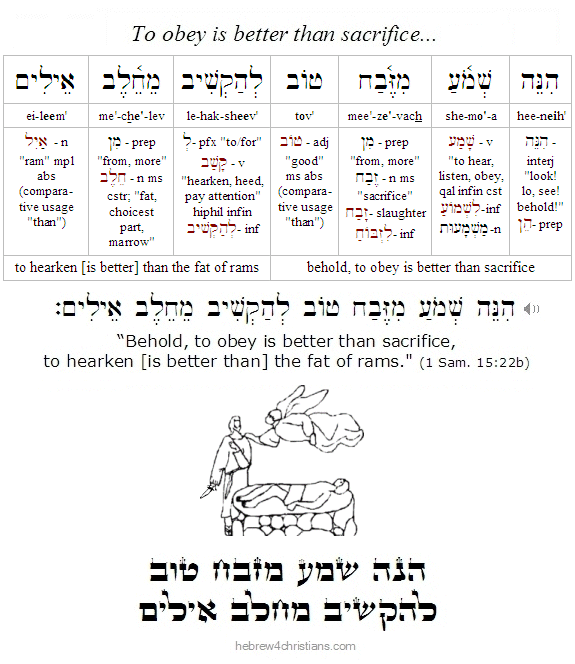 |
We "feed God" by offering heartfelt prayer, by walking in faith, by yearning for Him, by studying Scripture, by participating in corporate worship, by giving tzedakah, by performing acts of kindness (gemilut chasadim) for others, and so on (Heb. 13:15-16). Expressing our love for God is the deepest meaning of teshuvah, which is an "answer" or response to His great love for us (1 John 4:19). Just as God feeds and sustains us through His love, so we "feed Him" by our yearning, our prayers, our praise, and our worship...
For more on this subject, see "The Hunger of God's Heart."
Outshine my Darkness...
06.29.26 (Tammuz 15, 5786) "If I say, surely the darkness shall cover me, even the night shall be light about me, for the darkness cannot hide from You, but the night shines as the day: nothing escapes your radiance" (Psalm 139:11-12).
The heart of faith confesses that the light of God overcomes all the darkness, even the darkness of our own hearts, and furthermore it furthermore affirms that we can trust that God is in our darkness, in the silence, in the unknown... Yeshua was covered by the dark cloud as He suffered on the cross and there interceded on your behalf. You come out of the shadows when you admit the truth that you need God. You need help. You need a miracle to help you to truly love. You may find excuses for many things, but you cannot escape the "wretched man that I am" reality that is grounded in your fears.
God sees in the darkness and is present there, too. When you feel alone, like an unbridgeable gulf lay between you and all that is good; when you feel like you want to scream but are afraid that even then no one would hear, may the LORD shine His light upon you... Amen, may His light shine upon you.
Hebrew Lesson
Psalm 139:11 reading (click):
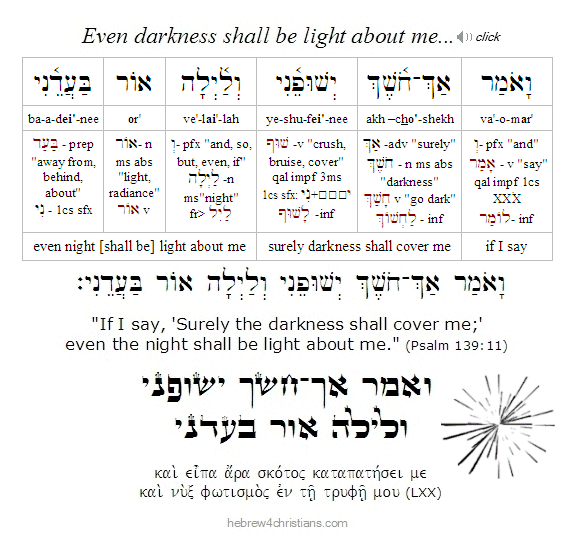 |
Note: June 2026 updates continue here.
Follow the site's progress:
Site Updates for 2026
Site Updates for 2025
Site Updates for 2024
Site Updates for 2023
Site Updates for 2022
Site Updates for 2021
Site Updates for 2020
Site Updates for 2019
Site Updates for 2018
Site Updates for 2017
Site Updates for 2016
Site Updates for 2015
Site Updates for 2014
Site Updates for 2013
Site Updates for 2012
Site Updates for 2011
Site Updates for 2010
Site Updates for 2009
Site Updates for 2008
Site Updates for 2007
Site Updates for 2006
Site Updates for 2005
Site Updates for 2004
Hebrew4Christians Forum
|